
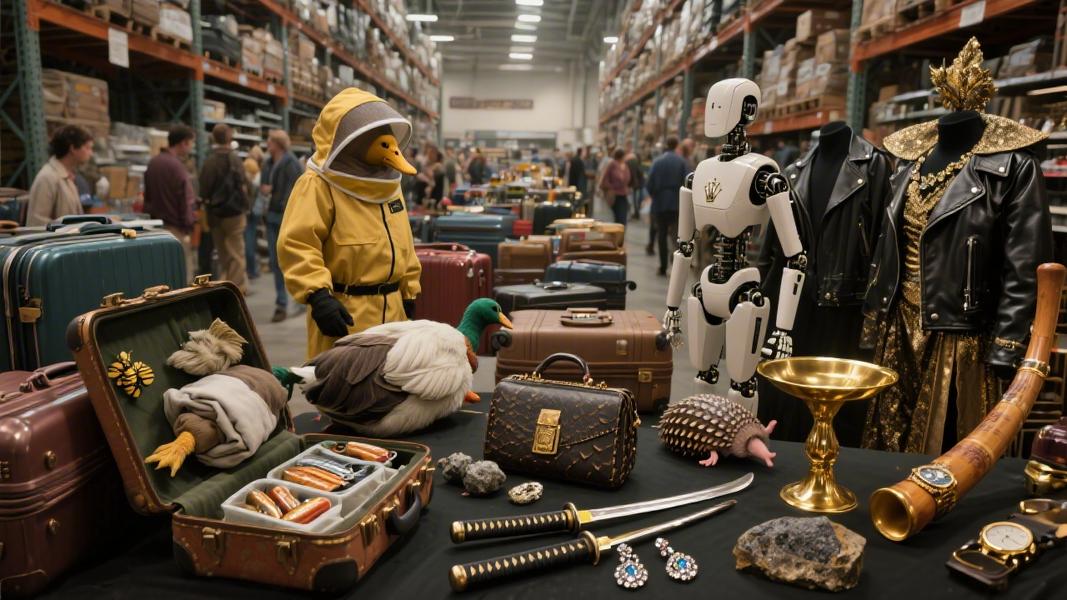
A beekeeper suit. A suitcase packed with rat poison. And, somehow, a meteorite. These aren’t props from a surrealist film — they’re real items pulled from real lost luggage, and someone, at some point, thought it was a good idea to check them on a flight.
Unclaimed Baggage, the nation’s only retailer of lost airline luggage, has released its second annual Found Report — a sweeping look at the strangest, most surprising, and occasionally alarming contents discovered inside orphaned suitcases over the course of 2024. The report, published in early 2025, covers more than 2 million items processed by the company, offering what the retailer itself calls “a fascinating glimpse into the world of lost luggage.”
The Odds Are Good — Until They’re Not
Here’s the reassuring part first: air travel is remarkably reliable when it comes to baggage. In 2025, close to 10 billion passengers traveled by air globally, and a striking 99.9% of checked bags were successfully reunited with their owners, according to industry data. That sounds great. But do the math on 10 billion passengers, and even a fraction of a percent starts to add up to a lot of misplaced belongings.
Airlines typically conduct a 90-day search before a bag is officially deemed orphaned. After that window closes, unclaimed luggage makes its way — through a purchasing agreement — to Unclaimed Baggage’s flagship store in Scottsboro, Alabama, where it’s sorted, cleaned, priced, and put up for sale at discounts of up to 85% off estimated retail value. The inventory turns over constantly. On any given day, the store looks completely different from the day before.
What’s Actually in There
So what does the 2025 Found Report actually tell us? Quite a bit, it turns out — about human behavior, travel habits, and the remarkable range of things people consider appropriate to pack. The meteorite, for instance, raises questions that may never be answered. Was it a souvenir? A science project? A very heavy paperweight? The beekeeper suit at least implies some kind of professional purpose. The rat poison is harder to justify.
Still, the report isn’t purely about oddities. Over 2 million items processed in a single year means the operation is massive — closer to an industrial sorting facility than a quirky thrift shop, though it’s managed to be both. Electronics, designer clothing, jewelry, and cameras regularly surface in the mix, often in near-perfect condition. Someone packed them. Someone forgot them. Someone else is getting a deal.
Bid on the Mystery
For those who want the full experience of not knowing what they’re getting into — literally — Unclaimed Baggage also hosts in-store auctions where customers bid on suitcases that haven’t been opened yet. As one attendee described the scene: “People bid on unopened suitcases, with no way of knowing if they were going to get treasures.” That’s the appeal, of course. It’s part garage sale, part lottery ticket, part anthropological dig.
The store hosts a rotating calendar of events throughout the year. Most recently, it promoted a Columbus Day Weekend Celebration in October 2025, one of several seasonal sales and auction events that draw visitors from across the country to a small Alabama town that has, improbably, become a destination.
A Mirror Held Up to the Traveling Public
What makes the Found Report more than a novelty list is what it quietly implies about us — about how we pack, what we value, and what we’re willing to haul through airport security. A meteorite doesn’t end up in a suitcase by accident. Neither does a full beekeeper ensemble. These are deliberate choices made by real people, now immortalized in an annual retail report.
Unclaimed Baggage seems to understand the cultural weight of what it’s sitting on. Its operations have turned a logistical footnote of the airline industry into something genuinely compelling — part consumer bargain, part time capsule. The items that pass through its doors aren’t just lost property. They’re artifacts.
Somewhere out there, someone is still wondering where their meteorite ended up. Chances are, it’s on a shelf in Alabama with a price tag on it.
