
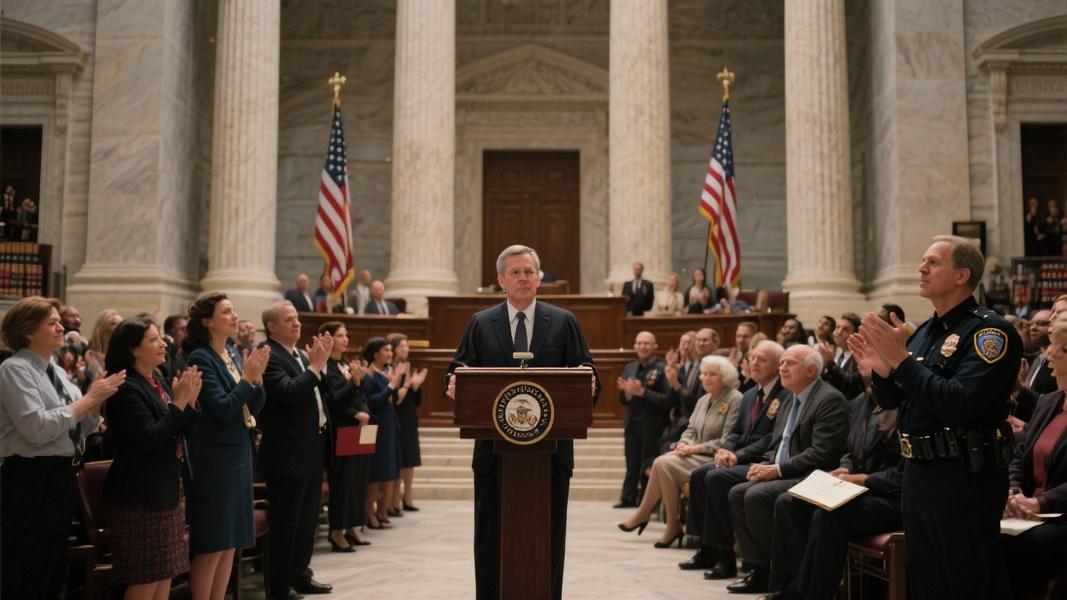
After a momentous term that saw sweeping decisions on issues from abortion rights to gun control, the Supreme Court has officially closed its doors for the summer, marking the end of what many court watchers have called one of the most consequential sessions in modern history.
Chief Justice John Roberts announced the conclusion of the Court’s 2021-2022 term on Thursday, noting that “the Court has acted upon all cases submitted to the Court for decision this Term” and will remain in recess until the first Monday in October when the new term begins.
But amid the high-profile rulings that dominated headlines, Roberts took a moment to highlight something else entirely: the extraordinary dedication of the Court’s behind-the-scenes workforce.
Five Centuries of Service
In a rare moment of institutional reflection, Roberts acknowledged the retirement of numerous long-serving Court employees who collectively contributed more than 500 years of service to the nation’s highest court.
“Before we rise for the summer, I have a number of employees to recognize. Collectively, these individuals have rendered more than five centuries of Supreme Court service,” Roberts stated in his remarks.
Who are these unsung heroes who’ve kept the wheels of justice turning for decades? From the Clerk’s Office, Michael Duggan retired after more than 30 years, while Gary Kemp concluded nearly three decades of service.
The Marshal’s Office saw several significant departures, including Dannie Veney with over 38 years of service and Chief Deputy Marshal Richard Nelson, who retires with the remarkable distinction of having served more than 48 years in federal service, including 18 years at the Court.
Among chambers staff, Michele “Shelly” Blincoe concluded an impressive 39-year career, while several Supreme Court Police officers also retired, including Jeff Banaszak after 31 years and Bernard Bishop following 27 years of service.
In Memoriam
The Court also paused to remember those who had passed away during the term. “We sadly note deaths among long-serving employees this year,” Roberts remarked, acknowledging Virginia Singletary, who served more than 41 years; Raymond Billeaud, a Police Officer for over 21 years; and Moses Humes, who passed shortly after retiring with 22 years of Court service and more than 47 years in federal positions.
What makes these recognitions particularly poignant is their timing — coming at the end of one of the most divided and publicly contentious terms in recent Court history.
Technology and Knowledge Guardians Depart
Two key leadership positions will see new faces when the Court reconvenes in October. Robert J. Hawkins, Director of Information Technology, retired after more than 27 years, receiving special recognition for his team’s efforts during the pandemic.
“He and his team were creative, agile, and essential in allowing us to discharge the public’s work through the coronavirus pandemic,” the Chief Justice acknowledged.
Linda S. Maslow, only the 11th Librarian of the Court since its founding, will retire this summer after nearly 34 years. Under her leadership since 2012, the library embraced digital tools while protecting its historic collection.
The departures represent a significant changing of the guard for an institution that prizes continuity and institutional knowledge.
Gratitude Amid Controversy
Despite the term’s contentious nature — which included an unprecedented leak of a draft opinion and protests outside justices’ homes — Roberts took time to express appreciation for the Court’s staff and the legal community.
“On behalf of all the Justices, I would like to thank the Supreme Court employees for their outstanding work and dedication to their important responsibilities this Term. I thank the members of the Court’s bar as well for their professionalism and cooperation,” he said.
The Court now enters its summer recess following the release of final orders. When it reconvenes in October, it will do so without many familiar faces who have quietly upheld its operations through decades of legal storms and calm — a reminder that behind every landmark decision stands a dedicated workforce ensuring the Court’s essential functions continue uninterrupted, term after controversial term.
