
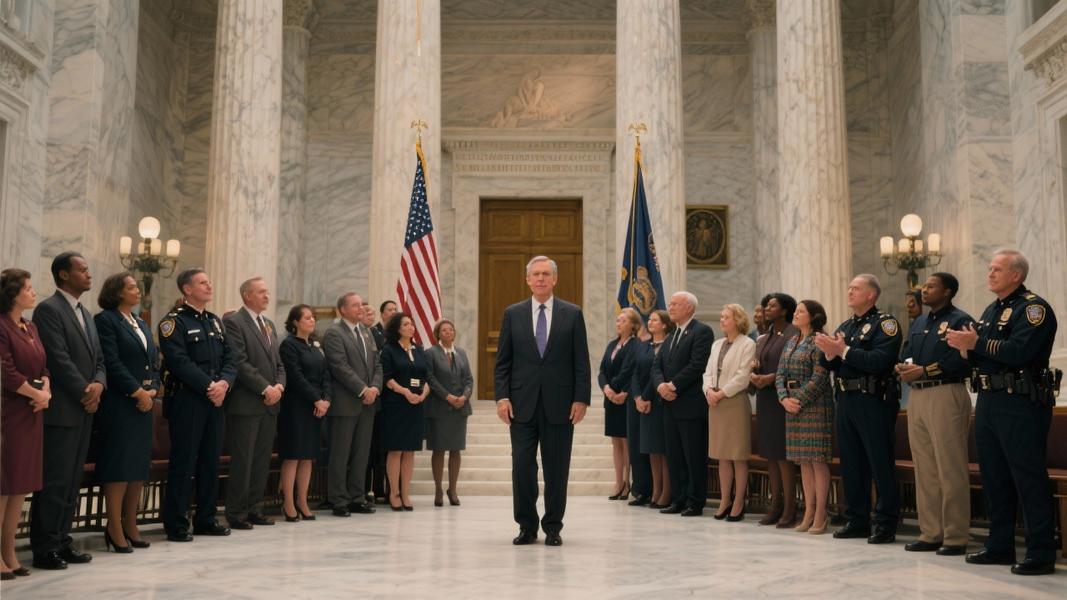
The Supreme Court has concluded its current term and entered summer recess, with Chief Justice John G. Roberts, Jr. taking a moment to recognize the dedication of staff who collectively contributed more than 500 years of service to the nation’s highest court.
In his announcement Thursday, Roberts stated, “I am authorized to announce that the Court has acted upon all cases submitted to the Court for decision this Term,” officially beginning the recess that will last until the first Monday in October 2022.
A Term Marked by Significant Rulings
The conclusion comes after a particularly consequential term that saw the Court make several landmark decisions. As the justices prepare for their summer break, Roberts took time to acknowledge the foundation that makes the Court’s work possible: its staff.
“On behalf of all the Justices, I would like to thank the Supreme Court employees for their outstanding work and dedication to their important responsibilities this Term,” Roberts said. “I thank the members of the Court’s bar as well for their professionalism and cooperation.”
Behind the high-profile cases and constitutional deliberations lies a workforce whose institutional knowledge and dedication often go unrecognized by the public. This year, that workforce is seeing significant turnover.
Five Centuries of Combined Service
What does it mean when an institution loses five centuries of institutional memory in one year? That’s the reality facing the Supreme Court as Roberts recognized numerous retiring employees who have served the Court for decades.
“Before we rise for the summer, I have a number of employees to recognize. Collectively, these individuals have rendered more than five centuries of Supreme Court service,” the Chief Justice noted in his remarks.
The list of departing staff spans multiple Court departments. From the Clerk’s Office, Michael Duggan retired with more than 30 years of service, while Gary Kemp concluded nearly three decades of work. The Marshal’s Office saw several departures, including Dannie Veney with over 38 years of service and Chief Deputy Marshal Richard Nelson, who retires with more than 18 years at the Court and an impressive 48 years of total federal service.
Several chambers staff are also departing, including Michele “Shelly” Blincoe, who retires after more than 39 years of service to the Court.
Technology and Knowledge Leadership
The Court is also losing key leadership in specialized departments. Robert J. Hawkins, Director of Information Technology, retired after more than 27 years at the Court. His tenure culminated in what Roberts described as “creative, agile, and essential” work that enabled the Court to function throughout the coronavirus pandemic.
Similarly, Linda S. Maslow, who has served as the Court’s 11th Librarian since 2012, will retire this summer after nearly 34 years of service. Roberts praised Maslow for guiding “our Library to embrace digital tools and resources while safeguarding its unique collection and extending a tradition of outstanding responsiveness.”
The Court also remembered those lost during the year. Virginia Singletary passed away after more than 41 years of service, Raymond Billeaud after more than 21 years as a Supreme Court Police Officer, and Moses Humes shortly after retiring from 22 years of Court service and 47 years of federal service.
A Changing Institution
The significant staff turnover comes as the Court itself faces increased scrutiny and a changing role in American life. The institution has weathered internal leaked documents, external protests, and heightened security concerns during a term that produced several decisions likely to resonate for generations.
Still, the day-to-day operations of the Court rely on the dedication of staff members who largely remain out of the public eye. The retirement of so many long-serving employees represents not just a change in personnel but a significant transfer of institutional knowledge.
In his concluding remarks, Roberts expressed the Court’s gratitude: “The Court thanks our retiring employees for dedicated public service to Court and Country. We wish each of you well in your retirement.”
As the nine justices prepare to reconvene in October, they’ll do so in a workplace transformed not just by the cases on their docket, but by the changing faces of those who make their work possible.
