
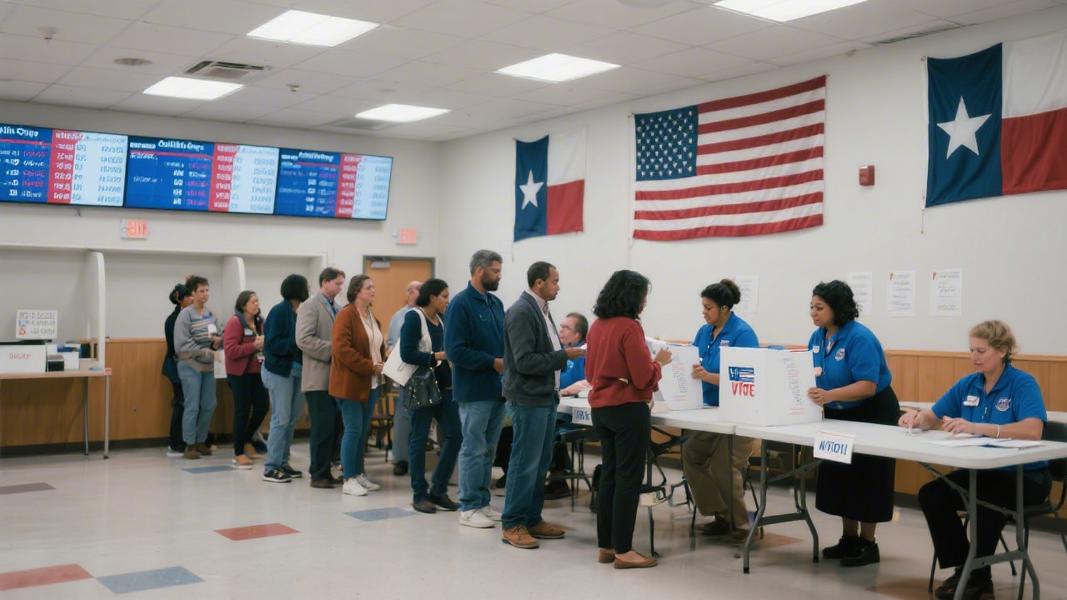
Texas is gearing up for one of its most consequential primary elections in years — and the ballot is anything but short.
On March 3, 2026, voters across the Lone Star State will head to the polls to weigh in on a sweeping slate of races, from the U.S. Senate down to obscure-but-important appellate court seats. Polls open at 7 a.m. and close at 7 p.m., capping off an early voting window that ran from February 17 through February 27. For millions of Texans, the choices made on this day could reshape the state’s political landscape for the better part of a decade.
What’s Actually on the Ballot
The sheer scope of this primary is worth pausing on. At the federal level, voters will decide who advances to compete for U.S. Senator John Cornyn’s seat — a race that’s drawn intense attention from both parties. Every U.S. House seat in the state is also up for grabs, and those contests are being fought on entirely new congressional maps redrawn in 2025, meaning some incumbents are running in redrawn districts that look nothing like what they’ve navigated before. That’s a big deal, and it’s documented in full detail for anyone who wants the complete picture.
Then there’s the statewide card — and it’s a long one. Texas Governor, Lieutenant Governor, and Attorney General are all on the line. So are the Comptroller of Public Accounts, the Commissioner of the General Land Office, and the Commissioner of Agriculture. One Railroad Commissioner seat — currently held by Jim Wright — is being contested. And if that weren’t enough, voters will also weigh in on four Texas Supreme Court seats, three seats on the Court of Criminal Appeals, and three positions on the newly created 15th Court of Appeals.
Still, for most voters, it probably comes down to the top of the ticket.
Dallas County and Local Machinery
At the county level, election officials have been working overtime to make sure everything runs smoothly. Dallas County is providing full election results, early voting rosters, and a range of supporting materials for the March 3 primary — a logistical operation that involves coordinating hundreds of polling locations across one of the state’s most populous counties. For residents looking to track results or dig into historical data, the county’s election portal has it all available.
How competitive are these local races? In many cases, very. Redistricting has a funny way of turning safe seats into genuine contests, and 2026 is no exception.
Results Still Coming Into Focus
As of February 28, 2026 — just days before Election Day — the Texas Secretary of State’s official results page was already live, though with 0% of polling locations reporting in the U.S. Senate race. That’s not a glitch; it’s just the system being staged and ready to populate in real time once votes start flowing in on March 3. The state’s results infrastructure, updated at 5:12 p.m. on the 28th, will serve as the authoritative source as tallies come in throughout election night.
It’s a reminder that for all the noise of campaign season — the ads, the rallies, the spin — the actual machinery of democracy is quietly, methodically getting ready to do its job.
Texas doesn’t do anything small. And this primary is no exception — the question is who, when the dust settles on March 3, will have earned the right to call themselves its next standard-bearers.
