
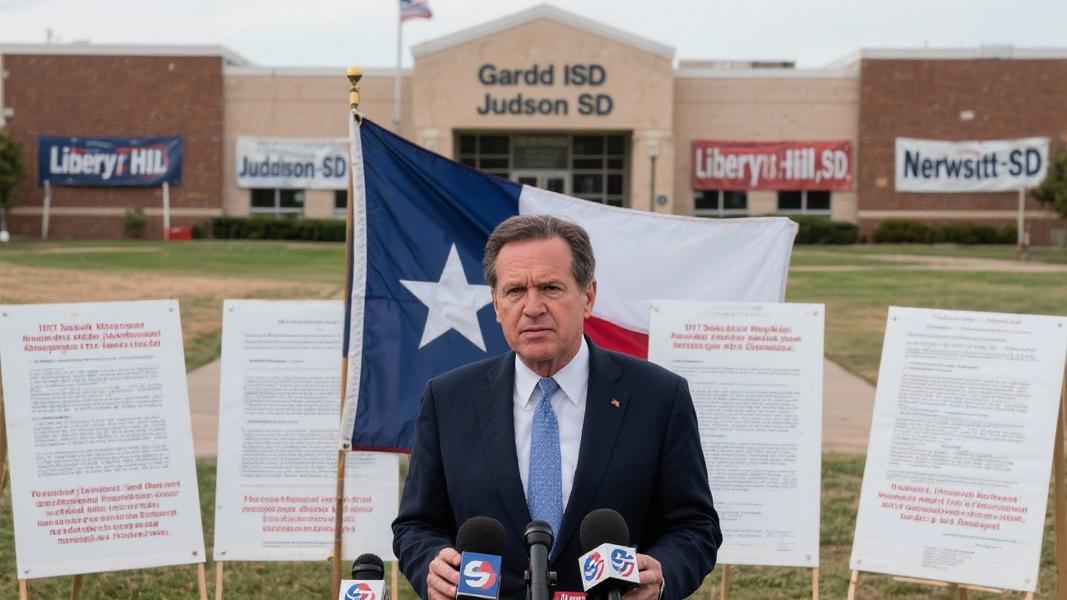
Texas Attorney General Ken Paxton has halted several school districts from using taxpayer funds to promote ballot measures that would raise taxes, calling the practice “unlawful electioneering” and warning other districts to fall in line or face similar action.
The crackdown comes after Paxton sent cease-and-desist letters to Garland, Judson, Liberty Hill, and Northwest Independent School Districts, all of which subsequently removed materials his office deemed inappropriate. “School districts should focus on teaching children reading, writing, and arithmetic instead of unlawfully using taxpayer funds to meddle in elections that will raise taxes even higher,” Paxton stated in a release from his office.
At issue is a Texas law that explicitly prohibits school districts from using “state or local funds or other resources” to advocate for or against candidates, measures, or political parties. The statute effectively bars districts from engaging in political advertising or campaigning using public resources — a line Paxton claims these districts crossed.
A Pattern of Enforcement
This isn’t Paxton’s first foray into policing school communications. Earlier this year, his office filed lawsuits against seven school districts — Denton, Aledo, Denison, Castleberry, Hutto, Huffman, and Frisco — accusing them of similar violations ahead of the March primary elections. Those cases specifically targeted communications where school leaders allegedly encouraged colleagues to vote against candidates who supported private school choice policies.
The legal offensive yielded some success for Paxton’s office. State courts issued injunctions against Denton and Castleberry ISDs and a restraining order against Frisco ISD, effectively muzzling these districts from disseminating further information about specific candidates or education policies.
“Under state law, school districts and other governmental entities are prohibited from using public resources to advocate for or against a specific candidate, party, or measure,” the Attorney General’s office noted in justifying its actions.
Political Motivations?
Critics, however, see something more calculated in Paxton’s aggressive legal approach. Some education advocates suggest the Attorney General is strategically silencing opposition to school voucher programs favored by both himself and Governor Greg Abbott.
“The attorney general is clearly trying to suppress the opposition to the voucher plan that he and the governor favor,” one observer told Education Week. “He has a bully pulpit so he can warn or argue against school district positions… But he also had this obvious legal cudgel, and he used it.”
What constitutes legitimate information-sharing versus prohibited electioneering? That line remains blurry for many school administrators trying to navigate their communications about policies that directly affect their districts.
The Texas chapter of the American Federation of Teachers has expressed concern that Paxton’s actions could have a “chilling effect” on school employees’ civic engagement. The organization argues that administrators and educators may become reluctant to “fulfill their obligation to promote civic engagement and share factual information regarding elections that could have a significant impact on our public schools.”
Drawing the Line
Paxton, for his part, shows no signs of backing down. “ISDs are educational entities, not lobbying firms,” he declared, adding that “illegal electioneering must come to an end, and any school district engaging in such conduct can expect to hear from my office.”
The recent actions against Garland, Judson, Liberty Hill, and Northwest ISDs suggest Paxton remains committed to this enforcement approach. Each district promptly removed materials identified as problematic after receiving the Attorney General’s warning.
As school bond elections and tax measures approach in various districts across Texas, administrators now face heightened scrutiny over how they communicate with their communities. Even factual information about potential impacts of ballot measures could potentially draw legal fire if perceived as advocacy.
For Texas school districts, the message is clear: when it comes to elections and ballot measures, tread carefully — or prepare to defend yourself in court.
