
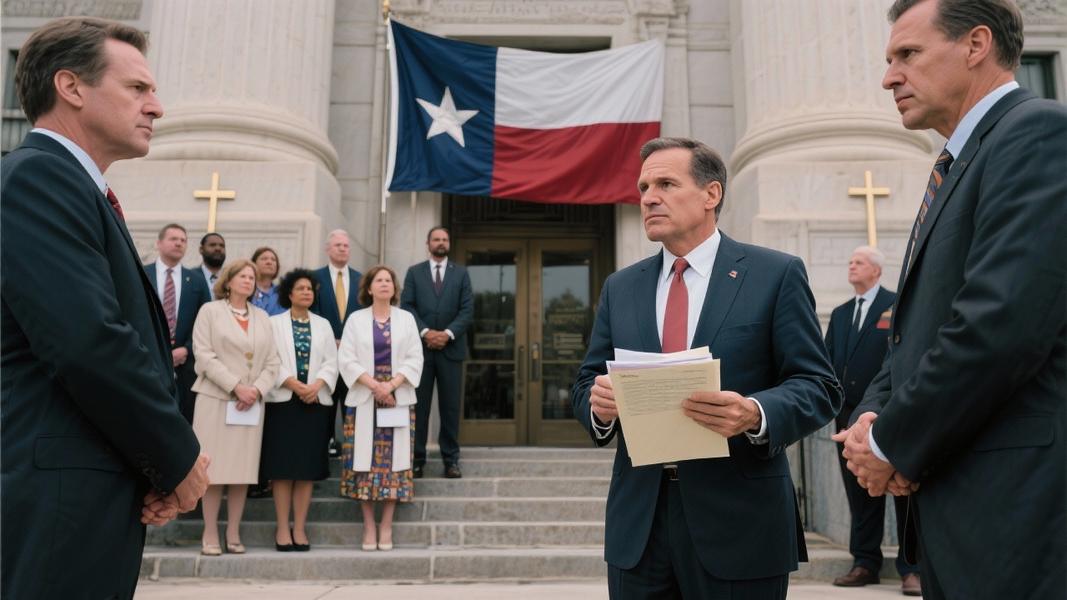
Texas Attorney General Ken Paxton has launched a legal battle against a state agency, claiming it’s forcing religious organizations to choose between their faith and funding for homeless services.
In a lawsuit filed against the Texas Department of Housing and Community Affairs (TDHCA), Paxton challenges regulations that prohibit religious activities within programs receiving state and federal funding for homelessness and housing initiatives. The restrictions, he argues, effectively discriminate against faith-based organizations solely because of their religious character.
Faith vs. Funding: The Core Conflict
The dispute centers on TDHCA rules that require organizations to agree not to engage in religious activities within their homeless assistance programs as a condition for receiving public funds. According to Paxton’s office, these stipulations force religious groups to compromise their fundamental beliefs to access the same resources available to secular organizations.
“State agencies have no authority to force Christians and other religious organizations to censor their beliefs just to serve their communities,” Paxton stated when announcing the legal action. “Constitutionally protected religious liberty must be upheld in Texas and across the country.”
Why does this matter beyond church walls? Faith-based organizations have historically played a significant role in providing services to homeless and low-income populations across Texas, often operating shelters and assistance programs in communities where government services fall short.
Constitutional Questions
The lawsuit frames the issue as a constitutional violation, arguing that the TDHCA regulations impermissibly condition access to public benefits on a religious organization’s willingness to alter or abandon core elements of its faith. This, Paxton’s office contends, runs afoul of First Amendment protections for religious liberty.
But it’s not just about constitutional principles. The practical impact could determine which organizations can participate in addressing Texas’s homeless challenges, potentially reshaping the landscape of service providers in communities statewide.
This isn’t Paxton’s first foray into religious liberty battles. The lawsuit follows previous legal action against Texas higher education work-study programs that allegedly discriminated against religious students, reflecting what appears to be a broader campaign against regulations that limit funding based on religious viewpoints.
Can state agencies require faith-based organizations to separate their religious activities from publicly funded programs? That’s the question at the heart of this case, and one that touches on longstanding tensions between government neutrality toward religion and the free exercise rights of religious groups.
As the case moves through the courts, homeless service providers across Texas will be watching closely. For many faith-based organizations, their religious mission is inseparable from their service work—a position that now places them at the center of this latest church-state legal battle.
