
Texas AG Paxton Blocks School Districts from Using Public Funds for Pro-Tax Ballot Measures
Texas Attorney General Ken Paxton has cracked down on several school districts for allegedly misusing taxpayer dollars to promote ballot propositions that would raise taxes, triggering immediate compliance from the targeted schools.
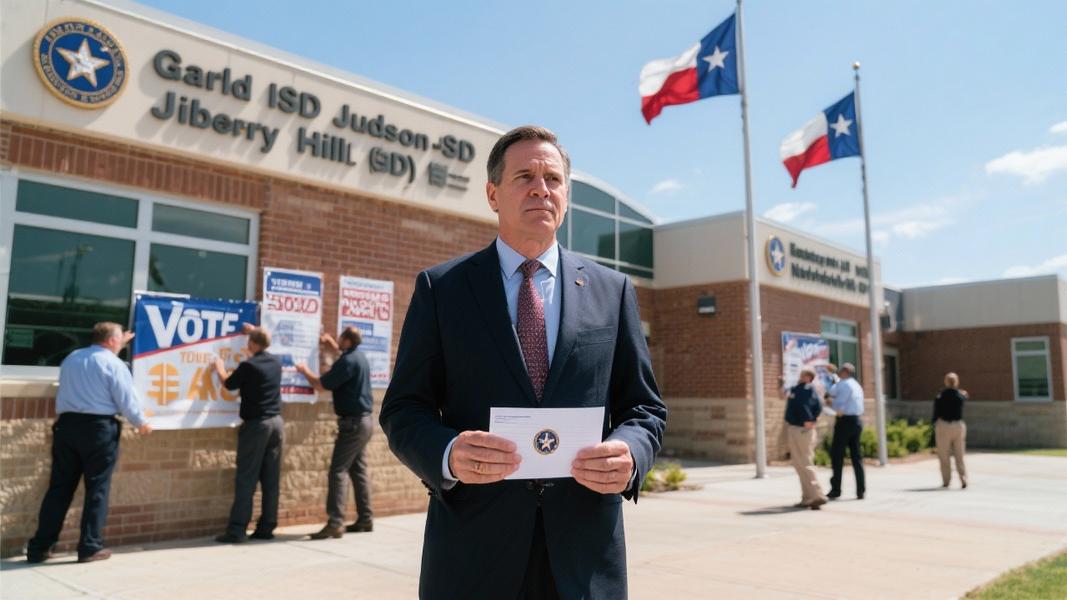
The attorney general’s office investigated and sent warning letters to Garland, Judson, Liberty Hill, and Northwest Independent School Districts, asserting they violated Texas election laws by using public resources to campaign for tax-increasing measures.
“School districts should focus on teaching children reading, writing, and arithmetic instead of unlawfully using taxpayer funds to meddle in elections that will raise taxes even higher,” Paxton stated in comments accompanying the enforcement action.
Legal Boundaries for School Communications
Texas law explicitly prohibits school boards from using public funds or resources to campaign for or against any candidate, measure, or political party. This includes ballot propositions that would increase local tax burdens — a restriction that Paxton’s office claims these districts clearly violated.
The warning letters specifically referenced violations related to promoting Proposition A, a state-required vote on maintaining operational funding and accessing additional revenue. After receiving notice from the attorney general’s office, the districts quickly removed the questioned materials and agreed to comply with state requirements.
“ISDs are educational entities, not lobbying firms,” Paxton declared. “Illegal electioneering must come to an end, and any school district engaging in such conduct can expect to hear from my office.”
Broader Pattern of Enforcement
This isn’t Paxton’s first move against school districts over political communications. In a separate but related action, his office has taken even stronger measures against seven other districts — Denton, Aledo, Denison, Castleberry, Hutto, Huffman, and Frisco — for allegedly using district resources to urge staff to vote against candidates supporting school voucher policies.
The legal consequences have been swift. State courts have already granted injunctions against Denton and Castleberry ISDs and issued a restraining order against Frisco ISD, effectively preventing them from disseminating further information about specific candidates or policies affecting public schools.
Is this simply enforcement of election law, or something more politically charged? Critics suggest the latter.
“The attorney general is clearly trying to suppress the opposition to the voucher plan that he and the governor favor,” one education policy observer told Education Week. “He has a bully pulpit so he can warn or argue against school district positions. He has plenty of options at his disposal. But he also had this obvious legal cudgel, and he used it.”
The actions represent a growing tension between state officials and local school districts over what constitutes legitimate public information versus prohibited political advocacy — a distinction that’s becoming increasingly contentious as education policy remains a political battleground in Texas.
