
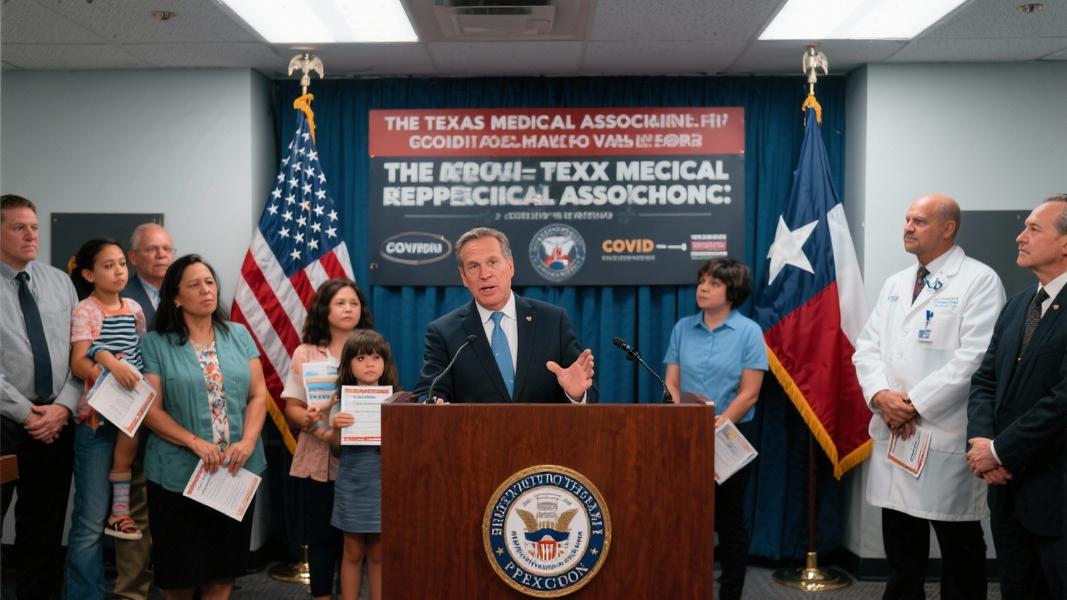
Texas Attorney General Ken Paxton has publicly rebuked the Texas Medical Association for rejecting federal guidance that gives parents more say in COVID-19 vaccination decisions for their children — calling the move “outrageous” and demanding an immediate reversal.
The confrontation centers on recent changes by the CDC’s Advisory Committee on Immunization Practices (ACIP), which shifted from universal COVID-19 vaccination recommendations for children to a “shared clinical decision-making” approach between parents and physicians. Paxton praised these federal changes as a victory for personal freedom while accusing the TMA of “undermining science-backed recommendations.”
A Clash Over Medical Guidance
“It’s outrageous TMA is undermining ACIP’s new federal guidelines for COVID-19 vaccines that expand personal freedom and mitigate the medical tyranny of the Biden Administration,” Paxton said in a statement released Monday. “TMA has chosen to try and ignore the overwhelming evidence and science-backed recommendations from ACIP that ensure Texas children are not subjected to a one-size-fits-all COVID-19 vaccine mandate.”
The CDC’s updated guidance, implemented last month, represents a significant shift in approach. Rather than recommending universal vaccination for all children regardless of circumstances, the federal agency now advocates for individualized decisions made jointly by parents and healthcare providers.
What’s more, ACIP has begun issuing informed consent forms detailing both risks and benefits of COVID-19 vaccination — a move that aligns with recent Texas legislation.
New Legal Requirements
The dispute comes just weeks after House Bill 4535 took effect in Texas. The legislation, passed during the 89th Texas Legislature and implemented on September 1, 2025, requires physicians to obtain written informed consent before administering any COVID-19 vaccine.
Under the new law, physicians must provide a standardized information sheet covering several aspects of the vaccines, including potential side effects, the expedited development process, long-term study status, manufacturer liability protection, and information about the federal Vaccine Adverse Event Reporting System.
The TMA has previously fought against similar legislation. Just last session, the organization successfully defeated Senate Bill 95, which would have significantly expanded physician liability for failing to obtain additional informed consent for vaccinations.
Critics of that bill argued it would have deterred vaccination efforts and fostered mistrust. “By adding legal liability and paperwork, it would feed the perception doctors are trying to hide some risk or danger when it comes to receiving vaccines,” one opponent noted. “This was a bill that would have amplified the mistrust we are seeing not only in vaccines, but also in science and medicine more generally.”
Balancing Act
Despite the current controversy, the TMA continues to provide COVID-19 vaccination resources to Texas physicians. The organization maintains information portals with clinical guidance and operational support for vaccine administration.
Is this just the latest skirmish in the ongoing tension between public health mandates and individual choice? The debate touches on fundamental questions about parental authority, medical expertise, and the state’s role in health decisions.
For now, Paxton is urging physicians across Texas to speak out against the TMA’s position. “This decision should be reversed immediately,” his statement concluded, “and I encourage every Texas physician to speak out against this brazen, flawed shift by TMA.”
Meanwhile, families and physicians throughout the state are navigating this evolving landscape of vaccination guidance, trying to make sense of conflicting messages from medical associations, public health officials, and political leaders — all while making decisions that will impact children’s health for years to come.
