
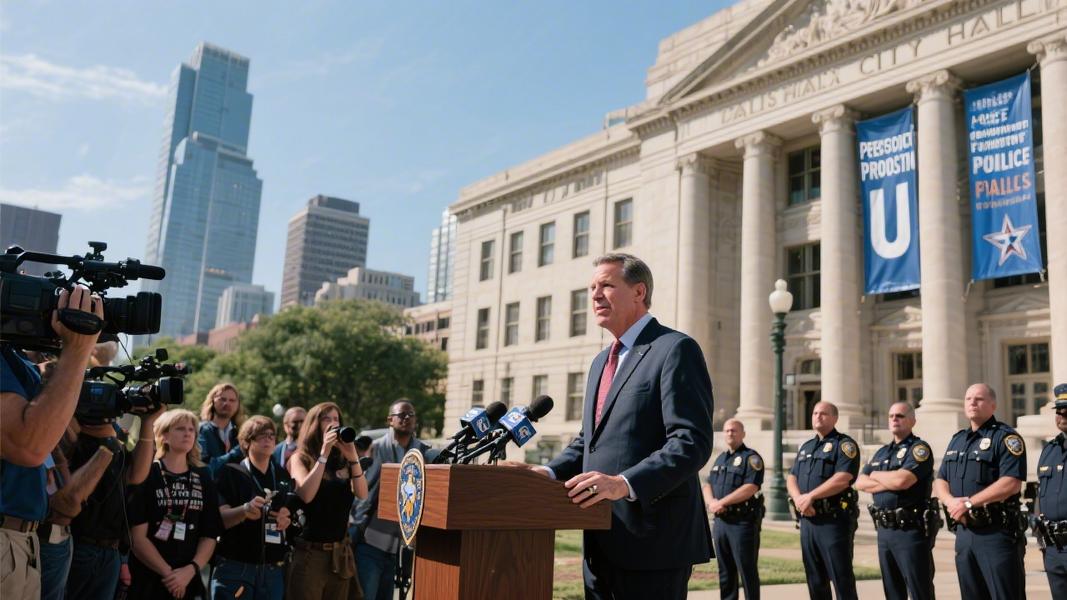
Texas Attorney General Ken Paxton has launched a high-stakes legal battle against Dallas officials, accusing the city of shortchanging its police department despite voters’ clear mandate for increased funding.
In a lawsuit filed Thursday, Paxton targeted Dallas City Manager Kimberly Bizor Tolbert and Chief Financial Officer Jack Ireland Jr., alleging they’ve failed to properly implement Proposition U — a measure approved by Dallas voters in November 2024 that requires 50% of new city revenue to fund police and fire pensions while maintaining a minimum force of 4,000 officers.
“I filed this lawsuit to ensure that the City of Dallas fully funds law enforcement, upholds public safety, and is accountable to its constituents,” Paxton said in a press release. “When voters demand more funding for law enforcement, local officials must immediately comply.”
A $159 Million Dispute
At the heart of the conflict lies a significant discrepancy in revenue calculations. Paxton claims Dallas officials determined the city’s excess revenue at just $61 million — far below the $220 million his office believes should be available under Proposition U’s formula. That’s a $159 million difference that could dramatically impact police staffing and compensation.
The lawsuit also alleges the city failed to conduct a mandatory third-party police compensation survey required by the proposition.
“As members of law enforcement across the country increasingly face attacks from the radical Left, it’s crucial that we fully fund the brave men and women in law enforcement defending law and order in our communities,” Paxton stated. “This lawsuit aims to do just that by ensuring Dallas follows its own charter and gives police officers the support they need to protect the public.”
Why has Dallas struggled to meet its policing goals? The proposition itself emerged from years of frustration over stalled police hiring efforts. With current staffing levels hovering around 3,100 officers — nearly 1,000 short of the voter-approved minimum — advocates argue competitive pay is the missing ingredient.
Grassroots Origins
Proposition U didn’t materialize from thin air. The measure was championed by Morty Bennett and the HERO Group, which gathered an impressive 170,000 signatures to place it on the ballot. It narrowly passed with just over 50% of the vote.
“The city has been saying they will get from 3,100 officers to 4,000 for years and years, and they never make any progress,” Morty Bennett, CEO and chairman of the Ashford Group and Companies, explained during the 2024 campaign. “They blame that they can’t recruit. They can’t recruit because they don’t pay enough. It is so simple.”
The legal action demands city officials allocate the disputed excess revenues to police pensions, officer pay, and hiring initiatives to meet the 4,000-officer threshold established by voters.
Dallas city officials haven’t publicly responded to the lawsuit, but the case represents yet another flashpoint in the ongoing national debate over police funding and staffing levels — with Texas officials taking an aggressive stance against what they perceive as local government resistance to voter-approved public safety measures.
For Dallas residents caught in the crossfire, the outcome may ultimately determine whether their city can overcome its persistent police staffing challenges or remain locked in the same cycle that prompted voters to take matters into their own hands in the first place.
