
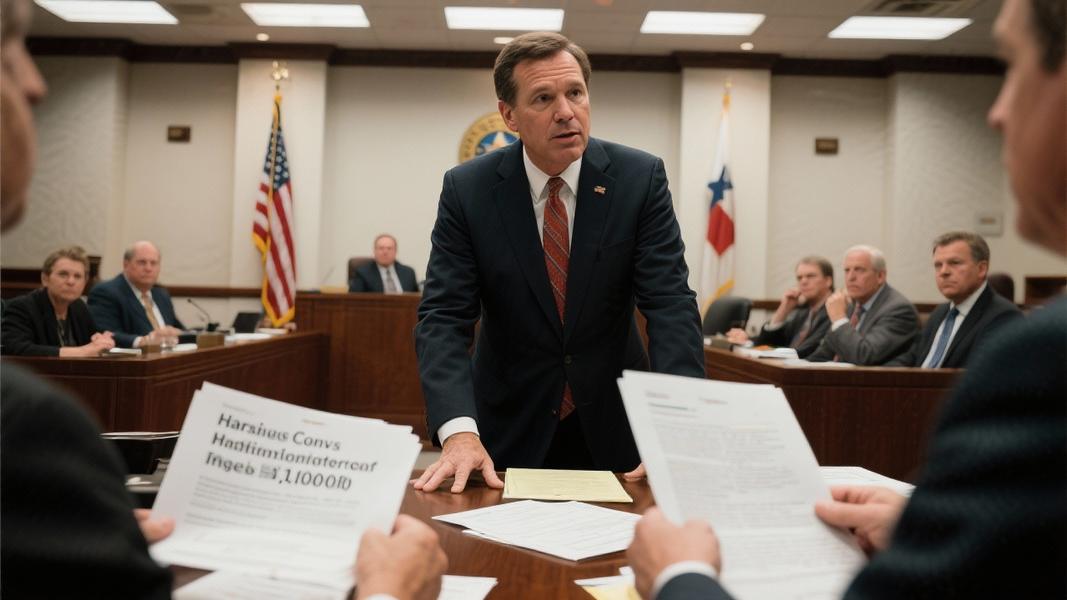
Texas Attorney General Ken Paxton has filed a lawsuit against Harris County, alleging officials unlawfully allocated more than $1.3 million in taxpayer funds to nonprofit organizations that help illegal immigrants fight deportation proceedings.
The suit, filed this week, claims the Harris County Commissioners Court violated the Texas Constitution by approving the funds for what Paxton described as “radical leftist organizations” dedicated to opposing deportations.
Constitutional Challenge
“We must stop the left-wing radicals who are robbing Texans to prevent illegals from being deported by the Trump Administration,” Paxton said in a statement accompanying the lawsuit. “Beyond just being blatantly unconstitutional, this is evil and wicked. Millions upon millions of illegals invaded America during the last administration, and they must be sent back to where they came from.”
The funds in question were approved in a 4-1 vote by the Harris County Commissioners Court and earmarked for distribution to several organizations including the Galveston-Houston Immigrant Representation Project, Justice for All Immigrants, Kids in Need of Defense (KIND), Refugee and Immigrant Center for Education and Legal Services, and BakerRipley.
At the heart of Paxton’s legal argument is a provision in the Texas Constitution that prohibits government entities from giving public money to private organizations without serving a legitimate public purpose. The Attorney General argues that subsidizing legal defense for people facing deportation doesn’t meet this standard.
Ongoing Political Battle
Is this just the latest skirmish in a broader political war? The lawsuit continues a pattern of legal challenges Paxton has mounted against Harris County, which is controlled by Democrats in a state with Republican leadership.
Political scientists and legal experts note that these confrontations often blur the line between constitutional principles and partisan politics. “There are valid legal arguments on both sides … but it’s become, instead of a judicial battle, a political one,” Brandon Rhodes observed when discussing similar legal conflicts between the state and county.
This isn’t the first time Paxton has targeted Harris County programs. His office has previously challenged the county’s guaranteed income program and other initiatives, actions that political analysts suggest resonate with his conservative base.
“Paxton’s lawsuit continues his long-standing battle against the Democratic-controlled county, which many conservative voters in the state appreciate,” political scientist Jay Taylor noted in a recent analysis.
The organizations receiving the contested funds provide legal representation and other services to immigrants facing deportation proceedings. Supporters argue these services ensure due process rights are protected, while critics contend they undermine federal immigration enforcement.
$1,344,751 – that’s the exact amount Harris County allocated to these immigrant support organizations, a sum that now sits at the center of this constitutional dispute.
For Harris County officials, the battle over these funds represents more than just a budget line item – it’s part of a larger struggle over local control versus state authority that has intensified in recent years across Texas.
As the case moves through the courts, it will likely serve as yet another test of where the boundaries lie between state power and county autonomy – and whether immigration policy will continue to be fought in courtrooms as much as in legislatures.
