
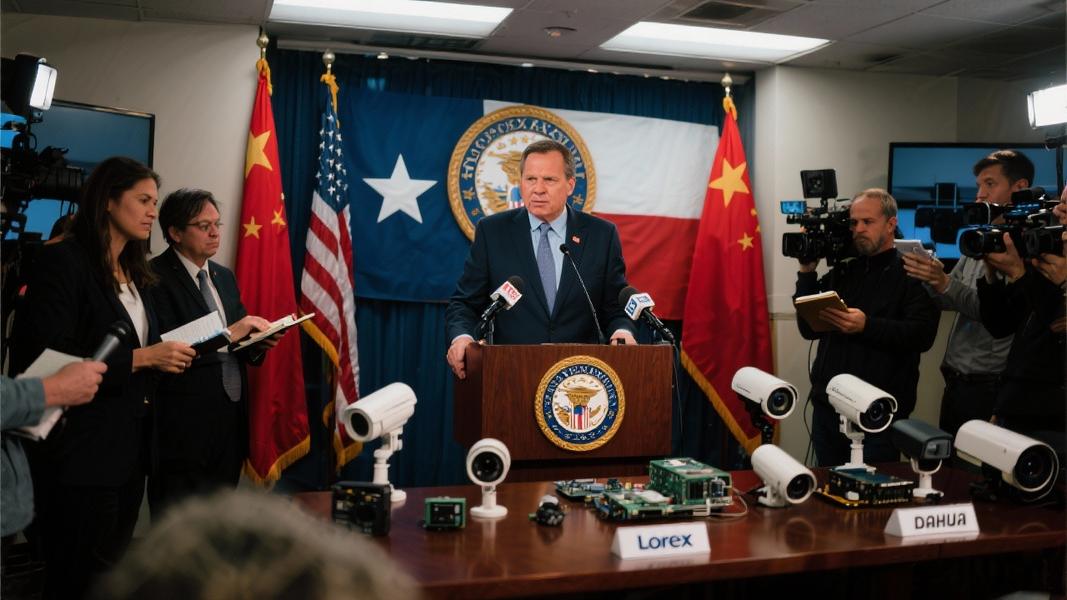
Texas Attorney General Ken Paxton has launched a sweeping investigation into several tech companies, including security camera manufacturer Lorex Technology, citing national security concerns over their potential ties to China. The move marks the latest escalation in a growing push by state officials to confront what they perceive as foreign threats embedded in everyday consumer technology.
“Texans should never have to worry that the devices protecting their homes could be tied to foreign adversaries,” Paxton said in a statement. “Any company that gives the CCP a foothold in American life will face the full force of Texas law.”
Growing Pattern of Enforcement
This isn’t Paxton’s first foray into tech regulation. His office recently secured a massive $1.4 billion settlement with Meta over allegations of unlawful data collection practices that violated Texas privacy laws. The Lorex investigation appears to be part of a broader initiative targeting at least 15 technology companies operating in the state.
What’s driving this sudden scrutiny? Beyond the stated security concerns, the investigations come amid a backdrop of heightened tensions between the U.S. and China in the technology sphere. Other state attorneys general have also begun examining Chinese-connected firms including TP-Link, Lorex, and e-commerce platform Temu over similar privacy and security issues.
The timing couldn’t be more relevant. Just last month, cybersecurity firm F5 disclosed a major breach where sophisticated nation-state actors had reportedly accessed their systems for at least 12 months before detection. While no direct connection has been made to the Texas investigations, the incident has heightened awareness of vulnerabilities in technology infrastructure.
Regulatory Landscape Evolving Rapidly
The tech investigations are unfolding against a rapidly evolving regulatory environment. Nearly all U.S. states have now enacted some form of legislation addressing deepfakes and AI-generated content, with federal requirements scheduled to take effect in 2026.
Consumer advocates have largely welcomed the increased oversight, pointing to the proliferation of sophisticated scams targeting Americans. Bad actors are increasingly deploying advanced techniques, particularly during high-volume shopping and travel periods, according to recent analyses of fraud patterns.
But the crackdown has its critics. Some industry observers have questioned whether state-level enforcement actions might create a patchwork of conflicting regulations that could ultimately harm innovation. Others wonder if the focus on Chinese connections might overlook equally significant privacy concerns with domestic technology providers.
Could this be the beginning of a new era in tech regulation? The investigations signal that state officials are no longer content to wait for federal action on what they view as pressing national security concerns. For consumers caught in the middle, the implications remain unclear — better protection of their data, or just another salvo in an increasingly complex technological cold war.
As the investigations proceed, one thing is certain: the days of tech companies operating with minimal oversight appear to be waning, and the devices we invite into our homes face unprecedented scrutiny over who might be watching from the other side.
