
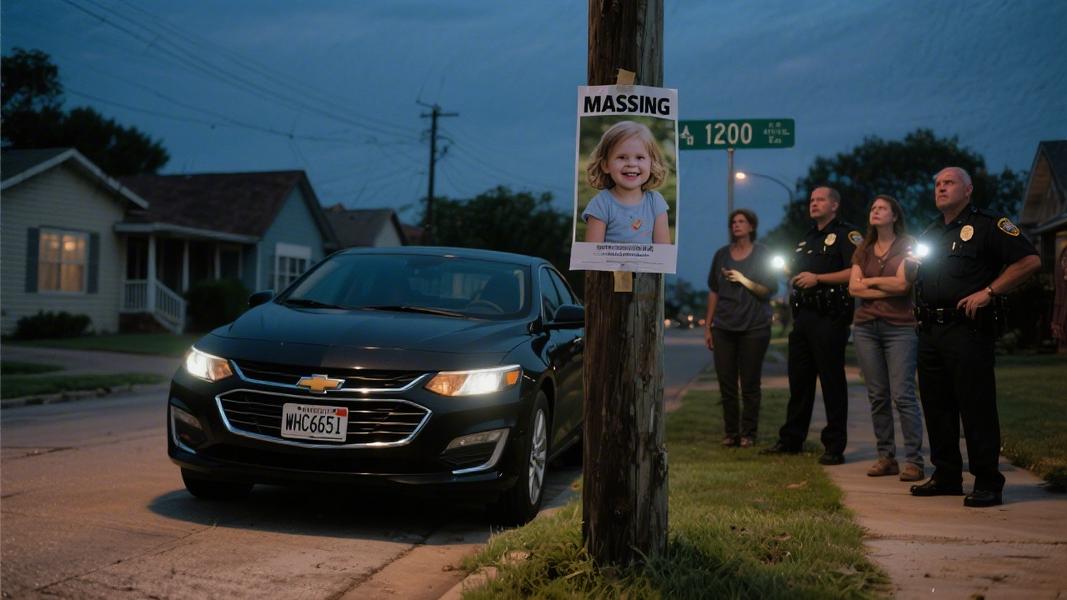
An AMBER Alert is only as powerful as the information behind it — and right now, every second counts.
Texas authorities have issued an AMBER Alert for Jolea Calabrese, a child whose disappearance has triggered an urgent, statewide search. The alert represents law enforcement’s most serious tool for mobilizing the public in cases of child abduction, and officials are urging anyone with information to come forward immediately. Details surrounding the circumstances of the disappearance remain critical, and investigators are working around the clock to piece together a timeline.
What We Know — and What We Don’t
AMBER Alerts in Texas are coordinated through a network of law enforcement agencies, media partners, and the public. They’re not issued lightly. To activate the system, authorities must confirm that a child has been abducted, that the child faces serious risk of injury or death, and that enough descriptive information exists to make a public alert genuinely useful. The fact that one was issued for Jolea signals that officials believe time is of the essence.
Still, the investigation is fluid. These cases move fast — sometimes faster than official channels can keep up with — and the picture available to the public in the early hours rarely reflects the full scope of what investigators are working with behind closed doors.
The Role of the Public
Here’s the uncomfortable truth about AMBER Alerts: they work best when people actually pay attention. Studies have shown that the majority of successful recoveries tied to AMBER Alerts involve a tip from an ordinary citizen — someone who saw a car, a face, a detail that didn’t quite fit. It’s not glamorous. But it’s effective.
Texas residents are being asked to stay alert, check their surroundings, and report anything suspicious to local law enforcement or the National Center for Missing & Exploited Children at 1-800-THE-LOST. Even a small detail — a license plate, a location, a timestamp — can break a case wide open.
A System Built for Moments Like This
The AMBER Alert system, named after Amber Hagerman, a nine-year-old girl abducted and murdered in Arlington, Texas, in 1996, was born out of tragedy. What started as a local radio initiative in the Dallas-Fort Worth area has since expanded into a nationwide framework coordinated across all 50 states. The system has been credited with helping recover more than 1,100 children since its inception — a number that represents real families, real lives pulled back from the edge.
That said, no system is perfect. Critics have long pointed out that alert fatigue — the tendency for people to tune out repeated notifications — can dull the public’s response over time. It’s a tension authorities haven’t fully resolved. But in a case like Jolea’s, the hope is that urgency cuts through the noise.
What Happens Next
Law enforcement will continue to coordinate across jurisdictions, pulling surveillance footage, interviewing witnesses, and following every available lead. The first 24 to 48 hours in a missing child case are widely considered the most critical — a window during which the odds of a safe recovery remain highest.
Anyone with information is urged not to wait. Don’t assume someone else has already called it in. Don’t decide it’s probably nothing. In these cases, the tip that feels smallest is sometimes the one that matters most.
Jolea Calabrese is out there somewhere. The question is whether the right person sees something — and decides to pick up the phone.
