
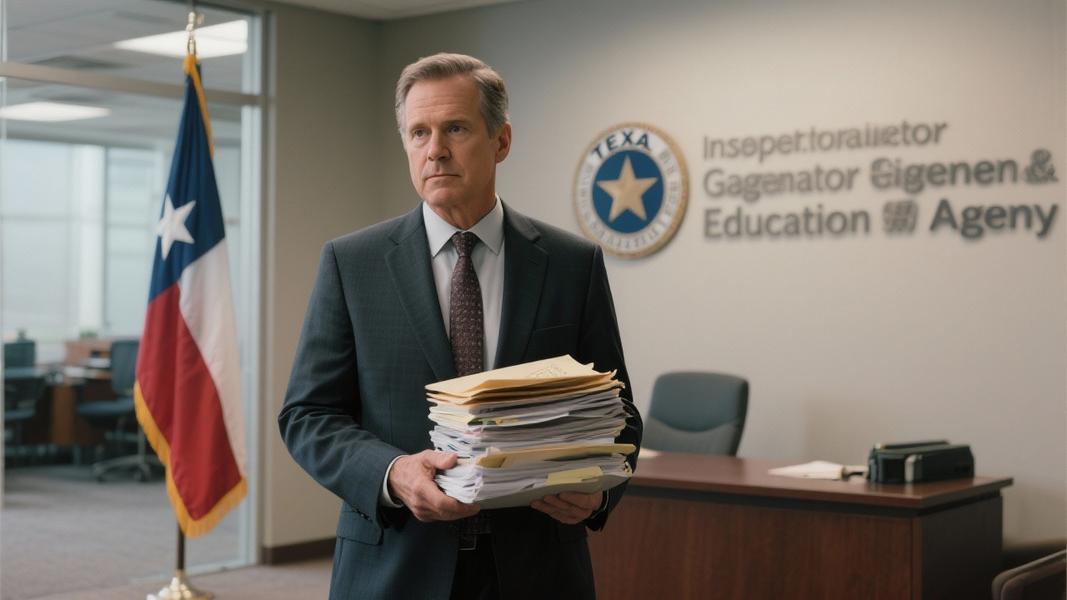
Texas education officials have appointed the state’s first-ever watchdog to crack down on teacher misconduct, a move that signals a more aggressive approach to protecting students amid rising concerns about classroom safety.
The Texas Education Agency announced on February 4 that Levi Fuller will serve as the inaugural Inspector General for Educator Misconduct, a role created specifically to oversee enforcement policies affecting nearly 5.5 million public school students across the state. The appointment comes as the agency faces mounting pressure to address what some officials describe as an alarming increase in teacher misconduct allegations.
“I look forward to the impactful work Levi Fuller will do in service of our students, families and school systems,” said Texas Education Commissioner Mike Morath, who personally appointed Fuller to the position.
What’s driving this unprecedented move? Sexual assault allegations in classrooms appear to be a primary catalyst. Fuller himself acknowledged this reality in an interview with Texas Scorecard, stating bluntly: “I can tell you that one of the big things, and the reason why this job was created, was because of the sexual assault allegations in classrooms.”
Targeting the ‘Flawed Few’
Fuller’s mandate encompasses a broad range of responsibilities, including coordinating investigations into teacher misconduct, recommending sanctions against educators found to have violated policies, and maintaining the state’s “Do Not Hire Registry” – a database of educators deemed unfit to work with students.
The new inspector general position appears designed to centralize and strengthen the TEA’s response to what officials have characterized as the “Flawed Few” – teachers whose misconduct threatens student safety and undermines public trust in the education system.
In accepting the role, Fuller struck a personal note. “I know the positive impact my teachers had on my life, and I want all students in our public schools, including my own children, to have that same experience,” he stated. “My mandate from Commissioner Morath is to do everything in the TEA’s power to ensure a safe learning environment for all Texas students, and I intend to see that mandate fulfilled.”
The timing of the announcement has raised eyebrows in some education circles. The inspector general appointment was revealed alongside new guidance on student protests, leading some to question whether the TEA is taking a more interventionist approach to school governance overall.
A New Era of Accountability?
Education watchdogs are closely monitoring how Fuller’s office will operate in practice. Will it focus primarily on the most serious cases of misconduct, or will its mandate expand to include other forms of teacher behavior deemed problematic?
The creation of this position follows years of debate about the proper balance between protecting students and ensuring due process for educators accused of wrongdoing. Teacher unions have historically expressed concern about overzealous enforcement that might punish educators based on unsubstantiated allegations.
Still, few dispute the need for robust systems to identify and remove genuinely dangerous individuals from classrooms. The challenge for Fuller will be navigating these competing interests while fulfilling his core mission of student protection.
As Texas embarks on this new approach to educator oversight, the rest of the country may be watching. If successful, other states could potentially adopt similar inspector general models to address teacher misconduct within their own education systems.
For now, Fuller faces the daunting task of building an effective enforcement system from the ground up – one that can identify bad actors without casting suspicion on the vast majority of Texas teachers who serve their students with dedication and integrity.
