
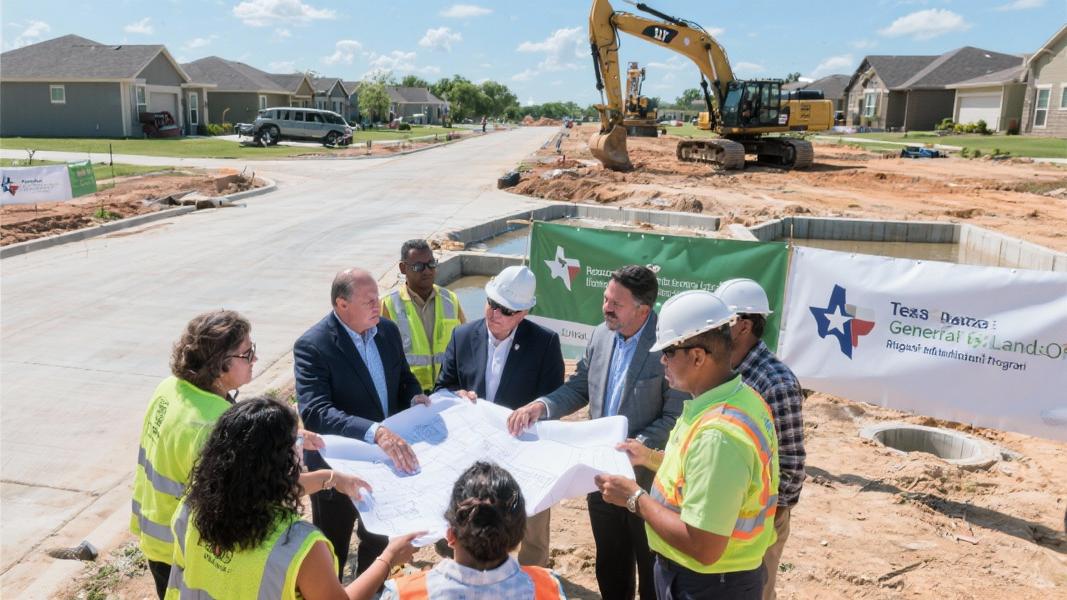
Texas Land Commissioner Dawn Buckingham has approved more than $45 million in regional mitigation funds for critical infrastructure improvements in Brazoria County and the cities of Buffalo and Clute, marking a significant investment in the state’s disaster resilience efforts.
The Texas General Land Office (GLO) announced the funding as part of its broader mission to strengthen communities against future natural disasters, with projects targeting essential services including roads, drainage, sewer systems, and water detention facilities.
“The GLO is delivering results that make Texas stronger and safer,” said Commissioner Buckingham in a statement. “These funds will protect families, support communities, and prepare our state for the challenges ahead.”
Building Resilience Where It’s Needed Most
The newly approved funding represents just a fraction of the GLO’s massive $1.16 billion Community Development Block Grant Mitigation program, which draws federal dollars from the Department of Housing and Urban Development (HUD). At least half of these resources must benefit low-to-moderate income individuals, ensuring improvements reach vulnerable populations often hardest hit by disasters.
What makes this approach different from past recovery efforts? Rather than a one-size-fits-all strategy, the program empowers local Councils of Governments (COGs) to develop their own Methods of Distribution after gathering public input. This regional focus allows communities to prioritize their unique hazards and vulnerabilities, whether they face greater threats from flooding, wind damage, or other disaster risks, according to program guidelines.
“By working hand in hand with local leaders, we are ensuring that federal resources are turned into real improvements that Texans can count on,” Buckingham added.
The collaborative approach has already yielded substantial investments across the state. Nueces County received $31.2 million for sewer, drainage, and water improvements, while cities like Missouri City and Patton Village have secured funding for critical drainage and road infrastructure projects.
Unprecedented Scale of Recovery
Texas faces a monumental task in rebuilding and strengthening communities affected by repeated disasters. The GLO currently administers more than $14.3 billion in disaster recovery and mitigation funding in response to eight different disasters, making this one of the largest recovery efforts in the state’s history.
The Capital Area Council of Governments (CAPCOG) offers another example of the program’s reach, with nearly $9.2 million allocated among four projects in Bastrop County and the cities of Elgin, Schulenburg, and Smithville — communities repeatedly devastated by storms and flooding.
“These GLO mitigation funds represent hope and security for Texans,” Buckingham noted. “By prioritizing local needs and cutting through bureaucratic delays, we ensure these projects will directly impact families, businesses, and livelihoods in meaningful ways.”
HUD defines mitigation as activities that increase resilience to disasters and reduce long-term risk of loss of life, injury, property damage, and suffering by lessening the impact of future disasters. But for communities that have weathered multiple catastrophes, these investments represent something more immediate: a chance to break the cycle of destruction and rebuilding that has defined life in disaster-prone regions.
“Together, we are building a future where every community has the resilience to thrive,” Buckingham said — a lofty goal in a state where the next storm is never a question of if, but when.
