
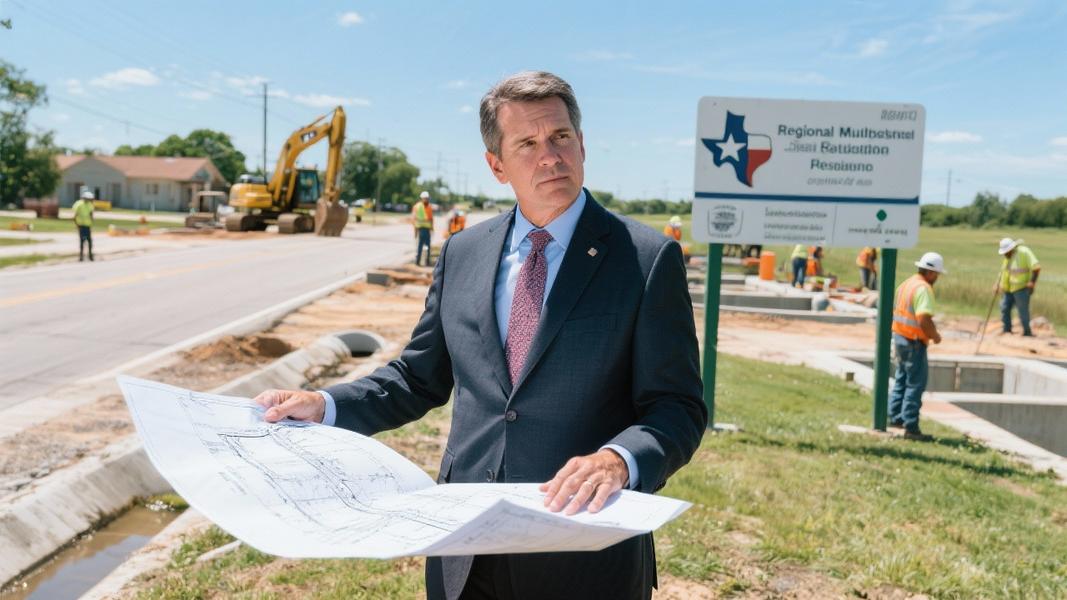
Texas is fortifying its infrastructure against future disasters with a massive influx of federal funds, as the state’s General Land Office continues approving millions for critical upgrades across multiple counties and municipalities.
Land Commissioner Dawn Buckingham announced this week that the GLO has approved $8.3 million in regional mitigation funds to improve infrastructure in Jackson County and the cities of Edna, Ganado, La Ward, and Bastrop. The money will upgrade roads, drainage, sewer systems, and water detention facilities as part of a broader program focused on local priorities, the agency confirmed.
“The Texas General Land Office is proud to lead with action, ensuring that communities have the resources they need to weather future challenges with confidence,” said Commissioner Buckingham. “These funds are a powerful step toward improving infrastructure and securing a brighter future for several Texas communities.”
Billions for Disaster Resilience
The funding represents just a fraction of the $1.17 billion allocated to the GLO’s Regional Mitigation Program through Community Development Block Grant Mitigation funds from the U.S. Department of Housing and Urban Development. Federal guidelines stipulate that at least 50% of these funds must benefit low-to-moderate income individuals.
What exactly counts as “mitigation”? According to HUD definitions, it includes activities that increase resilience to disasters and reduce long-term risks of loss of life, injury, property damage, and suffering by lessening the impact of future disasters.
The GLO has been on something of a funding spree throughout 2025. In a series of announcements, the office has approved $107.8 million for infrastructure across multiple counties and cities, $45 million for Fayette and Nueces counties along with cities including Bryan and Missouri City, $58.3 million for other counties and cities, and $30.8 million for several counties including Harris and Fort Bend.
“Texans know how to face challenges head-on, and the GLO is proud to stand shoulder to shoulder with communities as we invest in stronger, safer infrastructure,” Buckingham said in July during one of the funding announcements.
Local Priorities Drive Decision-Making
The funds are being distributed through a carefully structured process. The Texas GLO administers the program under a federally approved State Action Plan, which required regional councils of governments to develop Method of Distribution plans for allocating funds based on public participation.
Among the largest allocations in the program are $15.76 million for Dickinson County and $14.19 million for San Jacinto County, highlighting the targeted approach to disaster risk reduction.
A common thread throughout the announcements has been Commissioner Buckingham’s emphasis on cutting through bureaucratic red tape. “By prioritizing local needs and cutting through bureaucratic delays, we ensure these projects will directly impact families, businesses, and livelihoods in meaningful ways,” she said in a July statement.
Specific Projects Taking Shape
How detailed are the funding allocations? In May 2025, the GLO outlined specific projects including $31.25 million for sewer, drainage, and water improvements in Nueces County alone.
“Every community deserves the tools to prepare for and recover from future disasters,” Buckingham noted at the time. “These investments represent a shared commitment to building a more resilient Texas.”
The broader Regional Mitigation Program is designed to reduce risks and impacts of natural disasters across Texas communities that have faced repeated flooding and hurricane damage over the past decade. By focusing on critical infrastructure like drainage systems and roadways, officials hope to minimize damage from future storms.
For residents of places like Jackson County and the city of Edna, these improvements won’t just mean better infrastructure — they represent a concrete step toward security in a state where extreme weather events have become increasingly common.
“By putting local priorities first and delivering results,” Buckingham said, “the GLO is proving that together we can build a Texas that stands resilient, united, and ready for tomorrow.”
