
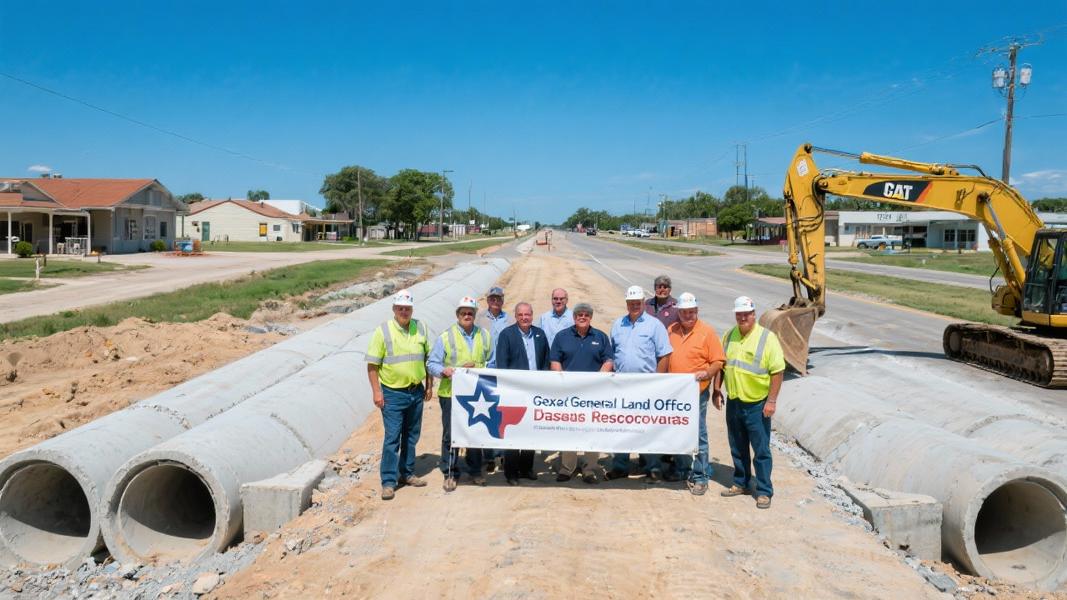
Texas communities battered by recent disasters are getting a multimillion-dollar lifeline for critical infrastructure improvements. The Texas General Land Office (GLO) has approved over $12 million in grants aimed at strengthening roads, drainage systems, and other vital infrastructure in four communities still recovering from natural disasters.
The funding, announced this week through the Regional Mitigation Program (RMP) and Disaster Recovery Reallocation Program (DRRP), targets Walker County and the cities of Holiday Lakes, Huntsville, and Port Aransas — areas that have faced significant challenges from past storms and flooding events.
Building Resilience Beyond Recovery
“Texans know that our strength comes from standing together in the face of challenges,” said Commissioner Buckingham. “These investments are more than concrete and steel — they are a commitment to safer neighborhoods, stronger communities, and a more resilient Texas.”
The newly approved funds will support infrastructure projects designed not just to repair damage from past disasters, but to mitigate risks from future events. It’s a forward-thinking approach that officials say will save money and protect lives in the long run.
Where exactly is this money coming from? The bulk of the funding stems from the GLO’s substantial $1.17 billion allocation in Community Development Block Grant Mitigation funds, specifically earmarked for the Regional Mitigation Program. This program was established to reduce the risks and impacts of future natural disasters through strategic infrastructure improvements.
Additional support comes through the Disaster Recovery Reallocation Program, which cleverly repurposes de-obligated and unutilized funds from previous disaster grants. Rather than letting these resources go to waste or be recaptured by HUD, the GLO redirects them toward communities still struggling to rebuild.
Local Impact
For residents of Holiday Lakes, a small city that has repeatedly found itself underwater during severe weather events, the funding represents more than just infrastructure improvements. It’s about peace of mind.
“When you’ve seen your streets turn into rivers multiple times, you don’t take drainage systems for granted,” said a local official who requested not to be named. The improvements planned for the area include significant upgrades to culverts and drainage infrastructure.
In Port Aransas, still bearing scars from Hurricane Harvey’s direct hit in 2017, the funding will support continued recovery efforts. The coastal community has made remarkable strides in rebuilding, but resilient infrastructure remains a critical need for long-term sustainability.
Walker County and Huntsville will see similar investments targeting vulnerable infrastructure points that have historically failed during extreme weather events.
Beyond Dollars and Cents
The allocation represents more than just money. For communities that have faced repeated disaster declarations, these improvements represent a chance to break the cycle of damage and repair that has drained local resources for years.
Can infrastructure improvements really make a difference when facing increasingly powerful storms? Officials at the GLO believe they can. Studies indicate that every dollar spent on hazard mitigation saves communities an average of six dollars in future disaster costs.
The funding comes at a critical time. Texas has experienced an increasing frequency of billion-dollar weather and climate disasters over the past decade, putting enormous strain on local budgets and recovery resources.
That said, some disaster recovery experts caution that infrastructure improvements alone can’t solve every challenge facing vulnerable communities. Comprehensive community planning, updated building codes, and natural solutions like wetland restoration all play important roles in creating truly resilient communities.
For the communities receiving this round of funding, however, the immediate focus is clear: build stronger, smarter, and more resilient infrastructure before the next disaster strikes. As one Port Aransas resident put it: “We can’t stop the storms from coming, but maybe now we can stop them from washing away everything we’ve rebuilt.”
