
Texas Bans Muslim Brotherhood and CAIR from Land Ownership in Controversial Terrorism Designation
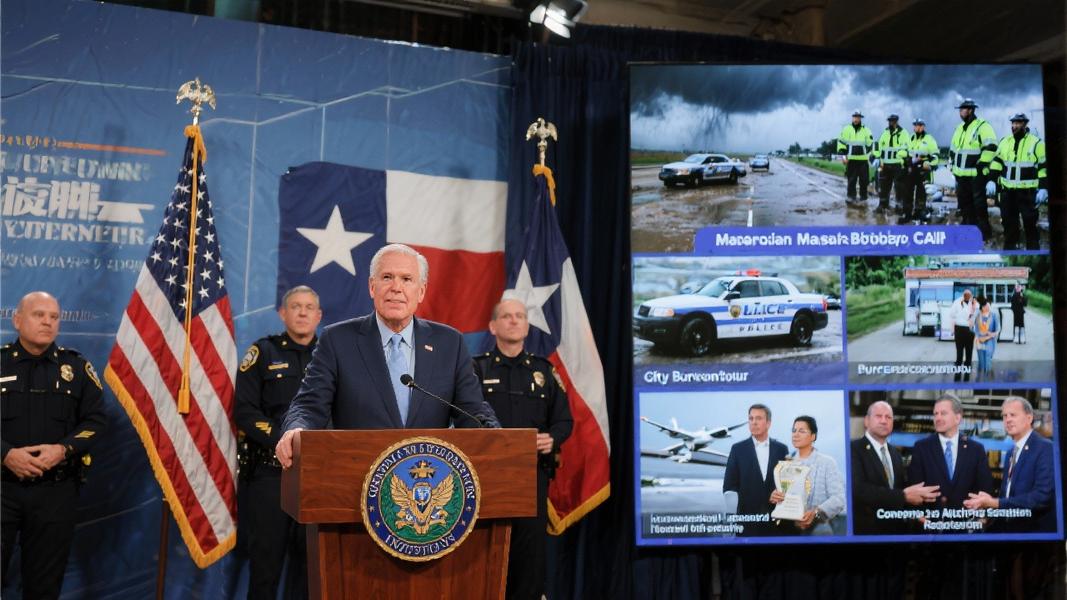
Texas Governor Greg Abbott has dramatically escalated his state’s stance on Islamic organizations, officially designating the Council on American-Islamic Relations (CAIR) and the Muslim Brotherhood as “foreign terrorist organizations” under Texas law. The November 18 proclamation effectively bars members of these groups from purchasing land within the state.
The executive action, which invokes authority under both the Texas Penal Code and Property Code, represents an unprecedented state-level terrorism designation that diverges significantly from federal policy. Neither CAIR nor the Muslim Brotherhood appears on the U.S. State Department’s official list of terrorist organizations.
Legal Implications
Abbott’s proclamation triggers Texas Property Code § 5.253, which prohibits designated entities from acquiring real estate in Texas. Violations could result in mandatory divestiture along with both criminal and civil penalties — a measure that critics say effectively creates a religious test for land ownership.
The governor has also directed the Texas Department of Public Safety to launch criminal investigations into both organizations, with DPS Special Agents assigned to FBI Joint Terrorism Task Forces tasked with gathering intelligence on potential violations of state and federal law.
“The goal is to identify, disrupt, and eradicate terrorist organizations engaged in criminal activities in Texas,” Abbott stated. “We will target threats of violence, intimidation, and harassment of our citizens. We will also focus on individuals or groups who unlawfully impose Sharia law—which violates the Texas Constitution and state statutes.”
Cited Evidence
What evidence does Abbott provide for these extraordinary designations? The proclamation references the 2009 federal case United States v. Holy Land Found. for Relief & Dev., where CAIR was identified as an unindicted co-conspirator in what prosecutors called one of the largest terrorism financing prosecutions in U.S. history. The document also cites convictions of CAIR members for terrorism financing and material support.
This action builds upon recent Texas legislation, including House Bill 4211, which bans residential property developments from creating Muslim-only compounds, and Senate Bill 17, prohibiting foreign adversaries and terrorist organizations from purchasing land in the state.
CAIR’s Response
CAIR has forcefully rejected the designation, promising legal challenges if the proclamation becomes actionable policy. “Although we are flattered by Greg Abbott’s obsession with our civil rights organization, his publicity stunt masquerading as a proclamation has no basis in fact or law,” the organization responded. “By defaming a prominent American Muslim institution with debunked conspiracy theories and made-up quotes, Mr. Abbott has once again shown that his top priority is advancing anti-Muslim bigotry, not serving the people of Texas.”
The organization maintains it has consistently condemned all forms of unjust violence and terrorism.
Constitutional Questions
Is this legal? Constitutional scholars are already raising questions about whether a state can unilaterally designate terrorist organizations, particularly when those designations contradict federal assessments. Civil rights attorneys point to potential First Amendment issues and discrimination concerns that could trigger federal intervention.
The move represents one of the most aggressive actions taken by any state against Muslim organizations in recent years, raising concerns about religious targeting and property rights. Legal challenges are expected to begin almost immediately.
For now, the proclamation stands as Texas policy — another example of Abbott’s willingness to push state authority into areas traditionally reserved for federal jurisdiction, and another chapter in the increasingly tense relationship between conservative state governments and American Muslim organizations.
