
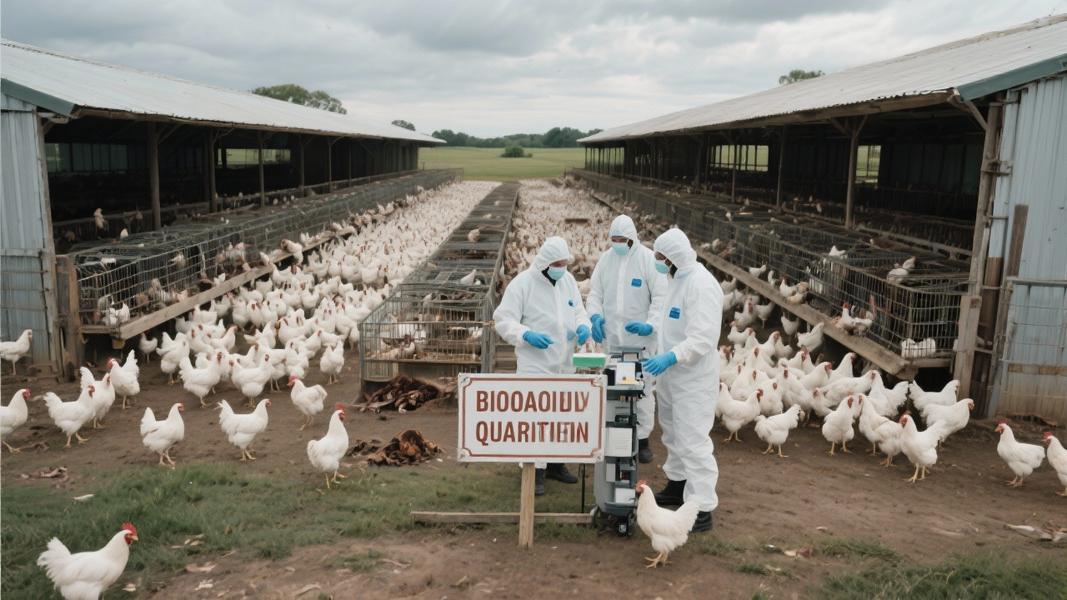
Texas has confirmed its first commercial poultry outbreak of highly pathogenic avian influenza this year, with 260,000 birds affected at a Shelby County facility. The detection marks a significant escalation in the state’s battle against the deadly virus, which had previously been limited to smaller, non-commercial flocks.
State officials announced the outbreak on December 11, 2025, placing the entire premises under immediate quarantine. The case represents a troubling development for Texas’s poultry industry, which contributes billions to the state economy annually.
Growing Pattern of Outbreaks
This latest incident brings Texas’s total to four affected premises across four counties in 2025. Earlier cases were considerably smaller in scale, with previous detections confirmed in Harris County (20 birds, November 12), Burnet County (11 birds, January 9), and Brazoria County (27 birds, January 9).
What makes this outbreak particularly concerning? The sheer numbers. With over a quarter-million birds involved, the potential economic impact and biosecurity challenges have multiplied exponentially overnight.
The virus strain involved has been identified as H5N1 Eurasian lineage goose/Guangdong clade 2.3.4.4b, consistent with strains identified in wild bird populations and dairy cattle elsewhere in the United States. Initial testing has shown no genetic changes that would increase transmissibility to humans, keeping the public health risk assessment at low.
Economic Implications Loom Large
Texas egg prices, already volatile in recent years, now face additional pressure as the industry confronts this latest threat. The state’s poultry sector, which includes both meat and egg production, stands to lose millions if the outbreak isn’t contained quickly.
“These situations require immediate and decisive action,” said a Texas Animal Health Commission spokesperson who wasn’t authorized to speak on the record. “We’re working around the clock with federal partners to implement containment protocols.”
Industry experts have warned that continued HPAI detections could disrupt supply chains and potentially drive consumer prices higher, particularly as the holiday season approaches.
The Shelby County outbreak comes at a particularly challenging time for the industry, which has been working to rebuild flocks after several difficult years marked by supply chain disruptions and increased production costs.
Still, officials emphasize that properly handled and cooked poultry products remain safe for consumption, and there is no evidence the current outbreak poses significant risks to the general public.
For Texas poultry producers, especially those with smaller operations near affected areas, the message is clear: vigilance and strict biosecurity measures aren’t optional — they’re essential for survival in what’s shaping up to be another challenging year for the industry.
