
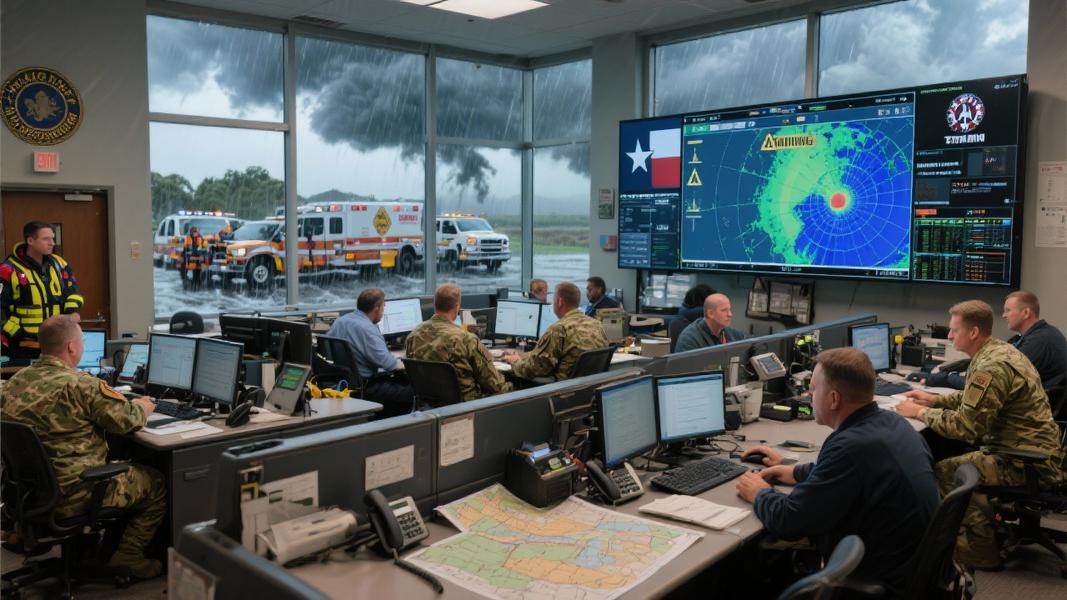
Texas is bracing for a potentially dangerous mix of severe thunderstorms, tornadoes, and flash flooding, prompting Governor Greg Abbott to elevate the state’s emergency response status Tuesday as forecasters warn of widespread weather threats.
Abbott increased the Texas State Emergency Operations Center to Level III readiness and activated additional emergency resources across multiple state agencies as the National Weather Service forecasts storms that could bring damaging winds, large hail, and rainfall totals exceeding 4 inches across much of North, East, and Southeast Texas.
“In preparation of severe weather, I activated additional emergency response personnel and resources to protect Texans and support communities responding across the state,” Abbott said in a statement. “Texans are strongly urged to monitor weather conditions and create an emergency plan to keep themselves and their families safe.”
Multiple Threats Looming
The governor’s directive comes as meteorologists track a weather system expected to deliver a triple threat of severe thunderstorms, possible tornadoes, and flash flooding. Some areas could see rainfall totals reaching 6 inches, creating dangerous conditions for drivers and residents in flood-prone areas.
Abbott’s warning to Texas motorists was blunt: “Remember: Turn Around, Don’t Drown.”
The state has mobilized an impressive array of emergency assets, including swiftwater rescue boats, helicopters with hoist capabilities, and specialized search and rescue teams. The Texas National Guard has been placed on standby, ready to deploy personnel and equipment where needed.
How bad could it get? Weather experts note the combination of heavy rainfall on already-saturated ground could lead to rapid flash flooding in urban areas and along creeks and streams, while strong wind gusts might cause widespread power outages.
Coordinated Response
The elevated emergency status has triggered a multi-agency response involving ten state departments, from the Texas Department of Transportation to the Public Utility Commission.
State officials have advised residents to assemble emergency supply kits, create communication plans with family members, and monitor local forecasts and road conditions through resources like DriveTexas.org.
The Texas Department of State Health Services has also activated medical support packages that can be rapidly deployed to affected communities, while the Texas A&M Forest Service has positioned personnel and equipment to assist with road clearing operations.
“We’re taking this threat seriously,” said a spokesperson for the Texas Division of Emergency Management who requested anonymity because they weren’t authorized to speak publicly. “When you combine potential tornado activity with flash flooding, the risks multiply significantly.”
Still, veteran emergency managers note that Texas has refined its severe weather response protocols in recent years, learning valuable lessons from previous disasters like Hurricane Harvey.
As storm clouds gather over the Lone Star State, Abbott’s message is clear: preparation now could save lives later — whether that means securing loose outdoor items, charging electronic devices, or simply knowing when to stay off flooded roadways.
