
After nearly two decades, justice may finally be on the horizon for Valerie Laguna, a young pregnant woman whose brutal murder shocked the small Texas town of Cotulla in 2005. Advanced DNA technology has led to the arrest of a 66-year-old suspect in a case that had gone cold for years.
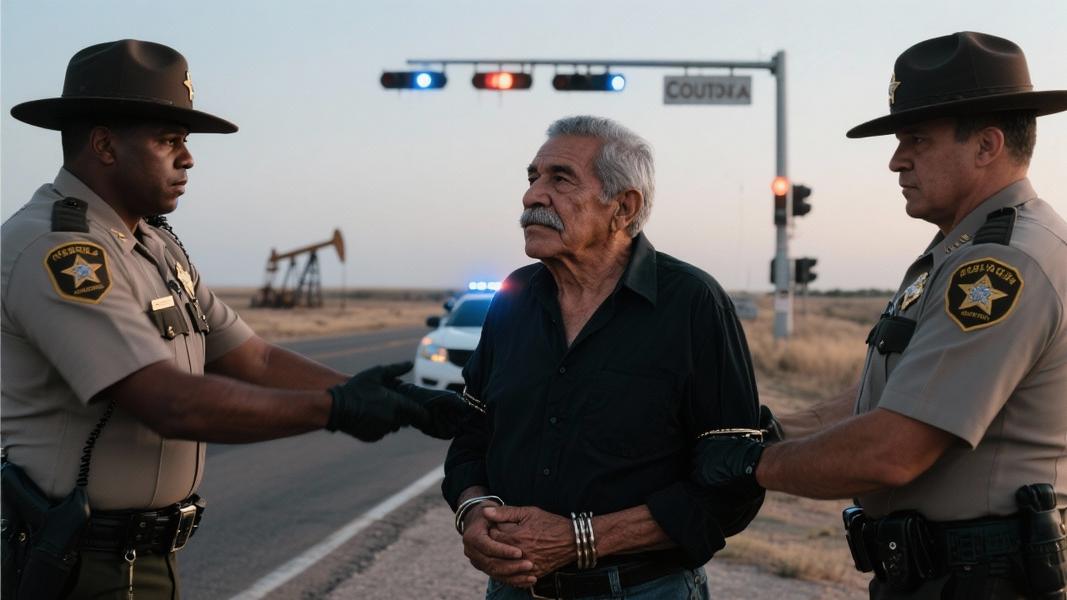
Saul Gonzalez, a San Antonio resident, was arrested Friday at Eagle Ford Crossing in Cotulla after being indicted on capital murder charges in connection with Laguna’s death, authorities confirmed.
The case dates back to July 19, 2005, when the body of 26-year-old Valerie Laguna was discovered at Cristo Rey Cemetery in Cotulla. Investigators determined she had been sexually assaulted, beaten, and strangled. Perhaps most heartbreaking — she was nine months pregnant at the time of her death, with medical examiners later determining blunt force trauma to the head as the cause of death, according to reports.
A Case That Refused to Die
Despite extensive interviews and DNA collection from multiple individuals during the initial investigation, the case went cold. Gonzalez had been identified as a possible suspect early on, but there wasn’t enough evidence to move forward with charges.
“Numerous witnesses were interviewed, and DNA samples were collected from multiple individuals and Gonzalez was eventually identified as a possible suspect. Still there were no major breaks in the case,” law enforcement officials stated.
What kept the investigation alive through multiple sheriff administrations? A refusal to let Laguna and her unborn child be forgotten. The La Salle County Sheriff’s Office maintained the case as a priority, with department leaders engaging in what they described as “tireless work” to solve it over the years, never allowing it to truly go cold despite the lack of progress.
Modern Science Breaks the Case
The breakthrough finally came thanks to advances in forensic technology. In 2020, the La Salle County Sheriff’s Office submitted multiple pieces of evidence to BODE Technology, resulting in new DNA profiles from the evidentiary items.
Then in 2023, additional analysis of both previously submitted and new evidence led to a critical discovery — Gonzalez’s DNA matched material found on key evidence items, investigators revealed.
The case had received additional support in 2021 when it was identified by Texas Rangers as eligible for the Texas Department of Public Safety’s Sexual Assault Kit Initiative (SAKI). This program, funded by the Department of Justice, provides investigative resources to agencies nationwide working to solve cold cases involving sexual assault and related homicides.
Could this represent a new era for cold case investigations? The collaborative effort certainly suggests so. The Texas Department of Public Safety Crime Lab, University of North Texas Center for Human Identification, Williamson County Sheriff’s Office, and La Salle County Sheriff’s Office all contributed expertise to the investigation that ultimately led to the indictment.
Justice in Motion
On August 29, 2025, a La Salle County grand jury formally indicted Gonzalez for capital murder in connection with the 2005 cold case. He is currently being held in the La Salle County Jail following his arrest in Cotulla.
For the family of Valerie Laguna, who have waited 18 years for answers, the arrest represents a significant step toward closure. For investigators, it demonstrates the value of persistence and the power of advancing technology in solving crimes that once seemed unsolvable.
As DNA technology continues to evolve, cases like Laguna’s serve as powerful reminders that for investigators and victims’ families, the passage of time doesn’t diminish the pursuit of justice — it only makes the eventual breakthrough that much more meaningful.
