
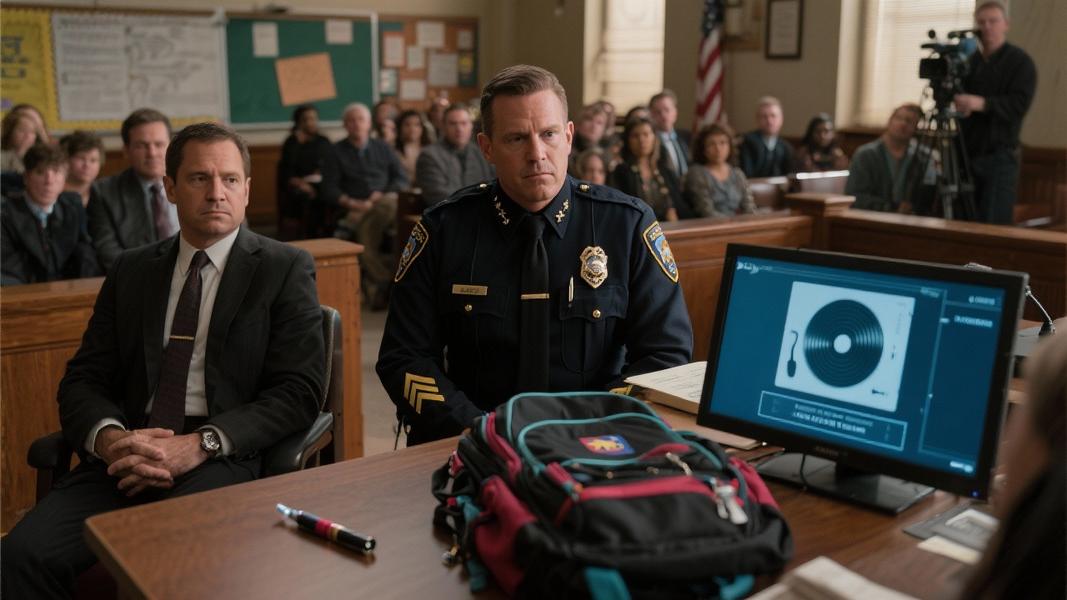
A Texas appeals court ruled Thursday that an audio recording allegedly capturing a school police officer planting evidence can be used in his criminal trial, overturning a lower court’s decision in a case that raises significant questions about privacy expectations for law enforcement.
The January 8, 2026 ruling found that former Corpus Christi Independent School District police officer Andrew Abel Gonzalez has no reasonable expectation of privacy while conducting investigations inside public school classrooms — a decision that could have far-reaching implications for police accountability.
“Justice Ysmael D. Fonseca wrote that society is not prepared to recognize a privacy interest for an officer performing a public service as an agent of the state,” according to court documents obtained by Fox 26 Houston.
The case stems from a March 7, 2023 incident at Hamlin Middle School, where Gonzalez and Vice Principal Amanda Corona cleared a classroom to search for suspected contraband. What they didn’t realize? A student’s cellphone was still recording when they allegedly discussed planting a vape pen in a specific student’s bag.
That recording became the centerpiece of the criminal case against Gonzalez, who now faces three felony counts of tampering with or fabricating physical evidence with intent to impair and three misdemeanor counts of official oppression, local station KRIS 6 News reports.
The legal battle over the recording has been ongoing for months. A trial court initially granted Gonzalez’s motion to suppress the audio evidence on May 30, 2025, but the State of Texas quickly filed an interlocutory appeal to challenge that decision just days later on June 2, 2025, court records show.
Privacy vs. Accountability
At the heart of the case is a fundamental question: Do police officers have the same privacy rights as civilians when performing their duties?
The appeals court’s answer was unequivocal. “Police officers have less privacy than regular people when they’re doing their job,” the court stated, according to local media coverage.
The three-judge panel went further, suggesting that allowing officers to block such recordings could effectively shield misconduct from scrutiny. “The court wrote that if police officers could block recordings like this, it would make it easier to hide wrongdoing,” KRIS 6 News noted in their coverage.
Both Gonzalez and Corona were arrested following the March 2023 incident. They have since bonded out of jail while awaiting trial, according to information from local authorities.
The ruling represents a significant victory for prosecutors, who can now present what may be their most compelling evidence to a jury. For defense attorneys, it’s a reminder that the digital age has fundamentally altered expectations of privacy — especially for public officials performing their duties.
As the case moves forward toward trial, it stands as a stark reminder that in an era of ubiquitous recording devices, the actions of those in positions of authority may be subject to unexpected scrutiny — even when they think nobody’s watching.
