
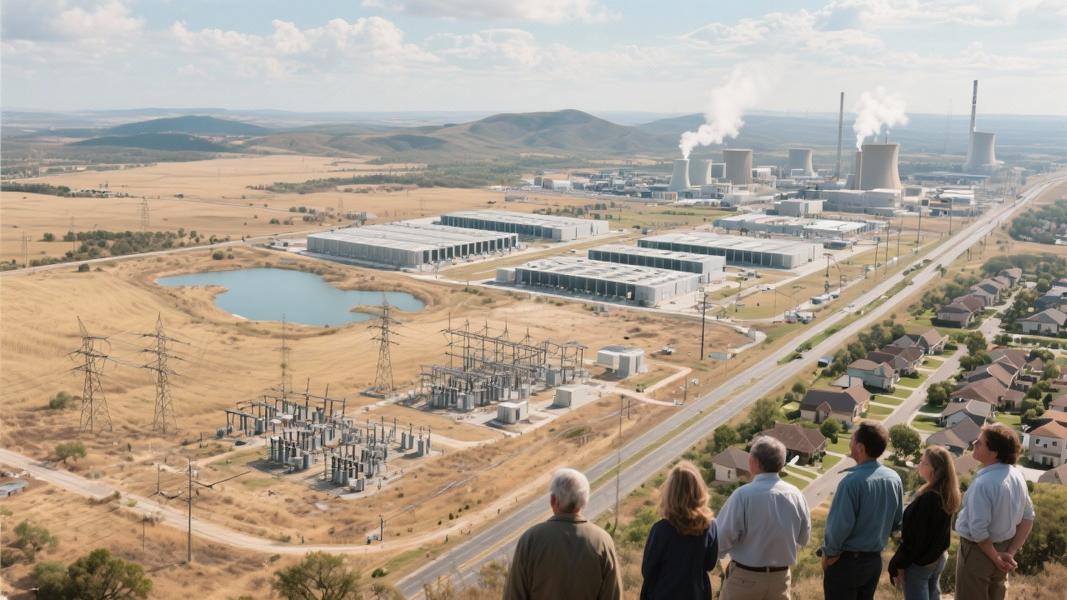
Texas is facing a digital power crisis that few saw coming. As hundreds of data centers flock to the Lone Star State, environmental experts warn the technology boom could strain both the electrical grid and water supplies to unprecedented levels.
An estimated 400 data centers now dot the Texas landscape — some already humming with servers, others still under construction, and many more in planning stages — according to reports from environmental researchers. The rapid expansion has triggered alarm bells among sustainability advocates, who point to staggering resource demands these facilities require.
Digital Thirst in a Drought-Prone State
The numbers tell a sobering story. The Electric Reliability Council of Texas (ERCOT) has received more than 200 gigawatts worth of large load interconnection requests over the past year alone — with a whopping 73% coming from data centers, according to analysis of grid management data.
Water consumption presents perhaps the most immediate concern. University of Michigan researchers have found that a single data center guzzles millions of gallons of water annually on average — a particularly troubling statistic for a state regularly battling drought conditions. The Houston Advanced Research Center, an independent nonprofit research organization, estimates existing Texas data centers will consume approximately 25 billion gallons of water in 2025 alone, representing 0.4% of the state’s total water use. By 2030, that figure could balloon to a staggering 399 billion gallons.
“There are an estimated 130 new gas-powered power plants that have been proposed for Texas, in part to meet this demand for data centers,” environmental advocates warn, “and if they’re all built, that’s going to have as much climate pollution as 27 million cars.”
Power Demands Skyrocketing
The electrical appetite of these facilities appears equally voracious. ERCOT’s long-term forecast anticipates data center energy consumption will reach over 12,700 megawatts in 2026 — then more than double the following year. This surge comes despite Texas already struggling with grid reliability during extreme weather events.
What’s driving this massive digital migration to Texas? Industry experts point to relatively cheap land, business-friendly regulations, and central location. But these advantages come with hidden costs that extend beyond the balance sheet.
Air quality concerns have also emerged. Data centers typically rely on diesel emergency generators that create harmful local air pollution associated with higher local rates of asthma among residents. Cases of unpermitted installations and air quality regulation violations have been documented nationwide, raising questions about regulatory oversight in Texas’s rapid expansion.
Renewable Opportunity Lost?
Could renewable energy offer a solution? Research suggests it might. Using natural gas to meet the anticipated electricity load of Texas data centers would require 50 times more water than using solar generation and a staggering 1,000 times more water than wind, according to studies from the Houston Advanced Research Center.
Yet infrastructure limitations hamper this potential. In 2024 alone, eight terawatt-hours of solar and wind power in Texas was curtailed due to insufficient transmission capability — essentially wasting clean energy that could have powered these digital hubs.
How concerned are ordinary Texans about this digital boom’s environmental footprint? Quite worried, it seems. About two-thirds of state residents express concern about the overall environmental impact of AI data centers, with energy consumption and water use topping the list of specific worries, according to polling by media researchers.
The coming years will test whether Texas can balance its digital ambitions with environmental stewardship. For now, the state finds itself at a crossroads — embracing technological progress while grappling with the very real resource limitations that even the biggest state can’t escape.
