
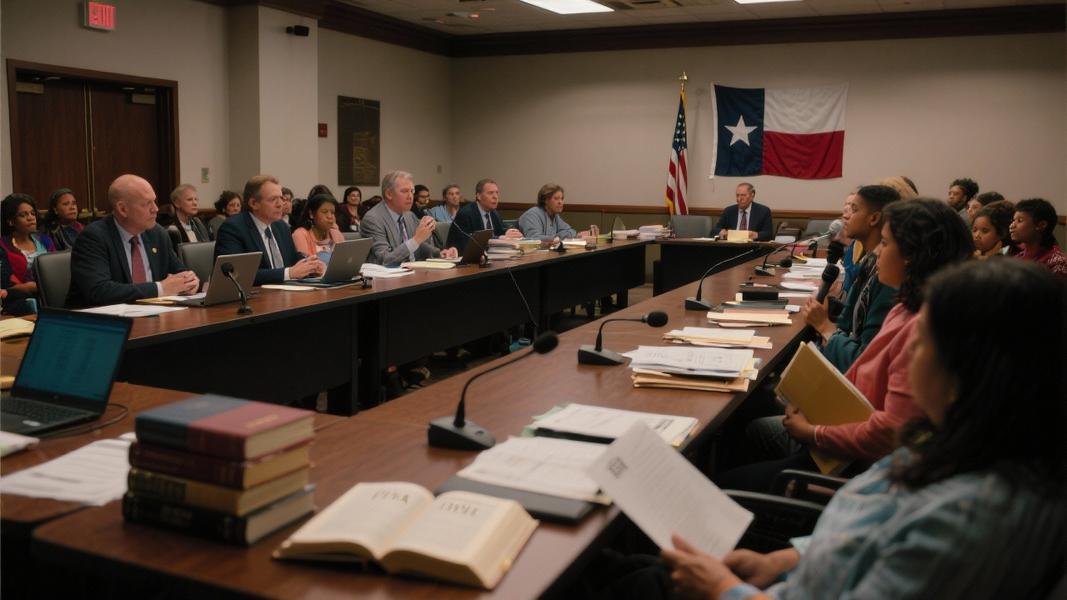
Texas education officials have hit the pause button on a controversial reading list that would make Biblical passages required reading in public schools, delaying a decision after facing a wave of public opposition during a marathon meeting.
The Texas State Board of Education voted 13-1 to postpone the vote on a proposed K-12 required reading list containing nearly 300 books — including 11 direct Bible passages — until April, following almost 10 hours of heated public testimony. The proposed curriculum has ignited debate about religious content in public education, diversity in assigned reading, and the balance between state mandates and teacher autonomy.
Bible in the Classroom: Educational Resource or Constitutional Concern?
The proposed list would require Texas students to study specific Biblical excerpts at different grade levels — Matthew 6:25–34 for sixth graders, 1 Corinthians 13 for seventh graders, and additional passages through high school, according to Fox 7 Austin reports. Three additional Biblical retellings from the state’s Bluebonnet Learning curriculum would also be mandated.
“Religious readings belong in Sunday school, not in public schools,” said Kevin Jackson, a parent who spoke against the proposal during public comment, as EdWeek noted.
But the proposal’s defenders frame the Biblical selections differently. Shannon Trejo, deputy commissioner at the Texas Education Agency, described the texts as “foundational knowledge” within the American literary canon, drawing from successful education systems. Brandon Hall, the lone Republican board member who voted against delaying the decision, emphasized the cultural significance of the texts: “Some of these passages of scripture that you mentioned have had a huge impact on our state, on our country.”
Diversity Concerns and Constitutional Questions
The pushback wasn’t limited to religious considerations. Critics raised multiple concerns about the proposed list, which ranges from classics like “To Kill a Mockingbird” to King James Bible excerpts. Many speakers questioned whether the selection adequately reflects the diverse backgrounds of Texas students.
Is this simply about literature, or something more? Democratic board members argued the Christian emphasis potentially violates the U.S. Constitution’s Establishment Clause, which prohibits government from favoring one religion over others. The Texas Tribune revealed that while the state narrowly approved the Bluebonnet reading program in late 2024, only about one in four districts have voluntarily adopted it, covering approximately 400,000 students.
The extensive list itself — nearly 300 required works — prompted concerns about overwhelming existing curricula and potentially displacing current classroom readings. Teachers and parents alike worried about the prescriptive nature of the mandate and its impact on educational flexibility.
What Happens Next
After the marathon session that stretched well into the evening, the board’s 13-1 vote delays the decision until April 6-10, giving stakeholders additional time to review and potentially revise the proposal.
The controversy comes just months after the state board narrowly approved the Bluebonnet reading program, which already includes Bible references. That program is currently used by approximately 25% of Texas school districts.
For now, Texas classrooms will continue operating under existing guidelines as the board weighs competing visions of what constitutes essential reading for the state’s students — and whether sacred texts should have a mandated place alongside secular classics in public education.
