
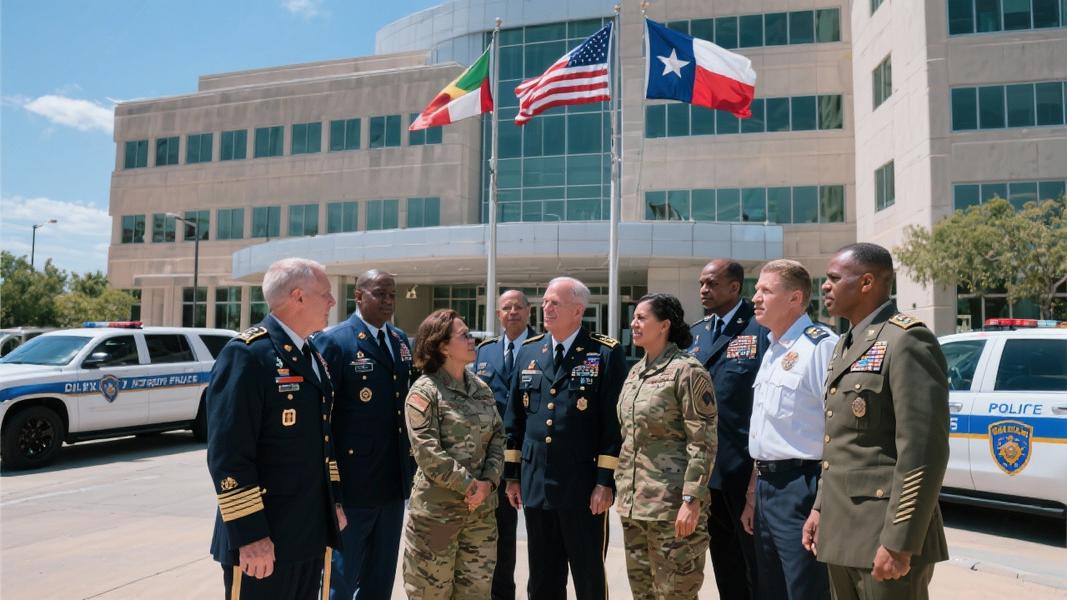
Texas law enforcement welcomed a truly global audience this week, as senior military leaders from across the world gathered to learn from one of America’s largest public safety agencies.
The Texas Department of Public Safety hosted a delegation from the U.S. Naval War College’s Naval Command College in Austin on January 12, 2026, bringing together representatives from more than 40 nations. The visit aimed to showcase DPS’s organizational structure, public safety strategies, and coordination capabilities to military leaders from countries spanning six continents.
“DPS is honored to host these distinguished leaders from around the world,” said DPS Colonel Freeman F. Martin. “Sharing our operational practices and learning from their global perspectives strengthens our collective ability to protect the communities we serve.”
Cross-Border Learning
The international cohort didn’t just get a surface-level tour. They engaged with four key DPS divisions, including the Colonel’s Office, Training Operations Division, Homeland Security Division, and the storied Texas Rangers Division. Discussions covered everything from organizational frameworks to leadership development and multi-agency collaboration — essential skills in an increasingly interconnected security landscape.
What makes this exchange particularly notable? The sheer diversity of the participating nations. The delegation included officers from traditional U.S. allies like the United Kingdom, Canada, and France, alongside representatives from nations with complex geopolitical relationships such as Ukraine, Russia, Pakistan and India.
Other participating nations spanned the globe: Argentina, Austria, Bahrain, Bangladesh, Bulgaria, Chile, Colombia, Denmark, Ecuador, Germany, Greece, Indonesia, Israel, Italy, Japan, Kenya, Kuwait, Lebanon, Malaysia, Mexico, Morocco, Nigeria, Norway, Peru, Philippines, Poland, Romania, South Korea, Saudi Arabia, Spain, Sri Lanka, Taiwan, Thailand, Tunisia, Türkiye, and the United Arab Emirates.
Naval Diplomacy
The Naval Command College itself represents a long-standing tradition of international military cooperation. Established in 1884, the U.S. Naval War College offers the NCC as an 11-month program specifically designed for senior officers from allied and partner nations.
Beyond mere tactical training, the program explicitly aims to foster friendship and break down barriers between future military leaders who may someday need to coordinate during international crises. Graduates receive a diploma, with some earning a Master of Arts in National Security & Strategic Studies.
The visit to Texas DPS represents just one facet of this comprehensive program, but it highlights an often-overlooked aspect of international relations: the sharing of public safety and security practices across borders.
As global security challenges increasingly transcend national boundaries, these kinds of exchanges — between military leaders from Bahrain to Bulgaria, Kenya to Kuwait — may prove as valuable as formal treaties in building the relationships that underpin international cooperation when crises strike.
