
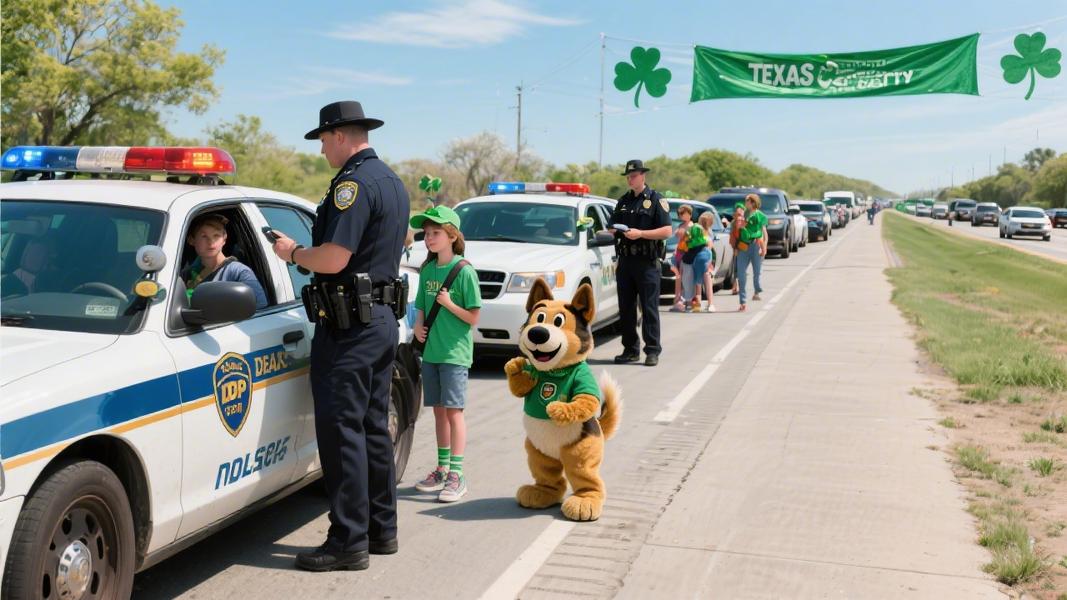
If you’re planning to hit the road this Spring Break or raise a glass on St. Patrick’s Day, Texas law enforcement wants you to know they’ll be watching — closely.
The Texas Department of Public Safety has launched a statewide traffic enforcement surge running from March 9 through March 17, targeting the twin surge of Spring Break travel and St. Patrick’s Day celebrations. Texas Highway Patrol troopers will be out in force, looking for speeders, unbelted drivers, impaired motorists, and anyone else tempting fate on the state’s already-busy roadways.
Eyes on the Road — and the Calendar
Texas Highway Patrol Chief Bryan Rippee didn’t mince words about the stakes. Speaking directly to the seasonal surge, Rippee said, “These are heavy traffic times as people get out to celebrate, but safety must always come first.” It’s a familiar message, but the numbers behind it are anything but routine.
The initiative isn’t just a Texas thing, either. THP’s enforcement push is part of Operation CARE, a coordinated national effort organized by the International Association of Chiefs of Police (IACP). The goal is straightforward: put more officers on roads during the periods statistically most likely to produce fatal and serious-injury crashes. Texas is one of dozens of states participating this cycle.
Last Year’s Numbers Tell the Story
How big is the enforcement footprint? Big. During the 2025 Spring Break and St. Patrick’s Day enforcement window, DPS troopers issued a staggering 93,232 citations and warnings combined. That figure alone should give any lead-footed driver pause.
Break it down and it gets more specific. Troopers logged 6,425 speeding violations and 516 seat belt and child seat violations — the kind of infraction that still, somehow, surprises people when they’re pulled over for it. There were also 2,483 citations for driving without insurance, and, perhaps most notably, 552 felony and fugitive arrests. That last number is a reminder that traffic stops have a way of turning into something much more significant than a speeding ticket.
Still, the raw citation count isn’t really the point. DPS has been clear that the broader objective is reducing the kind of crashes that end in tragedy — the ones that close highways for hours and make the evening news for all the wrong reasons.
What Drivers Should Expect
Increased patrols. Checkpoints. Troopers who’ve been briefed, caffeinated, and deployed specifically for this stretch of the calendar. The enforcement window covers both a weekend getaway season and a holiday notorious for impaired driving — a combination that, historically, does not go well without a visible law enforcement presence.
That’s not to say everyone on the road is a suspect. Most drivers will pass through the week without incident. But for those who figure the odds are in their favor — that they won’t be the one pulled over, or that they’re fine after a few drinks — the data from last year suggests the math doesn’t quite work that way.
Enjoy the break. Wear your seatbelt. Don’t drive impaired. Texas DPS is counting on you — and if you don’t, they’re counting on catching you instead.
