
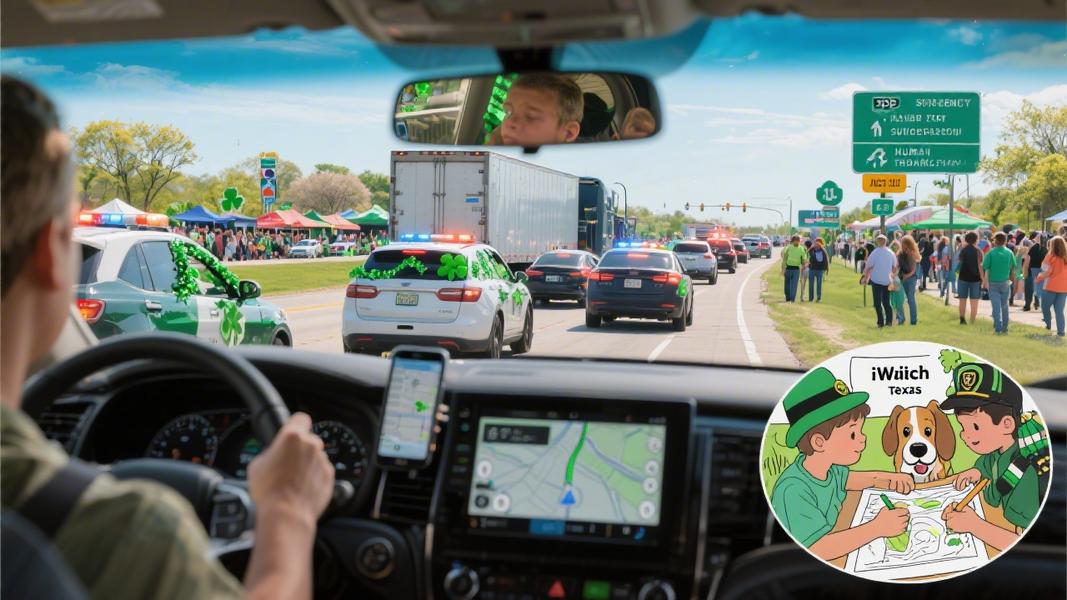
Spring break is here, and so are the troopers. Texas law enforcement isn’t leaving road safety to chance this season.
The Texas Department of Public Safety has announced a significant ramp-up in highway patrols running from March 9 through March 17, targeting the surge of traffic that comes with spring break festivities and St. Patrick’s Day celebrations. The crackdown covers a wide range of violations — speeding, impaired driving, seat belt offenses, and more — and it’s backed by hard data from previous years showing just how dangerous these roads can get.
A Week of Heightened Vigilance
The stakes aren’t abstract. Last year’s enforcement effort produced some striking numbers: DPS troopers issued more than 93,232 citations and warnings statewide. That included 6,425 speeding violations, 516 seat belt and child seat infractions, and 2,483 citations for driving without insurance. Perhaps most sobering: 552 felony and fugitive arrests were made during the same period. That’s not a minor traffic stop blitz — that’s a serious law enforcement operation.
“These are heavy traffic times as people get out to celebrate, but safety must always come first,” a DPS official stated. “Our troopers will be highly visible across the state, focused on preventing impaired driving, speeding and other dangerous behaviors that put lives at risk.” It’s the kind of statement that sounds routine — until you look at last year’s arrest numbers and realize it isn’t.
Part of Something Bigger
This isn’t just a Texas initiative. The campaign operates under Operation CARE — short for Crash Awareness and Reduction Effort — a nationwide program coordinated by the International Association of Chiefs of Police. The program targets what researchers and law enforcement have long identified as high-crash periods: windows of time when traffic volume spikes and, predictably, so do dangerous driving behaviors. Enforcement data collected during Operation CARE is used not just to write tickets, but to build a broader picture of traffic safety trends across the country.
So why does it matter? Because spring break isn’t just a cultural moment — it’s a measurable public safety event. Roads fill up fast. Drivers travel long distances, sometimes exhausted, sometimes impaired, often in a hurry. Texas highways, already among the busiest in the nation, absorb all of that pressure at once.
What Drivers Should Expect
Troopers won’t just be sitting quietly at the side of the road. The emphasis this year is on high visibility — a deliberate strategy meant to deter dangerous behavior before it happens, not just punish it after. That means more marked units, more active patrols, and a clear message to anyone thinking about pushing their luck on the interstate: it’s probably not the week to do it.
Still, enforcement alone doesn’t change a culture. The real goal of campaigns like Operation CARE is awareness — getting drivers to think twice before getting behind the wheel after a few drinks, or assuming the open Texas highway is an invitation to see what their engine can do. The data gets collected, analyzed, and fed back into policy. The hope is that over time, the numbers trend in the right direction.
For now, though, the message from DPS is straightforward: enjoy the break. Just get there in one piece.
