
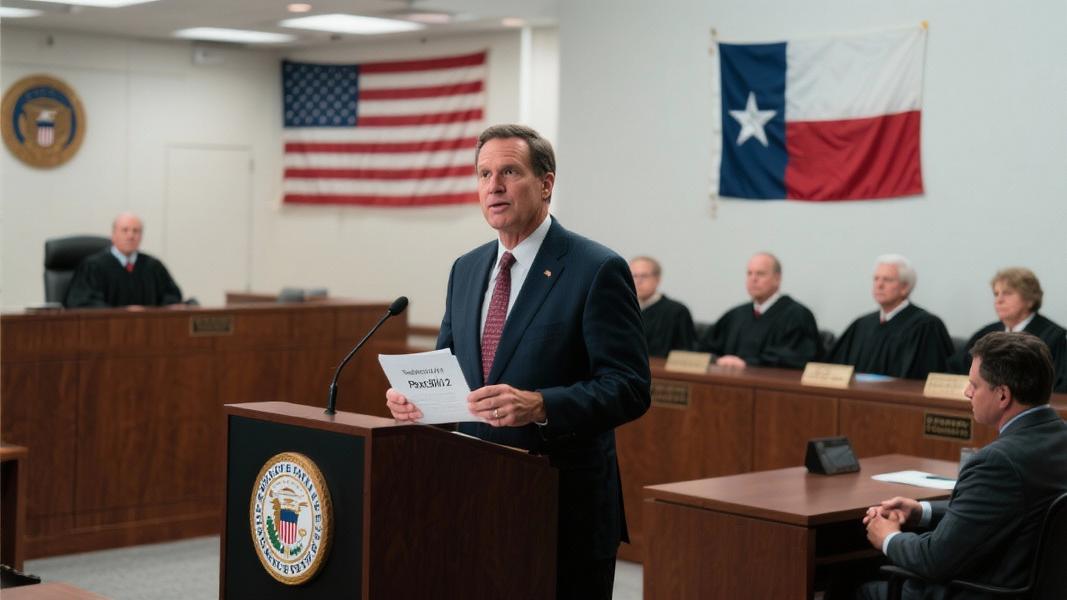
Texas’ controversial ban on sexually explicit drag performances around children is back in force after the Fifth Circuit Court of Appeals lifted a lower court’s injunction, delivering a significant legal victory to state officials who have championed the restriction as necessary to protect minors.
The ruling reinstates Senate Bill 12, a law passed by the Texas Legislature in 2023 that prohibits “sexually oriented performances” on public property or in places where children might be present. Attorney General Ken Paxton, who defended the law before the appellate court, celebrated the decision as a triumph for families across the state.
“I will always work to shield our children from exposure to erotic and inappropriate sexually oriented performances,” Paxton said in a statement following the ruling. “It is an honor to have defended this law, ensuring that our state remains safe for families and children.”
At the heart of the case is a fundamental question: Does the First Amendment protect the right to stage sexually explicit performances in front of minors? The Fifth Circuit expressed “genuine doubt” about this claim, which had formed the basis for the initial injunction against SB 12.
The legal battle began shortly after Texas lawmakers enacted the controversial measure last year. A coalition of drag performers and industry representatives promptly filed suit, arguing that the law violated their constitutional rights under both the First and Fourteenth Amendments.
Narrowly Tailored or Broadly Restrictive?
What exactly does SB 12 prohibit? That’s where interpretations diverge sharply.
The majority on the three-judge panel viewed the law as a narrowly focused regulation targeting explicitly sexual conduct, not a sweeping restriction on artistic expression. This perspective aligns with the state’s argument that it has a legitimate interest in protecting children from inappropriate content.
Judge James Dennis, however, broke ranks with his colleagues. In a partial dissent, he argued that SB 12 threatens to “chill” protected speech and artistic expression. Dennis pointed to legislative debates and statements from Texas lawmakers as evidence that the true target wasn’t sexually explicit conduct but drag performances themselves.
“He claimed that the Legislature’s intent was to ban drag performances outright,” according to court documents, suggesting the law’s language served as a pretext for broader restrictions.
The case reflects the growing national tension over drag performances in public spaces, particularly those accessible to minors. Conservative lawmakers in multiple states have pursued similar restrictions, while LGBTQ+ advocates maintain such laws discriminate against protected forms of expression.
Complex Legal Landscape
The legal challenge itself reflects the complexity of enforcing such regulations across jurisdictions. Multiple plaintiffs sued not only Attorney General Paxton but also various local officials across different Texas cities and counties, creating a multi-layered legal dispute.
Paxton, who has made cultural battles a cornerstone of his tenure, described the ruling as a “major win” in his efforts to “shield our kids from exposure to erotic and inappropriate sexually oriented performances.”
But the fight isn’t over. While enforcement can now proceed, the Fifth Circuit remanded the case back to the district court for further proceedings. Paxton has pledged to “continue to vigorously defend” the law as litigation continues.
For now, venues across Texas that host drag performances must navigate the newly reinstated restrictions or risk legal consequences—a situation that performers say could threaten their livelihoods and artistic expression while supporters of the law maintain it simply establishes reasonable boundaries to protect children.
As the case returns to the lower court, the question remains whether Texas’ attempt to regulate these performances will ultimately survive the full constitutional scrutiny that awaits—or whether the First Amendment’s protections will eventually prevail against what critics see as targeted restrictions on a specific form of expression.
