
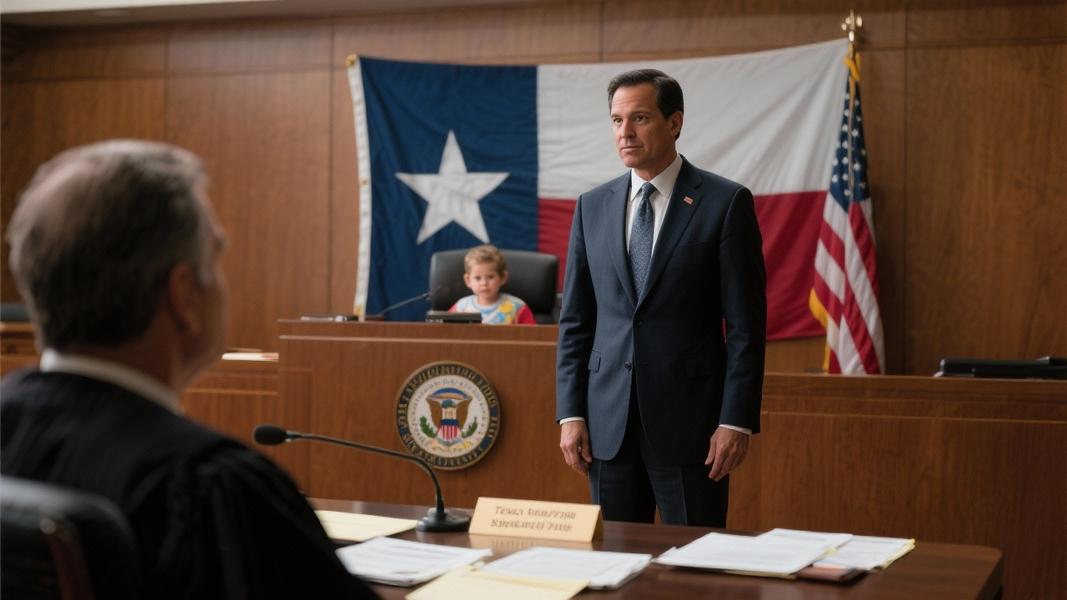
Texas can now enforce its controversial drag show ban after a significant legal victory for state officials in federal court. The U.S. Court of Appeals for the Fifth Circuit vacated a permanent injunction against Senate Bill 12, a law restricting “sexually oriented performances” in the presence of minors.
The ruling represents a major win for Texas Attorney General Ken Paxton, who has championed the legislation as necessary to protect children. “I will always work to shield our children from exposure to erotic and inappropriate sexually oriented performances,” Paxton said following the decision.
What the law actually does
SB 12, passed by Texas lawmakers in 2023, specifically prohibits “sexually oriented performances” on public property or in places where minors might be present. The law grants local governments authority to regulate such performances to promote public health and safety, while barring children from being near these events. Among its specific provisions, the legislation restricts performers who use “sexual prosthetics,” as reported by CBS Austin.
The legal battle over the bill has been contentious from the start. A coalition including LGBTQIA+ nonprofits, drag performers, and production companies sued to block the law, arguing it unconstitutionally targets drag as “a disfavored form of expression” and is so broadly written that it could criminalize everything from theater and ballet to comedy and even cheerleading. Violations of SB 12 can result in penalties including up to one year in jail.
“In its zeal to target drag, the Legislature also passed a bill so yawning in scope that it criminalizes and restricts an enormous swath of constitutionally protected activity,” the plaintiff groups stated in their complaint.
The legal seesaw
Initially, a lower district court sided with the plaintiffs, blocking the law’s enforcement after finding it unconstitutional. But that victory proved short-lived. The Fifth Circuit’s ruling has now vacated that injunction, allowing Texas to enforce SB 12 while the legal proceedings continue.
Why the reversal? The appeals court expressed “genuine doubt” about claims that the First Amendment protects the right to conduct “graphic, sexually explicit performances” in front of children, as noted by Texas policy researchers.
Not all judges agreed with the decision, however. In a partial dissent, Judge James Dennis argued that SB 12 was overly broad and risked chilling protected forms of expression. He pointed out that Texas already has laws prohibiting obscene performances and the exposure of harmful material to minors.
Does this ruling settle the matter once and for all? Hardly. The majority opinion emphasized child protection while attempting to limit the law’s scope to explicit sexual conduct, but critics remain convinced the legislation was designed with a broader target in mind.
“The Legislature’s intent was to ban drag performances outright,” opponents argued, warning that SB 12 would have a chilling effect on constitutionally protected expression well beyond its stated purpose.
As enforcement resumes and the case continues to work through the courts, the battle over where to draw the line between protecting children and protecting free expression remains far from settled in the Lone Star State.
