
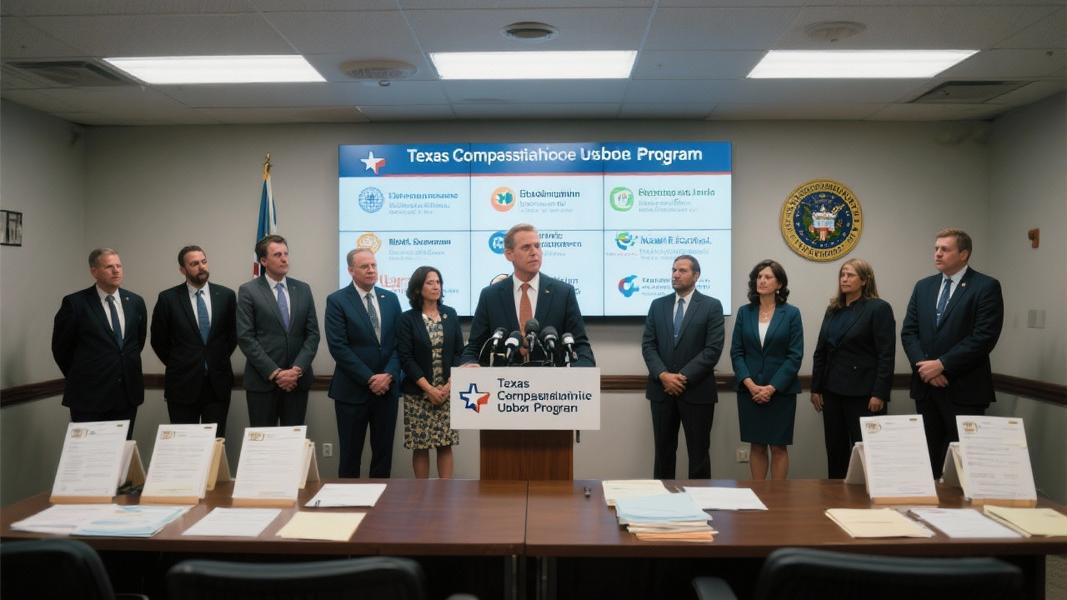
Texas has selected nine businesses to receive conditional licenses for its expanding medical cannabis program, marking a significant step forward in the state’s cautious approach to therapeutic marijuana access.
The Texas Department of Public Safety (DPS) announced these conditional selections as part of Phase I in the Texas Compassionate Use Program (TCUP) expansion. The organizations include several established cannabis companies like Verano Texas, Trulieve TX, and PharmaCann, alongside Texas-based entities such as Texas Patient Access, Lonestar Compassionate Care Group, and Story of Texas.
Rigorous Vetting Process Continues
These selections don’t mean patients will see new products on shelves immediately. Each conditionally approved business must still undergo thorough due diligence evaluations, including checks on disciplinary actions, financial standing, and litigation history. The evaluations represent just one step in a multi-phase process designed to carefully expand access while maintaining strict regulatory control.
“Conditional licenses do not grant the applicant permission to cultivate, manufacture, distribute or sell cannabis products until final approval by the department,” DPS stated in their announcement. The agency emphasized that licensees remain subject to ongoing evaluation throughout the process.
Why the measured approach? Texas has historically maintained one of the nation’s most restrictive medical cannabis programs since TCUP’s creation in 2015. The program began with just three licensed dispensaries statewide — a number that will eventually quintuple under the expansion plan.
Major Program Expansion Underway
The license expansion comes as part of House Bill 46, signed into law by Governor Greg Abbott in June 2025. The legislation represents the most comprehensive overhaul of Texas’ medical cannabis program in its eight-year history.
Beyond increasing licenses, HB 46 significantly broadens who can access medical cannabis and how they can use it. The bill adds several qualifying conditions including chronic pain, Crohn’s disease, traumatic brain injury, terminal illnesses, and hospice care. It also expands delivery methods to include lotions, patches, suppositories, and certain inhalation devices — though traditional flower cannabis remains prohibited in the Lone Star State.
Perhaps most significantly for patients, the legislation replaces the previous 1% THC limit with a more practical dosing structure: up to 10 milligrams of THC per dose, with packages not exceeding 1 gram total. This change allows for more precise and potentially more effective treatment options, according to medical cannabis advocates.
The program will also become more convenient for qualifying patients. Physician recommendations will now remain valid for a full year, with four 90-day refills that can be partially filled within each period. This change reduces the bureaucratic burden on patients managing chronic conditions.
Improving Geographic Access
Access has been a persistent challenge for Texas patients. With just three dispensaries serving a state of nearly 30 million people, many patients faced hours-long drives to obtain medication.
That’s set to change under the new rules. The expanded program will not only add more licensed providers but also allow those providers to operate satellite brick-and-mortar locations. This provision specifically targets underserved areas, particularly rural communities where medical cannabis access has been virtually nonexistent.
According to the DPS timeline, the remaining three licenses will be awarded in Phase II by April 1, 2026, bringing the total to 15 licensed dispensing organizations.
Will these changes satisfy medical cannabis advocates? Not entirely. Texas still maintains stricter limitations than many neighboring states, and the program continues to prohibit smokable flower — the most recognizable and traditional form of cannabis. That said, the expansion represents significant progress in a state that has approached cannabis reform with notable caution.
For Texas patients with conditions like chronic pain, epilepsy, and terminal illnesses, these nine conditional licenses represent more than regulatory paperwork — they signal the beginning of potentially life-changing access to medication that has remained frustratingly out of reach for many.
