
Texas is doubling down on carbon capture while giving the cold shoulder to offshore wind, highlighting the state’s divergent approaches to energy policy in the Gulf of Mexico.
ExxonMobil recently secured what’s being billed as the nation’s largest offshore carbon dioxide capture and storage agreement with Texas, giving the energy giant access to more than 270,000 acres of submerged land along the Gulf Coast. The deal allows Exxon to sequester carbon dioxide one to two miles below the gulf’s surface, marking a significant expansion of the state’s carbon capture ambitions, according to industry observers.
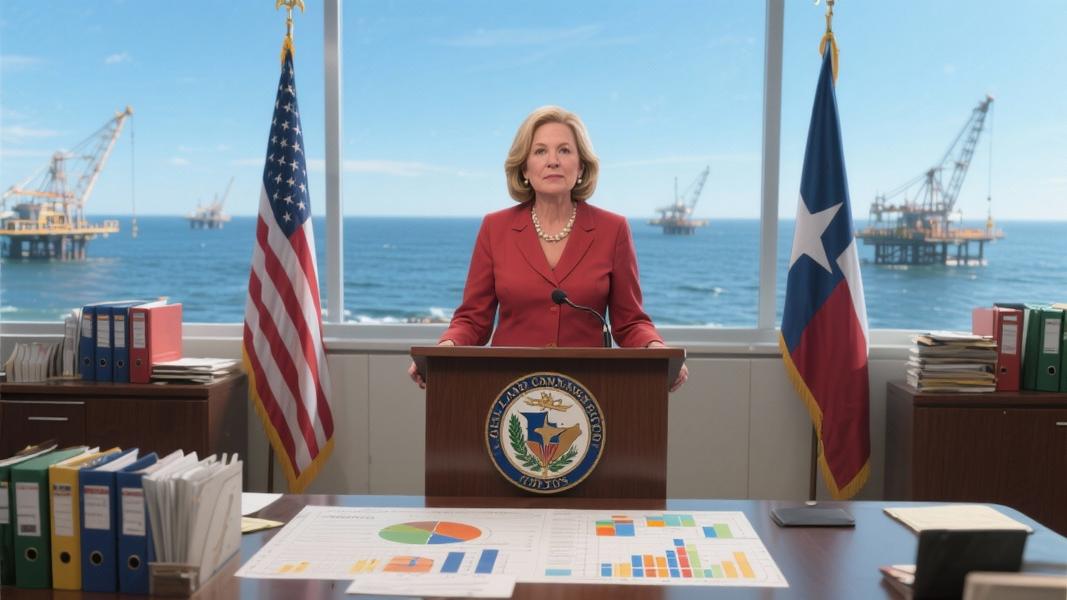
Meanwhile, Texas Land Commissioner Dawn Buckingham has taken a decidedly different stance on offshore wind development. She recently submitted a formal letter opposing the Biden Administration’s second proposal for an offshore wind energy sale in the Gulf of Mexico — a plan covering four areas totaling 410,060 acres.
“On my watch, I will never allow the federal government to endanger the people of Texas and our state’s beautiful wildlife with untested, unproven, and ineffective technology when reliable, clean, and safe energy is already available,” Buckingham declared in her opposition to the wind proposal.
The contrast between Texas’s enthusiasm for carbon capture and storage (CCS) versus its resistance to offshore wind underscores the state’s complex energy politics. This tension has now been further complicated by President Trump’s recent executive order temporarily halting offshore wind leasing on federal waters.
Signed on January 20, Trump’s order has effectively paused new wind leases on federal lands and waters. “The Department of the Interior and the Bureau of Ocean Energy Management are implementing President Trump’s executive order temporarily halting offshore wind leasing on the Outer Continental Shelf,” confirmed federal officials.
Wind Struggles, Carbon Capture Thrives
The Biden administration had previously set an ambitious goal to deploy 30 gigawatts of offshore wind power by 2030. But those efforts have faced significant headwinds in the Gulf region, with only one successful offshore wind lease sale held in August 2023 — and even that proved disappointing for Texas.
How bad was it? That federal offshore wind lease sale off Texas’s coast received exactly zero bids, while neighboring Louisiana managed to attract two. Industry analysts blamed the state’s antagonistic political climate for the complete lack of interest.
In stark contrast, Texas’s carbon capture initiatives have been gaining significant momentum. The ExxonMobil agreement is just one of several CCS leases awarded by Commissioner Buckingham’s office. Together, these seven leases cover approximately half a million acres in state-owned waters and are estimated to generate $10 billion over the next three decades.
“Commissioner Buckingham is committed to utilizing state land to benefit Texas students and ensure Texas remains leading the nation in energy production,” her office stated, highlighting the financial benefits these deals bring to the state’s educational fund.
That educational connection runs deep. The Texas General Land Office oversees more than 13 million acres of state land, with revenue from oil, gas, and mineral leasing flowing directly into the Texas Permanent School Fund. Since Buckingham took office, these activities have generated approximately $6 billion for Texas education.
“Texas’s unique ownership of both subsurface and surface rights to millions of acres, managed through entities like the Texas General Land Office for the benefit of the Permanent School Fund, helps fuel our state’s economic engine,” Buckingham noted in a recent industry publication.
The state’s divergent approaches to different energy technologies reflect both political calculations and economic interests. While carbon capture technology offers a way to potentially reduce emissions without abandoning fossil fuel infrastructure, it remains significantly less proven at scale than wind energy.
Still, with federal wind initiatives now on pause under the Trump administration and Texas officials firmly in the carbon capture camp, the Gulf’s energy future seems increasingly tilted toward technologies that complement rather than replace the region’s traditional oil and gas dominance.
