
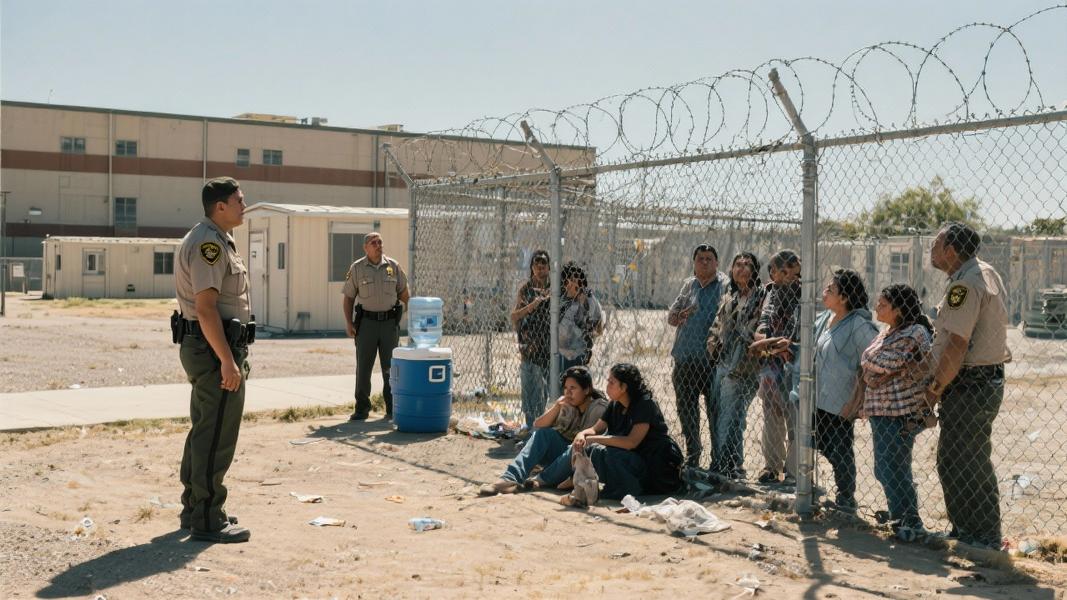
Allegations of physical abuse, coerced deportations, and inhumane conditions have surfaced at a Texas immigration detention facility, where human rights groups claim detainees are being beaten, denied adequate medical care, and illegally forced across the Mexican border — charges that homeland security officials vehemently deny as “fearmongering clickbait.”
The American Civil Liberties Union (ACLU) and other advocacy organizations allege that detainees at Camp East Montana, an Immigration and Customs Enforcement (ICE) facility at Fort Bliss, Texas, face systemic mistreatment. The facility, which houses approximately 2,700 men and women, has become the latest flashpoint in the contentious debate over immigration detention practices.
Allegations of Forced Deportations and Violence
According to the ACLU’s letter, detainees report being “handcuffed and rounded up before being loaded into vans and taken to the U.S.-Mexico border and told to go across the border into Mexico by masked officers even if the detainee did not have a removal order to the country.” Those refusing these allegedly illegal expulsions were reportedly “subject to physical abuse and threats of long-term imprisonment.”
One detainee, identified only as “Samuel” for safety reasons, described brutal treatment that included having his testicles “firmly crushed” by an officer while another “forced his fingers deep into my ears.” Samuel reportedly lost consciousness and required emergency transportation to a hospital. He also claimed to have suffered a broken tooth after being slammed to the ground.
Another detainee, “Eduardo,” reported that guards “started stomping on me until I lost consciousness” after he requested prescribed medications. Following hospitalization, he was allegedly placed in solitary confinement for five days and beaten on subsequent occasions for continuing to ask for his medications.
Medical Care Concerns
How responsive is medical staff to detainees’ health concerns? Multiple testimonies suggest significant gaps. Detainees complained that guards only provide medical attention when someone is visibly incapacitated — “the guards seem to have to see you lying on the floor” to respond. Samuel reportedly “filed around 10 requests for molar pain, migraines, stomach issues, depression and anxiety” before receiving any care, only to be given Tylenol and dismissed.
These allegations stand in stark contrast to statements from Assistant Department of Homeland Security Secretary Tricia McLaughlin, who insisted that “It is a longstanding practice to provide comprehensive medical care from the moment an alien enters ICE custody. This is the best healthcare that many aliens have received in their entire lives.”
Food Quality and Facility Conditions
Nearly all detainees interviewed reported receiving insufficient portions and spoiled food that caused widespread vomiting and diarrhea. Some detainees have reportedly gone hungry because housing units aren’t receiving adequate food supplies — a potential violation of ICE standards that require three nutritious meals daily, including at least two hot meals served in sanitary conditions.
Congresswoman Veronica Escobar has noted that drinking water at the facility “continues to taste foul” and that some detainees skip meals because “food quality had not improved, and specific diets were not being accommodated.”
McLaughlin sharply contested these complaints, stating that “Meals are certified by dietitians” and that “All detainees are provided with proper meals, medical treatment, access to showers, and have opportunities to communicate with lawyers and their family members.” She added, “No lawbreakers in the history of human civilization have been treated better than illegal aliens in the United States. Get a grip.”
Systemic Compliance Issues
The allegations gain additional context from internal ICE inspections that were leaked to the Washington Post, which reportedly found that Fort Bliss “violated over 60 federal detention standards in the first 50 days of its opening.” This suggests potentially systemic issues with compliance at the facility.
But McLaughlin categorically denied all allegations of abuse and inhumane treatment, characterizing them as “fearmongering clickbait” and defending ICE personnel against what she described as smear tactics. “As our brave ICE law enforcement is facing a more than 1150% increase in assaults against them, the ACLU is choosing to smear them with anonymous allegations,” she said. “Here are the facts: any claim that there are ‘inhumane’ conditions at ICE detention centers are categorically false. No detainees are being beaten or abused.”
The stark contrast between detainee testimonies and official denials highlights the challenges in ensuring transparency and accountability in immigration detention facilities — places where those held have limited means to document their experiences and where outside oversight faces significant barriers to access.
