
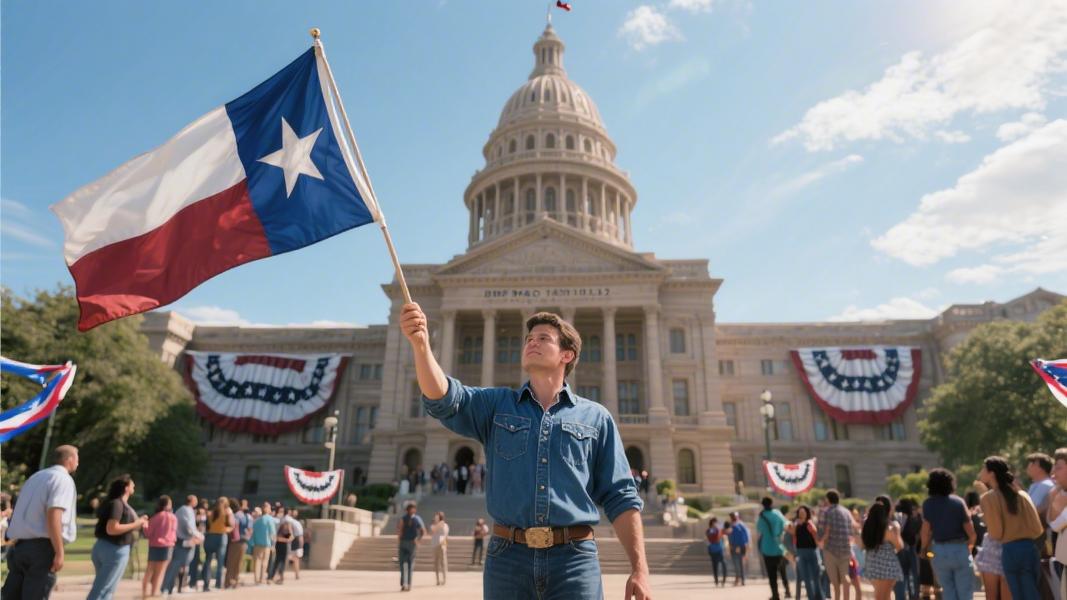
On March 2, 1836, fifty-nine men put their names to a document that would reshape the map of North America. Nearly two centuries later, Texas still marks that moment like it’s the most important thing that ever happened — and honestly, it’s hard to argue otherwise.
Every year on Texas Independence Day, the state commemorates the signing of its Declaration of Independence, a bold, defiant break from Mexico that gave birth to one of history’s most unlikely nations: the Republic of Texas. The document, signed by delegates gathered at the Convention of 1836 in Washington-on-the-Brazos, didn’t just declare freedom — it announced, in no uncertain terms, that the political ties binding Texas to Mexico were finished, permanently and without apology. As the declaration itself proclaimed, “our political connection with the Mexican nation has forever ended, and that the people of Texas do now constitute a free, Sovereign, and independent republic.”
A Declaration Born in Crisis
What makes that moment so remarkable isn’t just the words — it’s the timing. The ink was barely dry on the declaration when the rest of the revolution was still very much being fought in blood and fire. Just days before the delegates assembled, William B. Travis, commander of the Texian forces barricaded inside the Alamo, had sent out what would become one of the most famous dispatches in American military history.
Writing on February 24, 1836 — a week before independence was formally declared — Travis addressed his letter to “the People of Texas and All Americans in the World,” refusing to surrender to General Santa Anna’s besieging forces and vowing to fight to the last. He’d reportedly responded to an initial demand for surrender with a cannon shot. The letter has since been documented as one of the defining texts of the Texas Revolution — a desperate plea wrapped in the language of defiance. Travis never got his reinforcements. The Alamo fell on March 6, 1836, just four days after independence was signed.
Still, the revolution didn’t end there. The delegates pressed on, and the cause found its turning point six weeks later. On April 21, 1836, Sam Houston’s forces routed Santa Anna’s army at the Battle of San Jacinto, securing what the declaration had promised on paper. The full arc of that fight — from the siege of Bexar to San Jacinto — is chronicled as one of the most compressed, consequential military campaigns in North American history.
The Man Who Won Texas — and Then Refused to Break It
Sam Houston’s legacy doesn’t stop at San Jacinto. That’s the catch with Houston: he’s both the hero of Texas independence and, a quarter-century later, one of its most inconvenient consciences. When Texas voted to secede from the Union in 1861, Houston — then governor — refused to swear an oath to the Confederacy. He was removed from office for it.
What did he say on the way out? Something that reads, in hindsight, less like protest and more like prophecy. “Let me tell you what is coming,” he reportedly warned. “After the sacrifice of countless millions of treasure and hundreds of thousands of lives, you may win Southern independence if God be not against you, but I doubt it.” That quote, noted by Civil War historians, has aged with uncomfortable precision. Houston died in 1863, before the war ended. He never had to say he told them so.
Why It Still Resonates
How many states celebrate their own independence day with the same fervor as a national holiday? Texas does, and it doesn’t particularly care if that seems excessive to anyone else. Across the state on March 2, communities hold reenactments, ceremonies, and tributes that lean hard into the mythology — the Alamo, Travis’s cannon shot, Houston’s battlefield genius. It’s pageantry, sure, but it’s pageantry rooted in something genuinely dramatic.
The parallels to the U.S. Declaration of Independence are deliberate and unmistakable. The Texas version borrows its architecture — the grievances, the solemn assembly, the declarative finality — and applies it to a frontier revolt that most observers at the time thought was doomed. As observed in coverage of the 2025 commemorations, the document remains central to how Texans construct their identity — not just as Americans, but as something that was its own thing first.
That sense of prior sovereignty, of having once stood alone, never really left. Nearly two centuries on, it still colors how the state sees itself — and, some would argue, how it governs. Whatever one makes of that, it all traces back to a room full of delegates in Washington-on-the-Brazos, on a cold March morning in 1836, deciding that enough was enough. Houston put it better than most ever could, even if he said it about a different fight entirely: I doubt it — two words that cut through the noise, then and now.
