
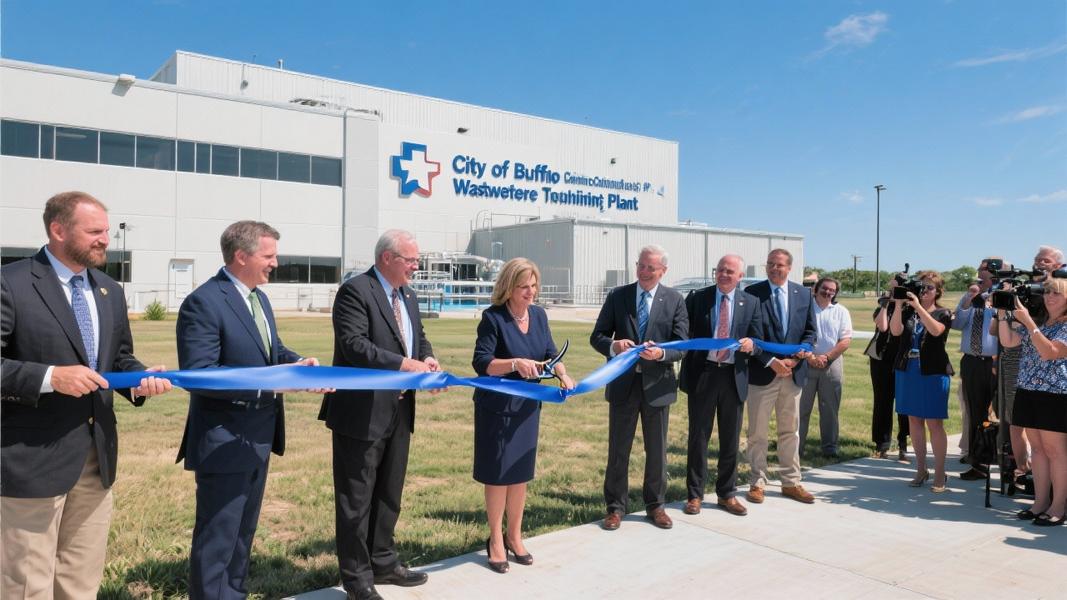
Texas is betting big on disaster preparedness, one wastewater treatment plant at a time.
The Texas General Land Office (GLO) has provided $9.6 million in funding to upgrade Buffalo’s Wastewater Treatment Plant, a critical investment aimed at ensuring the facility can withstand severe weather events without service disruptions. The project represents part of a broader strategy to strengthen infrastructure in communities previously hit by natural disasters.
Building Resilience Through Infrastructure
For residents of Buffalo, a city that has experienced its share of weather-related challenges, the upgrade means more than just improved sewage handling. It represents a commitment to community resilience in the face of increasingly unpredictable climate patterns.
“Investments like this wastewater treatment plant ensure that Texas communities have the infrastructure they need to withstand future disasters,” said Commissioner Dawn Buckingham in a statement released by her office. “The Texas General Land Office is proud to partner with local leaders in Buffalo to strengthen essential services and protect families during severe storm events. These projects are about planning ahead and building a stronger Texas.”
The precise allocation—$9,628,000—comes through the 2016 Mitigation Competition, part of the Community Development Block Grant – Mitigation (CDBG-MIT) program that has allocated more than $1.1 billion statewide for competitive mitigation projects in counties impacted by disasters between 2015 and 2017.
Why wastewater treatment? When severe weather hits, these facilities are often among the first critical infrastructure systems to fail, leading to public health emergencies that compound disaster recovery challenges.
Part of a Larger Mitigation Strategy
The Buffalo project isn’t happening in isolation. It represents just one piece of Texas’s ambitious disaster mitigation portfolio managed by the GLO, which administers more than $14 billion in federal funds dedicated to disaster recovery and future risk reduction across the state.
Such investments reflect a growing recognition among state officials that proactive spending on infrastructure resilience often proves more cost-effective than reactive disaster response. For every dollar spent on mitigation, communities typically save several times that amount in avoided disaster recovery costs.
The funding specifically targets upgrades that will reduce service outages during severe storms while protecting the facility itself—critical considerations in a state where extreme weather events have become increasingly common.
Still, the true test of these investments will come during the next major weather event, when residents of Buffalo will be counting on their upgraded wastewater system to perform when they need it most.
As Texas continues to face climate uncertainties, these infrastructure investments may prove to be the difference between manageable weather events and full-blown disasters for communities like Buffalo—a distinction that makes all the difference when the storms roll in.
