
Texas is doubling down on its semiconductor ambitions with a flurry of multimillion-dollar grants aimed at cementing the Lone Star State’s position as America’s chip manufacturing powerhouse.
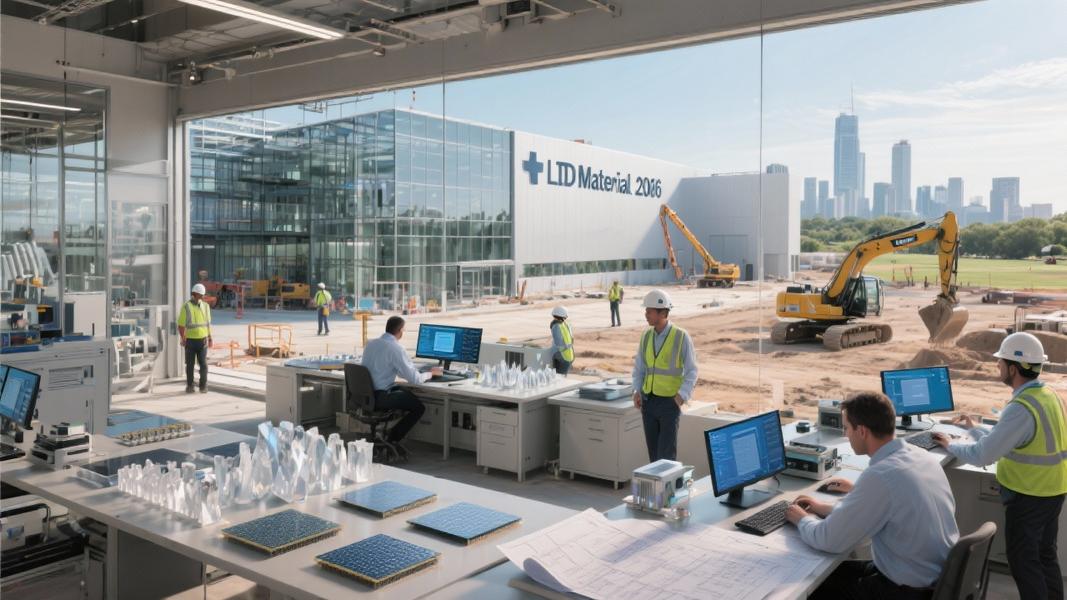
Governor Greg Abbott recently announced more than $1 million from the Texas Semiconductor Innovation Fund (TSIF) to LTD Material LLC, supporting a new 88,000-square-foot manufacturing facility in Austin. The facility will produce high-purity quartz parts essential to semiconductor production.
“Texas leads America’s resurgence in semiconductor manufacturing,” Abbott declared while unveiling the grant. The investment is expected to create 40 jobs and represents over $25 million in capital investment.
LTD Material CEO Kevin Nguyen emphasized the strategic importance: “The TSIF grant allows LTD Material to meet the surging demand from U.S. semiconductor foundries while reducing dependence on foreign quartz suppliers, a key strategy to the government’s focus on strengthening overall national security.”
Building a Semiconductor Ecosystem
The LTD Material grant is just one piece of a much larger puzzle. Since launching in June 2023 with $698.3 million in appropriations, the TSIF has become Texas’ primary vehicle for semiconductor industry development.
How extensive is the program? To date, the fund has supported 17 projects creating more than 700 jobs and driving nearly $6 billion in capital investment across various segments of the semiconductor ecosystem.
Among the most significant investments is a $15.2 million grant to Tekscend Photomask Round Rock Inc., which will expand its photomask production facility in Round Rock. The project promises to create 50 jobs and represents more than $223 million in capital investment.
The Tekscend expansion will increase production capacity by more than 40 percent while modernizing equipment to support 12nm technology nodes critical for AI, automotive applications, wireless communications, and sensors, according to the Round Rock Chamber of Commerce.
Research and Innovation Focus
But Texas isn’t just focusing on manufacturing. The state is making substantial investments in research and innovation infrastructure as well.
In a move that highlights the intersection of quantum computing and semiconductor technology, Abbott approved a $4.8 million TSIF grant to the Texas Quantum Institute at The University of Texas at Austin. The funding will support QLab, a quantum-enhanced semiconductor metrology facility, as reported by The Quantum Insider.
“Texas is the new frontier of innovation and UT Austin is where world-changing discoveries in quantum research and development are being made,” Abbott said during the announcement.
Similarly, Texas Tech University received a $12 million grant for a nanotechnology laboratory cleanroom facility as part of Lubbock’s Semiconductor Nanofabrication Center, according to local radio station KFYO.
These investments in research infrastructure may prove just as crucial as manufacturing capacity. Advanced semiconductor production requires cutting-edge research capabilities, specialized materials, and a highly skilled workforce — all areas Texas is targeting with its innovation fund.
With the global semiconductor industry projected to reach $1 trillion by 2030, Texas appears determined to position itself not just as a manufacturing hub, but as a complete semiconductor ecosystem spanning research, materials, components, and finished products — potentially reshaping the global chip supply chain that has long been dominated by East Asian manufacturers.
