
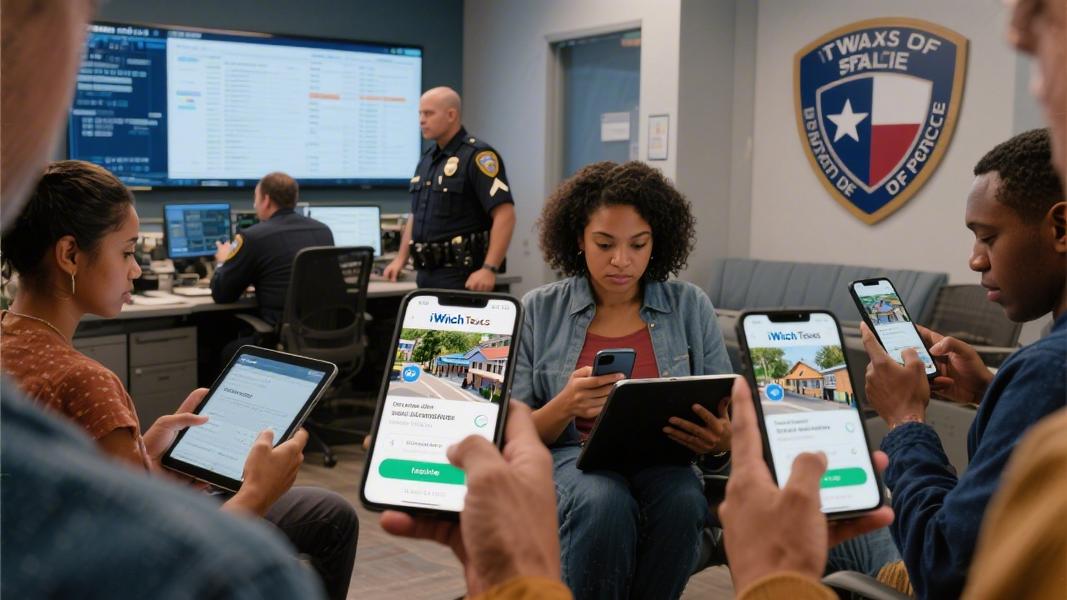
Texas wants your eyes — and your phone. The state’s Department of Public Safety is doubling down on its push to get residents to report suspicious activity through its iWatchTexas app, and the scope of what it’s watching for has grown considerably.
In a press release issued on March 2, 2026, DPS reminded Texans that the iWatchTexas program remains one of its primary tools for detecting threats in schools and communities across the state. The app, which officials say takes less than five minutes to use, allows residents to flag anything from unusual behavior near a school to what DPS describes as potential precursors to a terror attack. The message is simple: see something, say something — and do it fast.
A Platform That’s Been Quietly Expanding
What started as a community safety tip line has morphed into something considerably broader. At the direction of Governor Greg Abbott, DPS added a new feature specifically designed to capture reports of harassment or coercion attributed to hostile foreign adversaries — with the Chinese Communist Party named explicitly as a target of concern. “Texas’ No. 1 priority is to protect the safety and security of Texans,” Abbott said in announcing the update. It’s a notable expansion for an app that many residents may still associate primarily with school safety tips.
That’s the catch, really. The platform is being asked to do a lot of different jobs at once — monitor school hallways, track foreign influence operations, and now keep tabs on polling places. During recent election cycles, DPS has urged voters and poll workers to use iWatchTexas to flag any public safety threats they observe near voting sites. Whether that kind of multipurpose surveillance infrastructure is reassuring or unsettling probably depends on who you ask.
The People Running It Aren’t Downplaying the Stakes
DPS Colonel Freeman F. Martin, who serves as the state’s Homeland Security Director, has been among the most direct voices making the case for public participation. “As Texas’ Homeland Security Director, let me assure you that our local, state and federal law enforcement partners are working around the clock to keep our communities safe from any potential terror attacks — but we need the public’s help,” Martin said in remarks tied to a broader homeland security advisory. The phrasing is careful but the urgency is real. Martin isn’t treating this like a routine public service announcement.
Behind the app, there’s a more formal intelligence architecture at work. The DPS operates the Texas Fusion Center, a state intelligence hub that aggregates threat information from local, state, and federal partners. Tips submitted through iWatchTexas feed into that broader system — meaning a report filed by a parent outside a middle school in Lubbock could theoretically end up on the desk of a federal analyst. That’s either the point or the problem, depending on your perspective.
Five Minutes, They Say
So what does it actually take to file a report? Not much, according to DPS. As part of its initiative branded “Keeping Texas Communities Safe,” the department emphasizes that the process is quick and accessible — designed, presumably, to lower the barrier for residents who might otherwise talk themselves out of reporting something. Officials argue that even a single tip, filed in under five minutes, could be the thread that unravels a planned attack before it happens.
Still, the platform’s ever-widening mandate raises questions that DPS hasn’t fully addressed in public. When the same app is supposed to catch school shooters, Chinese government operatives, and election-day troublemakers all at once, it’s worth asking whether any of those missions gets done particularly well — or whether the whole thing risks becoming a catch-all for anxieties that don’t always translate neatly into actionable intelligence.
For now, DPS isn’t slowing down. The March reminder was the latest in a sustained, years-long campaign to normalize the use of iWatchTexas as a civic habit — like buckling a seatbelt or locking your front door. Whether Texans embrace it that way remains to be seen. But the state is clearly betting that in a threat environment this complicated, the most valuable sensor it has isn’t a camera or a satellite. It’s you.
