
Texas is doubling down on its commitment to protect its 367 miles of coastline through an ambitious set of initiatives that blend environmental stewardship with economic pragmatism.
The Clean Coast Texas initiative, operated under the Texas General Land Office’s Coastal Management Program, is expanding its efforts to improve water quality and bolster community resilience along the state’s vulnerable shoreline. The program, which has quietly gained momentum since its inception, is poised to announce significant new partnerships in 2025 that officials say will transform how the state approaches coastal protection.
“As a Texan who grew up near our beautiful coast, I am dedicated to leading the GLO’s mission to enhance coastal resiliency and protect our coastal communities and essential wildlife,” Land Commissioner Dawn Buckingham said in a statement obtained by this publication.
Green Infrastructure Takes Root
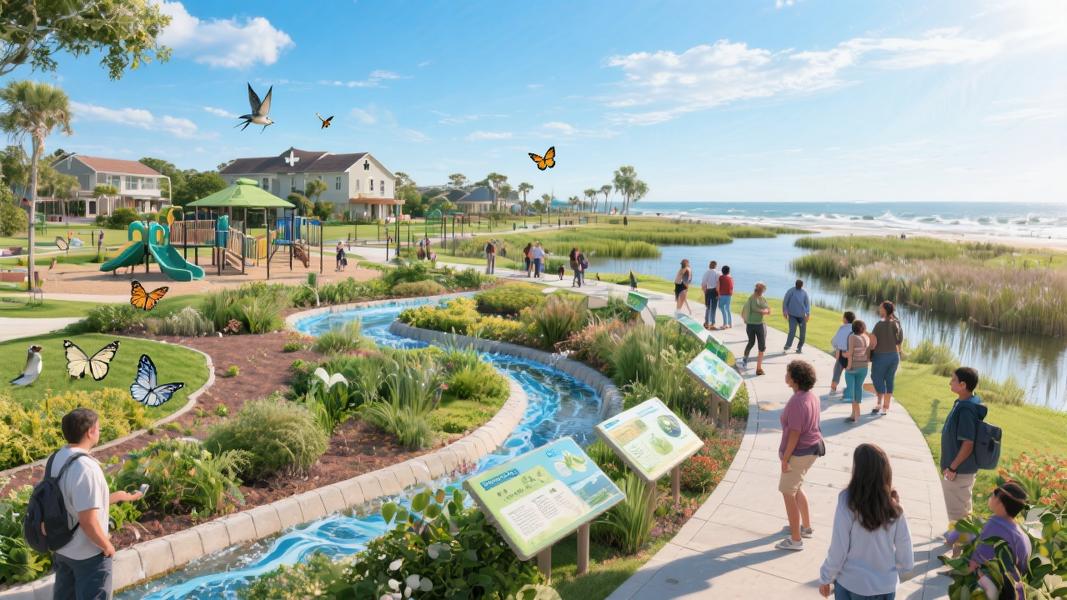
The initiative isn’t just about policy papers and promises. Clean Coast Texas has been actively collaborating with various organizations to implement tangible green infrastructure projects throughout coastal communities. These include bioswales — landscape elements designed to remove silt and pollution from surface runoff water — and permeable pavements that allow rainwater to penetrate the surface rather than contributing to harmful runoff, according to a recent program report.
Why do these seemingly mundane infrastructure projects matter? They represent a fundamental shift in how Texas approaches coastal management, moving from reactive disaster response to proactive environmental planning.
The Texas General Land Office recently hosted its Texas Coastal Roundup event, aimed at raising awareness about pressing coastal issues and promoting the preservation of the state’s natural coastal resources. The gathering brought together stakeholders from government agencies, environmental groups, and local communities, as documented in the GLO’s biennial report.
Private Sector Joins the Effort
The push for coastal sustainability isn’t limited to government initiatives. Private industry is making waves as well, with Avina Clean Hydrogen Inc. developing what it calls the largest green ammonia plant on the Texas Gulf Coast. The facility aims to utilize renewable energy sources, potentially reducing the environmental footprint of industrial operations in the region, the company announced recently.
This convergence of public and private efforts reflects a growing recognition that Texas’s economic future is inextricably linked to the health of its coastal ecosystems. With the state facing increasing threats from extreme weather events, sea level rise, and industrial pollution, the stakes couldn’t be higher.
Still, challenges remain. Funding constraints, jurisdictional complexities, and occasionally competing priorities between development and conservation interests continue to complicate coastal management efforts.
As Clean Coast Texas prepares to unveil its new initiatives in the coming year, coastal communities are watching closely. For many Texans whose livelihoods depend on healthy coastal ecosystems — from commercial fishermen to tourism operators — these programs represent more than environmental altruism; they’re economic lifelines.
The success of these efforts may ultimately hinge on whether Texas can maintain this momentum across changing political winds and budget cycles — a balancing act that has proven difficult for long-term environmental initiatives in the past.
