
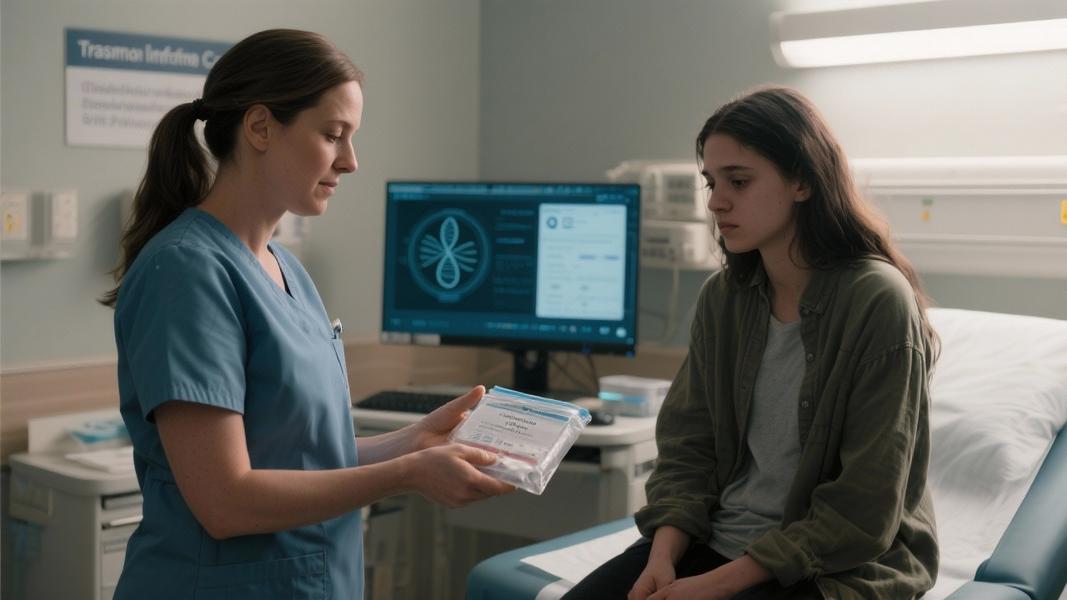
Texas has quietly launched a groundbreaking program that could transform how sexual assault survivors interact with the justice system. As of December 1, 2025, survivors can now have forensic evidence collected and tested without immediately involving law enforcement — a monumental shift in a state with one of the nation’s highest sexual assault rates.
The Limited Consent for DNA Testing Program, implemented by the Texas Department of Public Safety (DPS), allows survivors to obtain forensic medical exams and DNA testing completely free of charge, without requiring them to file a police report. It’s a dramatic departure from previous requirements that effectively forced survivors to choose between seeking justice and maintaining privacy during a deeply traumatic time.
“House Bill 1422 removes one of the biggest barriers sexual assault survivors face when deciding whether to seek help: the fear that getting a forensic exam means they must immediately involve law enforcement,” said Senator Joan Huffman, who championed the legislation. “With the Limited Consent for DNA Testing Program now in place, survivors can take back some control, get critical evidence collected and tested at no cost, and decide later – on their own timeline – whether to move forward with a police report.” The program applies to evidence collected on or after December 1, 2025.
A Survivor-Centered Approach
What makes this program truly revolutionary? For starters, House Bill 1422 explicitly requires that DNA results won’t be compared to state or federal criminal databases unless the survivor later decides to report the assault to police. It’s a critical safeguard that preserves survivor autonomy while still ensuring evidence is properly collected and preserved.
Representative Lacey Hull, who authored the legislation, emphasized the psychological hurdles many survivors face. “We know that making a report to law enforcement is a tremendously difficult decision,” Hull noted. “It is my hope that by providing an alternative testing option, we will empower survivors to subsequently make reports, and ultimately increase prosecutions of sexual assaults.”
The program has been months in the making. DPS Crime Laboratory Division personnel have been working behind the scenes to enhance software systems, ensure compliance with national accreditation standards, and collaborate with advocacy groups to develop trauma-informed consent forms.
“For months, DPS Crime Laboratory Division personnel have been committed to preparing for the roll-out of Texas’ new Limited Consent DNA Testing Program,” said DPS Crime Laboratory Division Chief Brady Mills. “It has taken a tremendous amount of time and dedication to get to this point, but our personnel have demonstrated – and continue to show – their steadfast commitment to supporting survivors of sexual assault.”
How It Works
Under the new program, sexual assault evidence kits will be processed within 90 days at the DPS Crime Laboratory in Houston. Survivors can track the status of their kit through Texas’ statewide electronic tracking system, Track-Kit.
Perhaps most importantly, the evidence will be stored for up to five years, giving survivors a significant window to decide whether they want to move forward with a criminal investigation. Before any evidence is destroyed, survivors will receive notification through the Track-Kit system and have three months to respond.
The system has been carefully designed to prevent accidental reporting to law enforcement. A specialized DNA testing workflow ensures that no information is shared without explicit additional consent from the survivor — a critical protection mandated by the legislation.
Addressing a Critical Gap
Sexual assault has long been one of the most underreported crimes in America. According to multiple studies, fewer than 1 in 3 sexual assaults are ever reported to law enforcement, with many survivors citing fear of the reporting process itself as a primary reason for their silence.
The traditional requirement to immediately involve police has been particularly problematic. Many survivors need time to process trauma, consult with loved ones, or simply gather strength before engaging with the criminal justice system. Without that flexibility, countless survivors have opted out of the process entirely — taking with them crucial evidence that might have helped identify serial offenders.
Will this new approach make a difference? Advocates are cautiously optimistic. By separating the medical and evidence collection process from the criminal justice system, Texas has removed a significant barrier that has likely prevented thousands of survivors from seeking help.
“This program marks a historic step forward for survivor-centered justice in Texas,” Senator Huffman concluded. It’s an assessment that, for once, both sides of the political aisle seem to agree upon in a state often divided on policy approaches to sexual violence.
As the program gets underway, all eyes will be on whether other states follow Texas’s lead in reimagining how the justice system can better serve those who have experienced sexual trauma — not by forcing them into a one-size-fits-all process, but by giving them options, time, and above all, control over their own path to healing and justice.
