
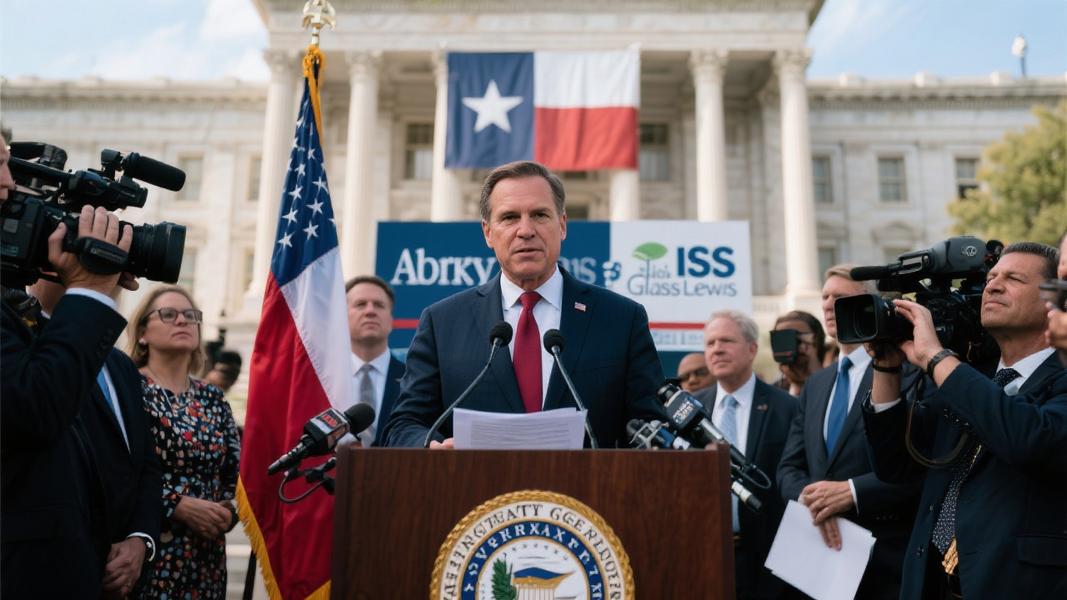
Texas Attorney General Ken Paxton has stepped into the ring to defend a controversial new state law that takes aim at proxy advisory firms — setting up what could become a significant battle over corporate governance, free speech, and the growing influence of ESG investing.
Senate Bill 2337, signed into law last year, requires proxy advisors to disclose when their voting recommendations to shareholders are based on considerations beyond pure financial returns — explicitly targeting factors like environmental impact, social justice initiatives, or corporate diversity goals.
“The role of a proxy advisor is to provide sound guidance based on financial considerations, not use their position to promote woke, left-wing ideology,” Paxton stated in defense of the law, framing it as a transparency measure to protect Texas investors from hidden ideological agendas.
What’s at Stake
Why does this matter? Proxy advisors like Glass Lewis and Institutional Shareholder Services (ISS) wield enormous influence over corporate America by providing voting recommendations to institutional investors on shareholder resolutions. Their guidance can sway decisions on everything from executive compensation to climate policies.
Under the new Texas law, these firms must now explicitly flag when their recommendations incorporate non-financial considerations — such as Environmental, Social, and Governance (ESG) factors — and disclose how those considerations might affect returns. The law also establishes penalties for violations under Texas’s Business & Commerce Code.
The legislation effectively forces proxy advisors to “show their cards” when recommending votes on corporate matters, particularly those touching on climate change, diversity initiatives, or social justice concerns — areas that have increasingly factored into investor decision-making in recent years.
Legal Pushback
The industry isn’t taking this lying down. Both Glass Lewis and ISS have sued Paxton, arguing the law violates their First Amendment rights and amounts to unconstitutional viewpoint discrimination. The firms maintain that their recommendations are based on rigorous analysis that appropriately considers all factors that could impact long-term shareholder value.
S.B. 2337 represents just one front in a broader conservative pushback against ESG investing. Similar measures have emerged in other Republican-led states, reflecting growing tension between traditional financial metrics and newer frameworks that consider environmental and social impacts.
Critics of the law see it as an attempt to chill speech around climate change and social equity issues by creating legal exposure for firms that dare to consider these factors. Supporters counter that it simply ensures investors know when advice is colored by non-financial considerations.
Broader Implications
The battle in Texas could have far-reaching consequences for corporate governance nationwide. If upheld, the law might significantly alter how proxy advisors operate, potentially forcing them to water down ESG considerations in their recommendations or face legal consequences.
That said, the outcome remains uncertain. Constitutional challenges to state laws regulating financial speech have often succeeded in the past, though courts have become increasingly skeptical of ESG-oriented investment strategies in recent years.
For now, proxy advisory firms face a difficult choice: adapt their recommendations to comply with Texas law, withdraw from operating in the state, or continue their normal practices while fighting the legal battle — each option carrying significant business risks.
As corporate America watches closely, the Texas showdown highlights a fundamental tension in modern capitalism: whether maximizing shareholder value should remain the singular focus of corporate governance, or whether broader societal impacts deserve equal consideration in the boardroom.
