
The United States and Israel struck Iran hard — and Texas leaders aren’t mincing words about it.
In the wake of coordinated U.S. and Israeli military strikes on Iran, elected officials and military analysts across Texas broke their silence over the weekend, offering reactions that ranged from full-throated support to measured alarm about what comes next. At the center of it all: a dramatic shift in the Middle East’s balance of power — and a body count that’s still being tallied.
Abbott Puts Texas on Alert
Governor Greg Abbott was among the first Texas officials to respond publicly, releasing a statement that left little doubt about where the Lone Star State stands. “Texas stands with President Trump in sending a clear message to Iran: its aggression toward America and the West will no longer be tolerated,” Abbott declared. It’s the kind of statement that plays well at home — but Abbott didn’t stop there.
He also praised the broader coalition effort, calling the joint operations a signal of American resolve. “These joint operations with our allies in the Middle East are a clear demonstration of American resolve to neutralize threats from rogue regimes that endanger our troops, our allies, and global stability,” Abbott said. But resolve, in Abbott’s case, came with a practical edge.
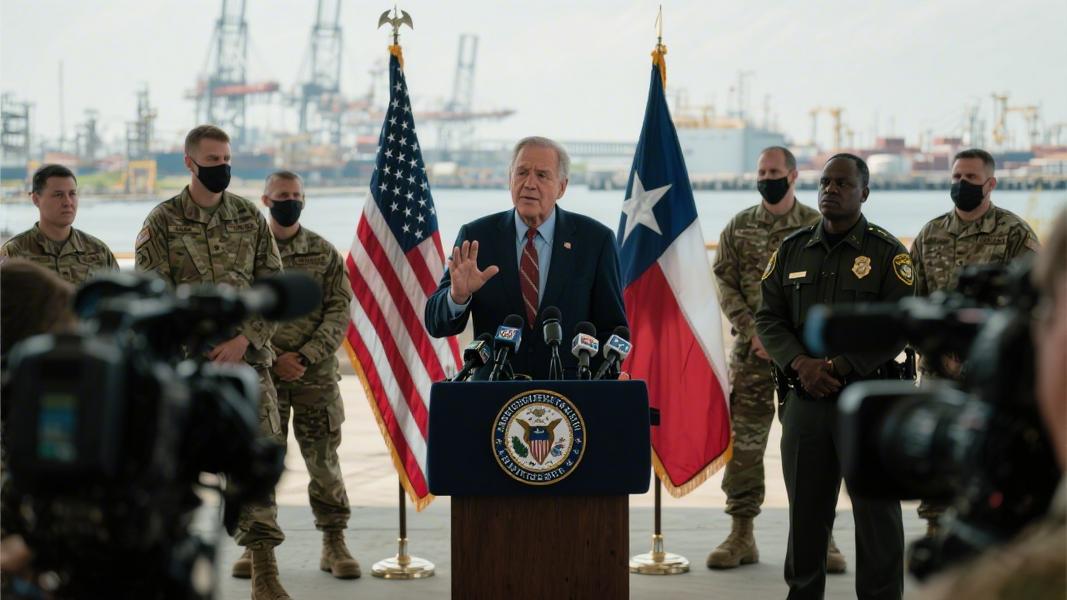
Citing the possibility of Iranian retaliation, the governor directed the Texas Department of Public Safety and the Texas National Guard to increase their footprint at critical infrastructure sites. “I have directed the Texas Department of Public Safety and the Texas National Guard to ramp up surveillance and patrols at key sites — including our vital energy facilities, ports, and southern border,” Abbott announced. Whether that’s precaution or politics — probably both — it signals that Texas officials are treating the threat of blowback as real, not theoretical.
Congress Weighs In
On Capitol Hill, Texas’s congressional delegation largely echoed Abbott’s support, though each put their own spin on it. Congressman Pete Sessions went further than most, calling the mission — dubbed Operation Epic Fury — a commendable show of force and implying the goal should extend beyond the strikes themselves. “President Trump is acting with resolve to defend American interests and advance peace through deterrence, sending a clear message that threats to our nation, our national security, and our allies will not go unanswered,” Sessions stated. He also called for the removal of Ayatollah Khamenei from power — a position that, as it turns out, may already be moot.
U.S. Sen. John Cornyn praised the strikes as a potential turning point in a region that’s been a source of chronic destabilization for decades, suggesting the operations could reshape the strategic landscape. Meanwhile, Rep. Henry Cuellar — one of the more centrist voices in Texas’s congressional delegation — acknowledged the gravity of the moment without abandoning caution. He warned that “the threat posed by Tehran is real and longstanding” and insisted Iran “must never obtain a nuclear weapon,” according to reporting out of San Antonio.
The Death Toll — and a Stunning Claim
Here’s where it gets heavy. Iranian state media reported at least 201 people killed and more than 700 injured in the strikes. But the claim drawing the most international attention — and the most scrutiny — is that Supreme Leader Ayatollah Ali Khamenei was killed in the assault, a development cited by both Trump administration officials and Israeli authorities. If confirmed, it would represent one of the most consequential moments in Middle Eastern geopolitics in a generation. Iranian state media has not independently verified Khamenei’s death.
The Economic Warning No One Wants to Hear
Still, not every voice coming out of Texas was a cheer. Retired U.S. Army Col. Joe Buccino offered a sobering counterpoint — one grounded less in ideology than in history. Iran, he noted, holds the third largest oil reserves in the world, and the regime has options for retaliation that don’t involve a single missile. Striking tankers. Closing the Strait of Hormuz. Choking off a critical artery of global energy supply.
“We saw in 1979 when the regime and the Ayatollah overthrew the Shah. We saw an oil shock that really impacted the United States. I think we’re going to see that again,” Buccino warned. It’s a reminder that wars — even swift, decisive ones — have a habit of sending bills to people far from the front lines. Texans, who know something about energy markets, might want to pay attention to that one.
The strikes may be over. The consequences are just getting started.
