
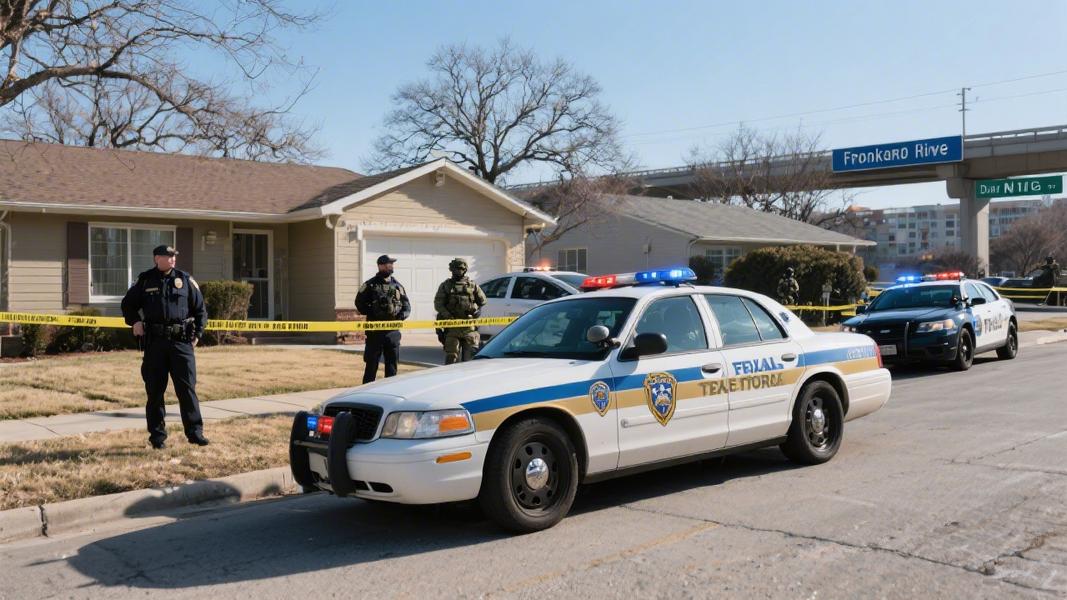
A routine drive down a North Dallas road ended in handcuffs — not because of a traffic stop or a tip, but because a camera read a license plate and connected the dots in seconds.
On March 3, 2026, a Texas Department of Public Safety trooper was patrolling near Frankford Road and the Dallas North Tollway when an automated license plate reader flagged a passing vehicle. The registered owner, it turned out, wasn’t just wanted — he was wanted on multiple counts. The alert triggered an immediate response, and by the following day, Justin Givens, 29, of Dallas, was in custody.
The Arrest
Givens was taken in on March 4, 2026, by DPS Criminal Investigations Division. He faced two felony warrants from the Dallas County Sheriff’s Office for Manufacture and Delivery of a Controlled Substance — serious charges that carry significant prison time under Texas law. That’s not all. Tacked on were misdemeanor warrants for Evading Arrest, filed separately by both DCSO and DPS. In other words, he’d tried to run before. This time, he didn’t get the chance.
What makes this case notable isn’t just the arrest itself — it’s the mechanism behind it. No informant. No chase. No instinct. Just a camera, an algorithm, and a database that knew exactly who was behind the wheel before the trooper had even pulled over. Texas DPS has been expanding its network of automated license plate readers across the state, and this arrest is being held up as a textbook example of the technology working exactly as advertised.
The Bigger Picture
Still, it’s worth pausing on what just happened here. A government-operated system scanned a civilian’s vehicle, cross-referenced it against a warrant database, and flagged a law enforcement officer — all in a matter of milliseconds, on a public road, without any prior suspicion. For supporters of the technology, that’s the point. For critics, that’s precisely the problem.
Privacy advocates have been raising alarms about the rapid proliferation of these readers across Texas, arguing that the infrastructure built to catch fugitives today can just as easily become a mass surveillance tool tomorrow. The data doesn’t disappear after a clean plate rolls by — in many cases, it’s stored, logged, and retained for months or years, building a quiet record of where Texans drive and when.
That’s the tension at the heart of this story. Givens had active felony warrants. He’s accused of dealing drugs and dodging law enforcement. It’s genuinely hard to argue the system failed anyone here. But the same network that caught him is watching every other car on Frankford Road too — including yours.
Technology has a way of proving itself on its best days. The harder question is what it does on all the other ones.
