
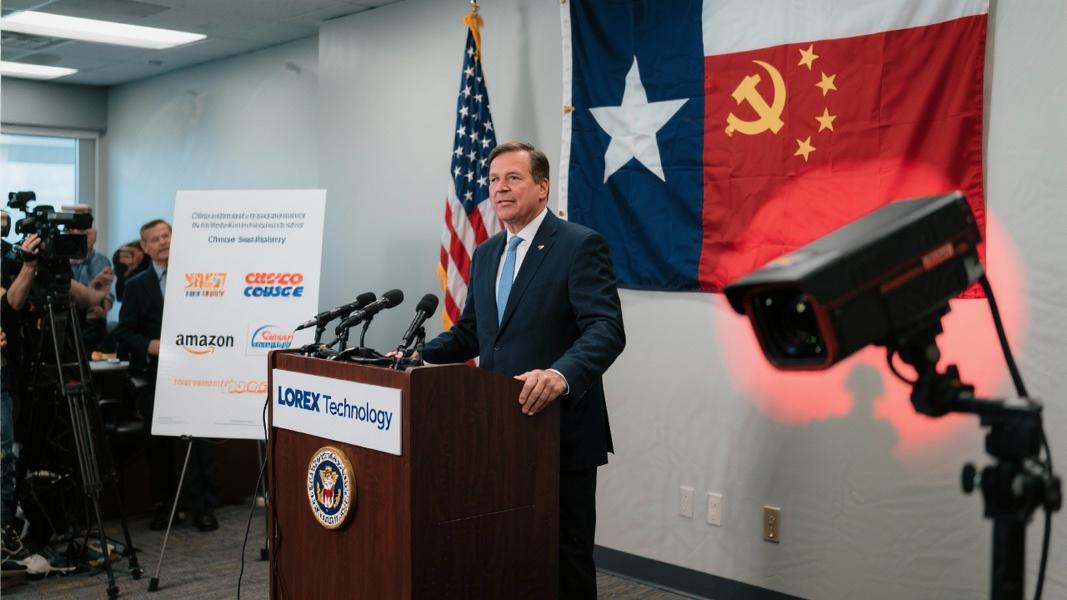
Texas Attorney General Ken Paxton has launched an investigation into Lorex Technology Inc., a popular home security camera provider, amid growing concerns that the company may have ties to the Chinese Communist Party (CCP).
The probe centers on whether Lorex has misled Texas consumers about potential security risks associated with its cameras and whether components manufactured by Chinese entities could pose threats to national security and personal privacy. Paxton’s office is examining if these cameras might be creating a backdoor for foreign surveillance into American homes and businesses.
“Texans should never have to worry that the devices protecting their homes could be tied to foreign adversaries,” Paxton stated in a press release announcing the investigation. “Any company that gives the CCP a foothold in American life will face the full force of Texas law.”
A Complicated Ownership History
The investigation highlights a complex corporate history that has raised red flags among security experts. Lorex, which was founded in 1991, was acquired by Dahua Technology, a Chinese company, in 2012. Dahua has since been designated as a “Chinese military company” by the U.S. Department of War and faces restrictions from the U.S. Department of Commerce and the Federal Communications Commission.
Although Lorex was sold to Taiwan-based Skywatch in 2022, investigators are concerned that Dahua continues to supply key components for Lorex cameras, potentially maintaining backdoor access to the devices. This arrangement has prompted questions about whether consumers are fully aware of who might have access to footage from their home security systems.
What’s particularly troubling for investigators? The cameras remain widely available through major American retailers like Amazon and Costco, potentially placing thousands of households at risk without their knowledge.
Part of a Broader Push
Texas isn’t alone in its concerns. Similar investigations into Lorex are underway in Nebraska and Florida, suggesting a coordinated effort among state attorneys general to address potential national security vulnerabilities at the consumer level.
The probe comes amid heightened tensions between the United States and China, with technology increasingly becoming a battleground for national security concerns. Home security cameras are especially sensitive since they can capture intimate details of Americans’ daily lives, property layouts, security measures, and personal habits.
“These aren’t just cameras watching your front porch,” said a cybersecurity expert familiar with the investigation who requested anonymity because they weren’t authorized to speak publicly. “They’re potential intelligence-gathering tools if compromised by foreign actors.”
Consumer Impact
For now, Lorex products remain on store shelves, leaving consumers in a difficult position. The company has not yet issued a public response to the investigation, though the outcome could have significant implications for the home security market in Texas and potentially nationwide.
The case highlights the increasingly blurred lines between consumer technology and national security in an interconnected global marketplace. As smart homes become more common, the question of who might be watching—and from where—has taken on new urgency for regulators.
Paxton’s office has indicated the investigation is still in its early stages, with no timeline yet for when findings might be released. But the message to technology companies with potential ties to foreign adversaries is clear: Texas is watching.
