
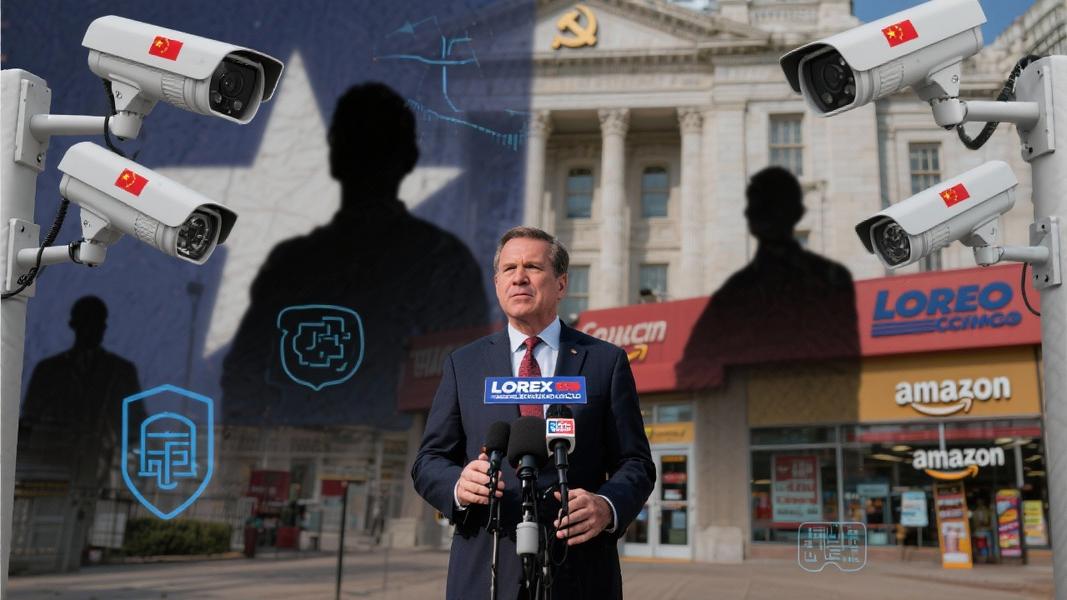
Texas Attorney General Ken Paxton has launched an investigation into Lorex Technology Inc., probing whether the popular security camera company’s products pose a national security threat due to potential ties to the Chinese Communist Party.
The move comes amid growing concerns about foreign surveillance technology in American homes. Paxton’s office is examining if Lorex cameras, which many Texans use to protect their property, could actually be compromising their privacy and security on a broader scale.
“Texans should never have to worry that the devices protecting their homes could be tied to foreign adversaries. Any company that gives the CCP a foothold in American life will face the full force of Texas law,” Paxton declared in a statement announcing the investigation.
A Complicated Corporate History
At the heart of the investigation is Lorex’s corporate lineage. The company, founded in 1991, was acquired by Chinese surveillance giant Dahua Technology in 2012. Though Lorex was later sold to Taiwan-based Skywatch in 2022, investigators note that Dahua reportedly continues to supply key components for Lorex cameras, raising questions about potential ongoing connections to Chinese interests.
Why does this matter? Dahua was one of several Chinese tech companies blacklisted by the U.S. government in 2019 over human rights abuses and security concerns. Despite these corporate reshufflings, Paxton’s office is examining whether Chinese influence remains embedded in Lorex products.
The investigation specifically aims to determine if Lorex is selling cameras that pose national security and privacy risks while marketing them as safe for residential use, according to sources familiar with the probe.
Cameras Still Widely Available
Despite the high-profile investigation, Lorex security cameras remain widely available throughout Texas. Major retailers including Amazon, Costco, and other big-box stores continue to stock the products, placing them in thousands of homes across the state.
This availability raises the stakes of Paxton’s investigation. If security concerns are validated, it could trigger a massive consumer safety issue affecting countless Texas households that have already installed these devices.
Tech security experts have long warned about the potential for foreign-made surveillance equipment to be compromised. In the worst-case scenario, hostile entities could potentially access footage from inside American homes or businesses, creating both privacy and security vulnerabilities.
But proving such connections isn’t straightforward. The complex web of corporate ownership, component sourcing, and international technology supply chains makes establishing direct links between consumer products and foreign governments notoriously difficult.
Broader Implications
The Texas investigation reflects growing national concern about Chinese technology in American infrastructure. Similar probes have targeted companies like TikTok, Huawei, and ZTE in recent years, with mixed results.
For consumers, the situation creates a dilemma. Many purchased Lorex cameras precisely because they wanted to feel more secure, not less. Now they’re left wondering whether the very devices they installed to protect their homes might be exposing them to other risks.
Lorex has not yet issued a public response to the Texas investigation. The company’s website continues to tout its products as “secure” and “private” solutions for home protection.
As this story develops, the question remains whether other states will follow Texas’s lead in scrutinizing foreign-linked security technology that has quietly become ubiquitous in American daily life.
