
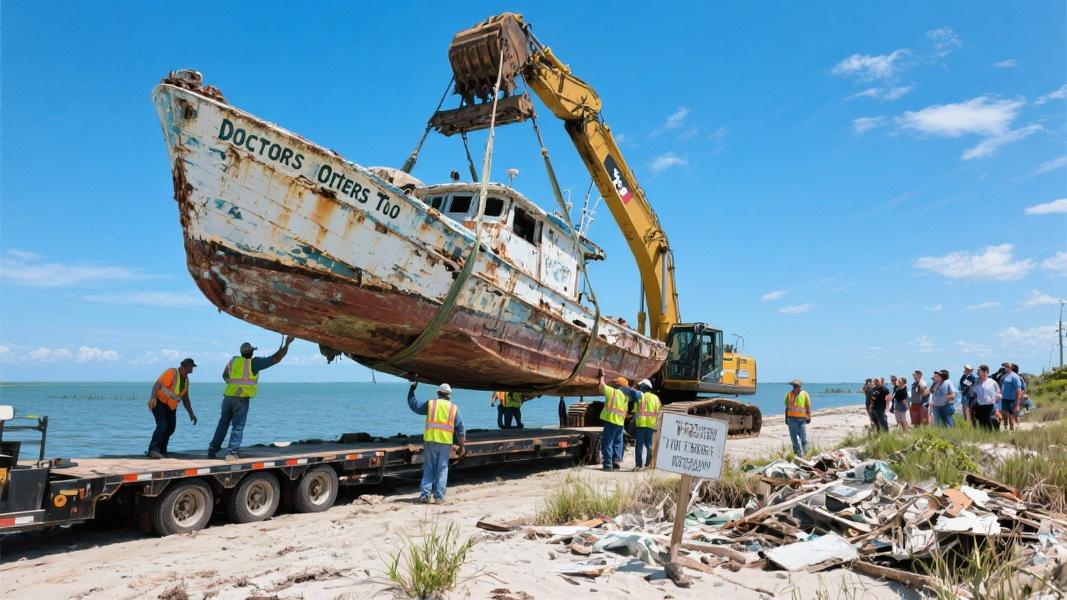
Texas is fishing out its coastal waters — one abandoned boat at a time.
In a continuing effort to clean up the state’s coastline, Texas Land Commissioner Dawn Buckingham announced the removal of five more derelict vessels from Texas coastal waters, part of an ongoing program that tackles environmental hazards while protecting vital waterways that support both wildlife and commerce. The removals, carried out by the Texas General Land Office (GLO) Oil Spill and Coastal Resources divisions, were funded through the NOAA Cycle 28 Texas Coastal Management Program, which provides approximately $2.2 million annually for habitat and wildlife protection initiatives.
Abandoned Vessels: An Environmental and Economic Threat
“It is an honor to continue GLO’s mission to keep the Texas coast clean by ensuring derelict vessels are disposed of safely,” said Commissioner Buckingham, who emphasized that as a former Galveston Island resident for over a decade, “preserving the health and beauty of its coastal waters is a mission close to my heart.”
The recently removed vessels include a 32-foot recreational vessel in Nueces County, a 45-foot fishing vessel in Matagorda County, two recreational vessels (17 and 24 feet) in Galveston County, and a 19-foot recreational vessel in Chambers County. An additional five boats were removed near Galveston, weighing approximately 21,040 pounds combined.
Why do these abandoned vessels matter so much? According to officials, they pose significant environmental risks, leaking toxic chemicals into delicate marine ecosystems while creating dangerous navigation hazards in busy waterways. Many of these fiberglass boats had sunk into Gulf-bottom mud, slowly releasing toxic residue that threatens both wildlife and water quality sources confirmed.
“Removing derelict vessels not only keeps the Texas coast cleaner but also promotes trade and commerce that is vital to our state,” Buckingham noted. “The removal of these vessels by the Oil Spill program, with support from the GLO’s Coastal Resources division, shows a commitment to a better future for coastal communities, habitats, and marine environments.”
A Costly But Necessary Cleanup
The expense of these removals is substantial. The GLO estimates the cost at around $1,000 to $1,500 per linear foot of vessel — meaning even a small 20-foot boat could cost $20,000 to safely remove and dispose of properly. That’s no small expense for a program that “does not receive dedicated funding to remove and dispose of derelict vessels,” according to the GLO.
The Derelict Vessel Program operates under the Oil Spill Prevention and Response Act of 1991, which authorizes the GLO to remove abandoned vessels that pose threats including potential oil discharge, safety hazards, or environmental damage. But funding remains a persistent challenge.
Looking ahead, the Oil Spill division is planning an even more ambitious project for late September 2025, targeting the removal of 11 vessels from submerged state land in Orange, Chambers, Galveston, Matagorda, Nueces, Willacy, and Cameron counties — weather and safety conditions permitting.
Prevention Through Community Engagement
Faced with the high cost of removals, Texas officials are increasingly focusing on prevention. In April 2025, a free four-day vessel turn-in event in Orange County saw residents voluntarily relinquish 71 boats totaling over 876 linear feet, along with batteries, fire extinguishers, and trailers — potentially saving the state hundreds of thousands in future removal costs.
“As a Texan raised on the coast, I take the care and protection of our wonderful Texas beaches as a personal responsibility,” said Buckingham. “Correctly disposing of discarded vessels aids in our efforts to maintain the cleanliness of the Texas coast while safeguarding vital marine and coastal habitats.”
The commissioner has made environmental protection a key priority since making history in 2022 as Texas’ first female Land Commissioner. Alongside her focus on marine ecosystem protection, Buckingham has committed to disaster assistance, Texas energy support, public education quality, veterans services, and border security efforts.
For the boats in Offatts Bayou and the Gulf Intracoastal Waterway, their removal represents what Buckingham called “a win for people and wildlife,” improving both environmental conditions and economic prospects by enhancing safety and aesthetics for tourism and commerce.
One vessel at a time, Texas is working to ensure its coastal waters remain both beautiful and functional — though the state’s 367 miles of coastline suggest this cleanup effort may continue for years to come.
