
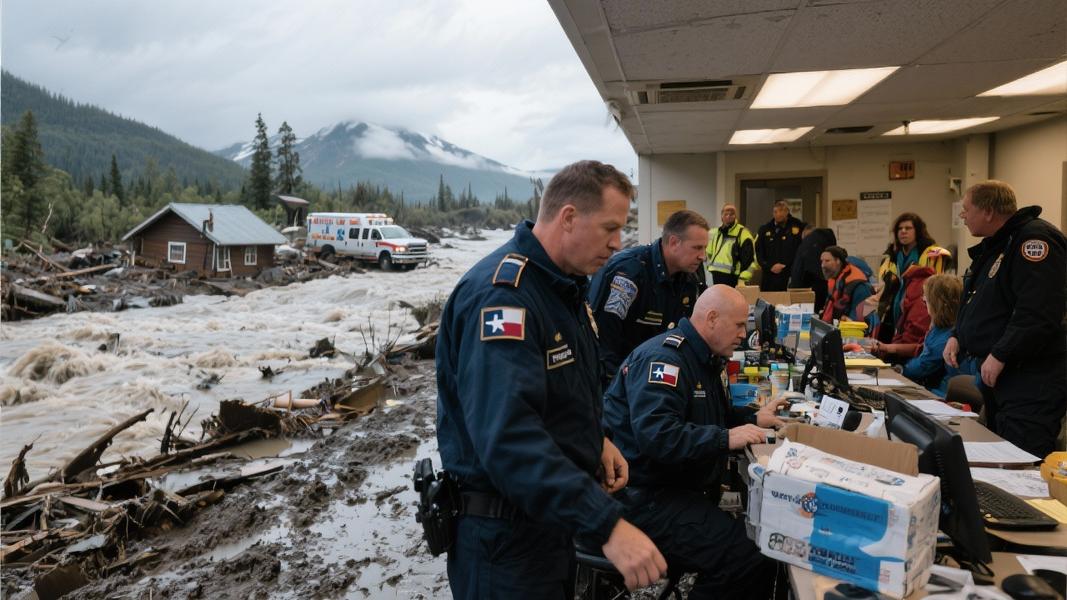
Texas has sent emergency management crews to Alaska in a rare cross-country disaster response effort as coastal communities in America’s northernmost state grapple with the devastating aftermath of Typhoon Halong, which has displaced thousands and literally swept homes into the sea.
Governor Greg Abbott announced the deployment Tuesday, coordinated under the Emergency Management Assistance Compact (EMAC) after Alaska’s Division of Homeland Security and Emergency Management formally requested assistance. The Texas personnel will provide specialized support in voluntary agency coordination and donations management as Alaska confronts what officials are calling a “major incident” affecting dozens of communities along its western coast.
Villages Demolished, Thousands Displaced
“Our hearts are with all Americans in Alaska who have been devastated by a typhoon that led to days of flooding,” Abbott said in a statement. “I deployed emergency management personnel to help people and communities in Alaska as they deal with the horrific aftermath.”
The destruction in western Alaska is severe. “Homes have been flooded, pushed off their foundations and, in some cases, swept entirely out to sea,” according to the American Red Cross, which has mobilized to assist approximately 2,000 evacuees. Beyond residential damage, critical infrastructure including roads and communication lines has been severely compromised.
How bad is it? The Alaska State Emergency Operations Center reports that 49 communities have reported impacts from the typhoon, with 1,400 residents currently taking shelter in a dozen emergency shelters across the region. The state has activated its emergency operations at Level 3 — indicating a major incident requiring coordinated response from multiple agencies at state, federal, tribal and volunteer levels, according to official reports.
Local Communities Unite in Response
Communities across the Yukon-Kuskokwim Delta, Bering Strait, and Northwest Arctic regions have established the Western Alaska Disaster Relief Fund through the Alaska Community Foundation to support recovery efforts. The fund represents a coalition of affected areas working together to coordinate relief.
“AVCP appreciates the efforts of philanthropic organizations throughout the state and YK Delta region to organize a response for charitable giving to assist our communities,” stated Vivian Korthus, CEO of the Association of Village Council Presidents. “Donations to this fund will be essential for impacted communities.”
The Texas-Alaska partnership comes just months after Texas itself weathered catastrophic flooding earlier this year. In July, thousands of Texans were displaced when floods ravaged parts of the state, prompting organizations like the Afya Foundation to deliver critical supplies including first aid kits and hygiene products.
That reciprocity isn’t lost on officials. Texas has moved from being a recipient of disaster aid to a provider in a matter of months, highlighting the increasing frequency and severity of climate-related disasters affecting diverse regions of the country.
Long Recovery Ahead
Beyond the immediate emergency response, organizations like the United Methodist Committee on Relief (UMCOR) are preparing for longer-term recovery needs. UMCOR has experience providing solidarity grants for flood events, including awarding support to the Rio Texas Annual Conference after southern Texas was inundated with “half a year’s worth of rain” during severe flooding in March.
The inter-agency response includes a complex web of state, federal, tribal, volunteer, and faith-based organizations working in coordination. Abbott emphasized that Texas “will continue to work to help ensure the safety and well-being of those impacted by the typhoon and flooding,” while thanking emergency personnel “working around the clock to support their fellow Americans in need.”
As Alaskan communities face the daunting task of rebuilding, the arrival of specialized personnel from thousands of miles away serves as a reminder of how vulnerable even the most remote American communities have become to increasingly severe weather events — and how disaster response has evolved into a national, rather than merely local, endeavor.
