
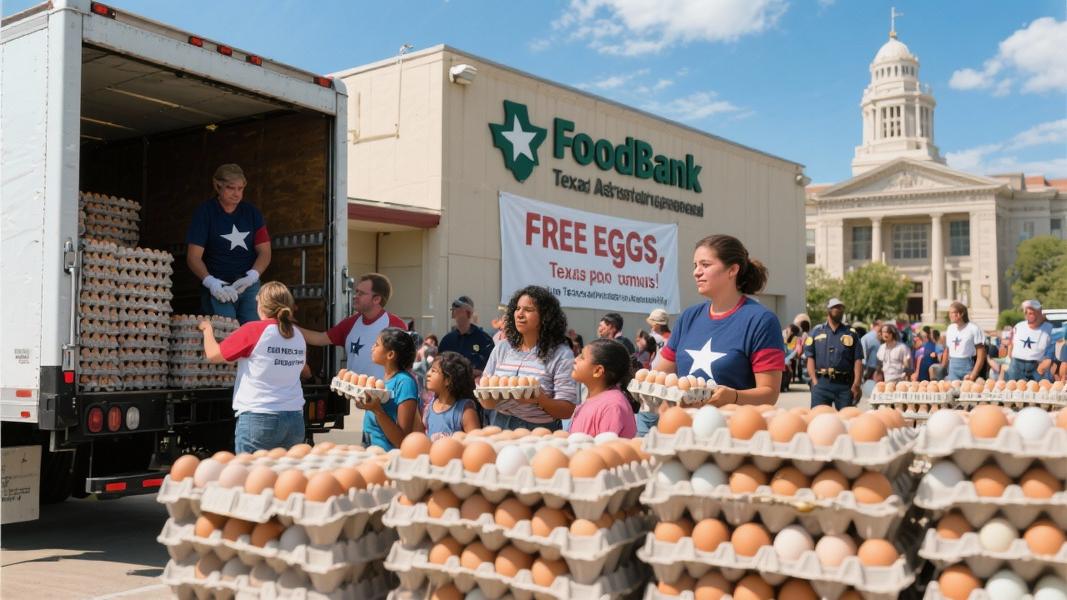
Texas Attorney General Ken Paxton has secured a settlement requiring Cal-Maine Foods, the nation’s largest egg producer, to donate more than two million eggs to food banks across the state, bringing closure to a price gouging case that began during the early days of the COVID-19 pandemic.
The settlement, announced by Paxton’s office, mandates Cal-Maine Foods donate precisely 2,160,000 eggs to Texas food banks within the next 120 days.
“My office will crack down on any corporation illegally raising prices on Texans,” said Attorney General Paxton in a statement following the settlement.
Pandemic Price Hikes Sparked Legal Battle
The case stems from April 2020, when Paxton filed a lawsuit accusing Cal-Maine of jacking up egg prices by approximately 300% during the early weeks of the pandemic. The attorney general’s office alleged the dramatic increase occurred despite no significant disruption to the company’s supply chain that would justify such a spike.
At the time, Paxton declared: “No one is exempt from price gouging laws in Texas, including suppliers of grocery stores and pharmacies. My office will not tolerate any person or business taking advantage of hardworking Texans. Those who violate the Texas Deceptive Trade Practices Act will be met with the full force of the law.”
The lawsuit specifically targeted Cal-Maine, which sells popular brands including Egg-Land’s Best and Land O’Lakes, for allegedly violating the Texas Deceptive Trade Practices Act during a declared disaster when price gouging prohibitions were in effect.
Company Denied Wrongdoing
Cal-Maine Foods has consistently denied the price gouging accusations. “We have been consistent in our pricing practices whether we sell at a profit or at a loss,” a company spokesman stated in an email response to the allegations.
The egg producer attributed the dramatic price increases to unprecedented retail demand as consumers stocked up during the early weeks of pandemic lockdowns, not to any manipulative pricing strategy.
What happened to the original lawsuit? It was dismissed after being filed, though details surrounding the dismissal weren’t widely reported. The current settlement appears to resolve lingering issues from that initial legal challenge.
Settlement Benefits Food Banks
The settlement’s requirement for Cal-Maine to donate over two million eggs comes at a time when food insecurity remains a serious concern for many Texas families. Food banks across the state will distribute the donated eggs over the coming months.
While the settlement doesn’t include an admission of wrongdoing by Cal-Maine, it does provide tangible benefits to Texans struggling with food costs. Egg prices have been particularly volatile since 2020, with inflation and avian flu outbreaks contributing to sustained high prices at grocery stores.
For Paxton, the settlement represents a resolution to a case his office has pursued for nearly four years.
The attorney general’s focus on consumer protection during emergencies reflects a broader pattern of increased scrutiny on essential goods pricing during crisis periods. But questions remain about how companies should respond to sudden demand spikes during emergencies without running afoul of price gouging laws.
Legal experts have noted the challenges in distinguishing between normal market forces and illegal price manipulation, especially during unprecedented events like the COVID-19 pandemic when consumer behavior shifted dramatically.
For Texas food banks and their clients, however, the theoretical debate matters less than the practical outcome: millions of eggs soon to be available for families in need.
