
Texas has clinched an unprecedented 13th consecutive Governor’s Cup from Site Selection magazine, cementing its reputation as America’s economic powerhouse with more than twice the qualifying business projects of its nearest competitor.
The Lone Star State recorded 1,368 major business investment projects in 2024, marking its 21st overall win in the prestigious economic development competition and highlighting what Governor Greg Abbott has been eager to trumpet as proof of Texas’s economic dominance.
Corporate Giants Double Down on Texas
“Texas partners with the businesses that come to our great state to grow,” said Governor Abbott. “When businesses succeed, Texas succeeds. We added more new jobs last year than any other state, and we have exceeded that for three years in a row. Texas also added more than 314 corporate headquarters since 2015, making our state the headquarters of headquarters.”
The state’s $2.7 trillion economy — which would rank as the 8th largest in the world if Texas were an independent nation — grew at a robust 4.8% in 2024, well above the national average, according to state economic development figures.
Tech and semiconductor giants are leading the investment charge. Texas Instruments opened a massive new 300 mm semiconductor wafer fabrication facility in Sherman, with a projected capital investment of $40 billion over coming decades. The plant is expected to employ thousands in high-skill manufacturing jobs crucial to America’s tech supply chain.
“Semiconductors are essential to building the space and artificial intelligence infrastructure that will define our future,” Abbott noted at the facility’s opening. “Today’s announcement by Texas Instruments helps Texas to expand our No. 1 ranking and helps lead the semiconductor manufacturing boom we have here.”
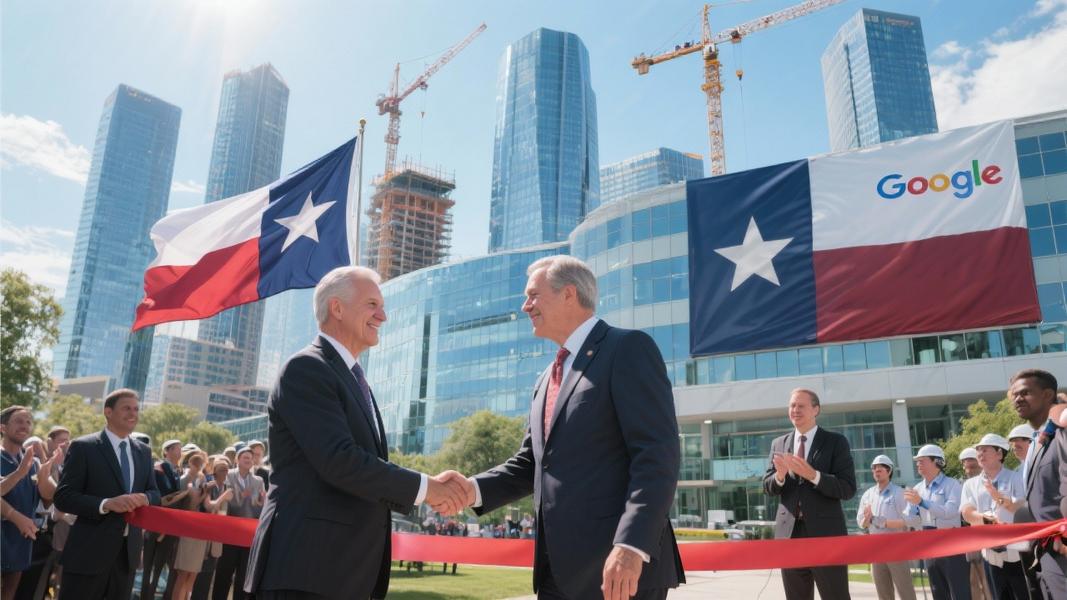
Not to be outdone, Google announced its own $40 billion investment in Texas as part of its ‘Investing in America’ initiative — the largest such investment the tech giant has made in any state. The funds will support energy efficiency improvements and workforce development programs across the state.
Regulatory Climate Fuels Growth
What’s behind the Texas economic juggernaut? The state’s business-friendly regulatory environment continues to earn accolades, with Site Selection magazine naming Texas “America’s Top Business Climate” for the third consecutive year. This followed Chief Executive magazine’s ranking of Texas as the “Best State for Business” for an astonishing 21st year in a row.
The governor has doubled down on pro-business policies, signing a slate of legislation aimed at reducing regulatory burdens. Among the most significant: Senate Bill 14, dubbed “Texas DOGE,” which created the Texas Regulatory Efficiency Office specifically tasked with eliminating unnecessary business regulations.
“We are putting at the forefront of legislation the shaping, formation, and recalibration of government in the State of Texas to make it more responsive and more efficient,” Abbott said upon signing the bill.
Other key business-friendly legislation included House Bill 2464, which prevents cities from imposing regulations on home-based businesses, and a substantial increase in the business personal property tax exemption from $2,500 to $125,000 through House Joint Resolution 1 and House Bill 9.
Storm Clouds on the Horizon?
But it’s not all clear skies ahead. Economic experts at the Dallas Fed have cautioned that the Texas economy shows signs of cooling, with employment growth forecast at 1.3% for 2025, below 2024’s 1.5% pace. Potential headwinds include tariffs, reduced immigration, and policy uncertainty at the federal level.
Recent data from the Dallas Fed’s Texas Economy Dashboard shows more immediate concerns. The state’s job growth from April to July 2025 slowed dramatically to an annualized rate of just 0.4%, with unemployment holding steady at 4.0%. Average hourly earnings stood at $34.27 with year-over-year growth of 3.6%, according to their July report.
Housing markets, long a bright spot in the Texas growth story, are showing mixed signals. The Texas Real Estate Research Center at Texas A&M University reports home prices declining in Austin during the third quarter of 2025, while other major metros are seeing positive but slowing price growth.
Is the Texas economic miracle sustainable in this changing environment? Despite the warning signs, many analysts remain bullish. Comerica Bank projects that Texas economic growth, while moderating, will continue to outpace the nation in 2025, with personal incomes rising by approximately 5% in 2025-2026.
The Texas Bankers Association notes that “business leaders are optimistic even as some economists revise their forecasts down,” though they acknowledge that “progress on inflation has slowed.”
For now, Governor Abbott remains undeterred, continuing to tout the state’s economic achievements. “Texas is No. 1 in the nation for attracting new business investments because we offer businesses the freedom to succeed,” he insists, a message that resonates with many corporate leaders even as economists debate how long the winning streak can last in an increasingly uncertain global economy.
