
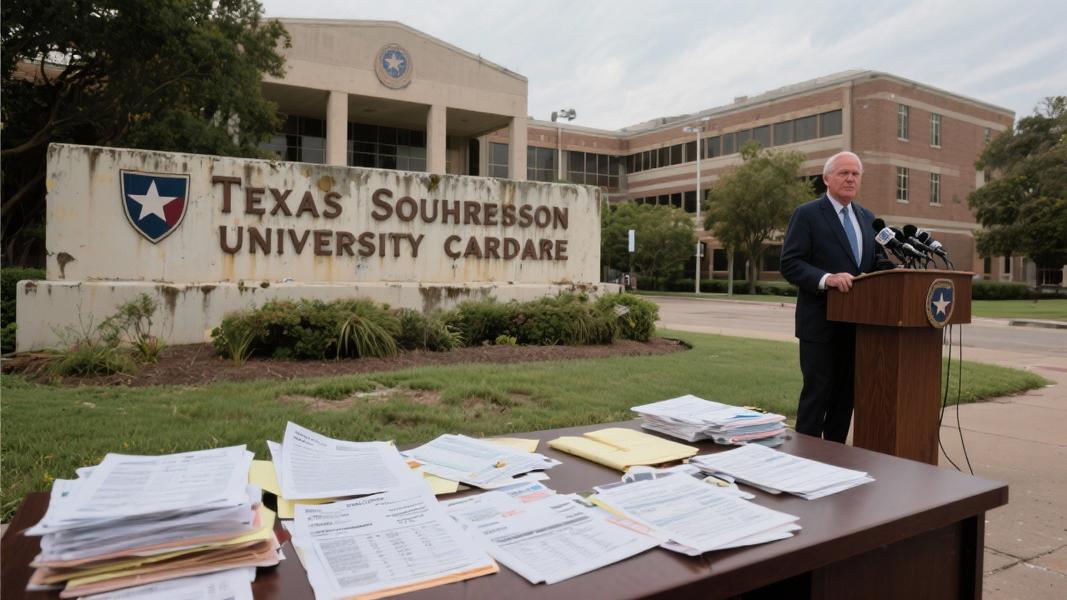
A damning state audit has revealed that Texas Southern University can’t account for $3.2 million in assets, with auditors unable to locate a staggering 83 percent of sampled university property despite records showing they should exist.
The scathing report from the Texas State Auditor’s Office, released recently, found that “50 of 60 sampled assets—83 percent—could not be located, despite being recorded in the university’s official accounting system.” The missing items represent just a sample of what could be a much larger problem at the Houston-based institution.
Widespread Financial Chaos
How bad is the financial disarray? TSU hasn’t conducted a required annual physical inventory since at least 2019, according to the audit. The university has also maintained “incomplete and inaccurate asset records across multiple systems,” making it nearly impossible to track what the school actually owns and where those items might be.
The problems extend well beyond missing laptops and equipment. Auditors identified 743 invoices paid to vendors with expired contracts and over 8,000 invoices that were dated before their corresponding requisitions were approved — a clear indication that purchases routinely circumvented required controls.
“I will do everything in my power to be sure that not one additional taxpayer dollar goes unaccounted for ever again at TSU,” Lieutenant Governor Dan Patrick said in response to the findings. His strongly worded statement suggests potential legislative action if the university doesn’t quickly address the issues.
Financial Reporting Failures
The university’s financial reporting practices appear equally troubling. TSU submitted required financial statements months late and provided inaccurate data to the Texas Comptroller’s Office, including misstatements of tens of millions of dollars in bond repayment figures.
Such reporting failures could have serious implications for the university’s credibility with state officials who control funding and oversight. The repeated pattern of financial mismanagement raises questions about whether this reflects administrative incompetence or potentially something more concerning.
In response to the audit’s findings, Texas Southern University has promised corrective action. The institution has committed to implementing a new procurement and management system called JAGGAER, expected to be operational by September. University officials stated it “has provided recommendations to strengthen the compliance, integrity, and effectiveness of institutional, financial, and business processes, including asset management.”
The university also plans to establish an Audit Response Committee and hire an enterprise risk manager to address the systemic issues highlighted in the report.
But the road to financial accountability may be long. With millions in assets unaccounted for and years of problematic practices to correct, TSU faces a challenging path to regain trust from state officials and taxpayers who fund the institution’s operations.
For now, the $3.2 million question remains: Where did all those assets go, and will anyone be held accountable for their disappearance?
