
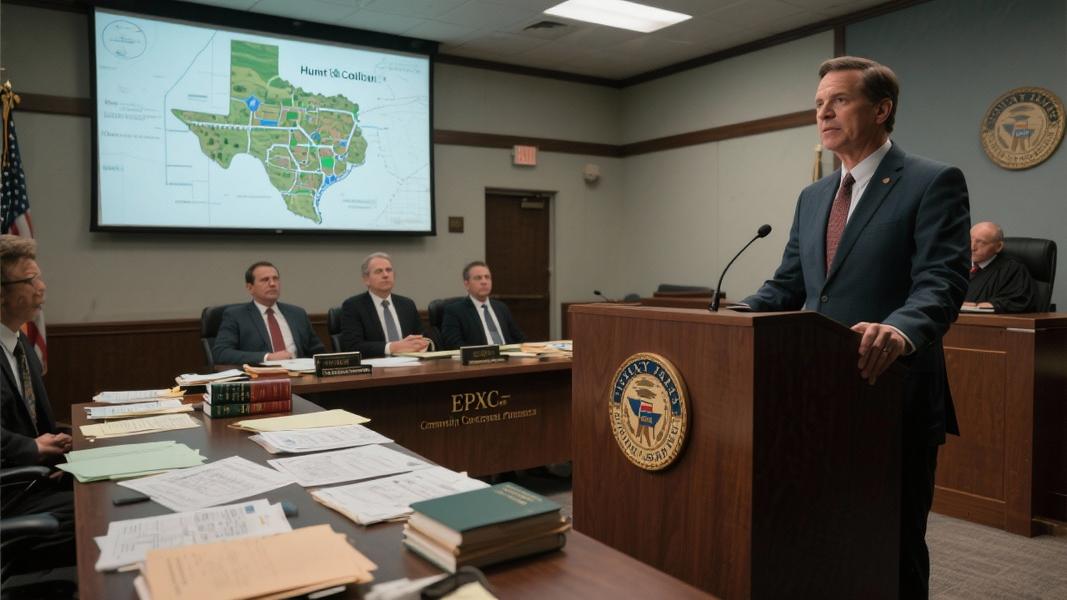
Texas Attorney General Ken Paxton has filed a lawsuit against the East Plano Islamic Center (EPIC) and its development entity, alleging they operated an illegal land development scheme that violated state securities laws — the latest escalation in a contentious battle over a proposed Muslim-centered community.
The lawsuit, filed against EPIC, Community Capital Partners (CCP), and several of their leaders, centers on a development known as “EPIC City” involving more than 400 acres in Hunt and Collin Counties. Paxton claims the developers violated both federal and state laws through fraudulent fundraising practices and securities violations.
Allegations of Securities Fraud
“The bad actors behind this illegal scheme must be held accountable for ignoring state and federal regulations,” Paxton said in a press release. He has asked the Texas State Securities Board (TSSB) to review his findings so he can pursue further legal action against the developers.
According to Paxton, his investigation into EPIC City began in March 2025. The attorney general alleges that CCP failed to verify the “accredited investor” status for more than 10% of securities purchasers, a requirement under Texas law. His office also claims promotional materials implied the development would be “unlawfully reserved for Muslims” and described as the “epicenter of Islam in North America.”
Perhaps most damaging, Paxton asserts that “despite promising not to, the developers have also funneled a significant amount of the funds to their own pockets.”
Federal Investigation Closed
The state’s legal action comes just months after the U.S. Department of Justice closed its own federal investigation into the EPIC City development. In June, federal authorities concluded their probe after developers affirmed that “all will be welcome in any future development” and that the community would follow state and federal law.
EPIC City developers have consistently denied seeking to impose Islamic law or exclude non-Muslims from the planned community. They’ve maintained that the development would adhere to the Fair Housing Act and remain open to people of all religions.
What’s driving the state’s continued scrutiny after federal officials stepped back?
Paxton frames his lawsuit in stark terms, calling EPIC City “a radical plot to destroy hundreds of acres of beautiful Texas land and line their own pockets.” The attorney general vowed to “relentlessly bring the full force of the law against anyone who thinks they can ignore the rules and hurt Texans.”
Broader Political Context
The lawsuit doesn’t exist in isolation. It comes amid heightened tensions over Muslim communities in Texas, exemplified by Governor Greg Abbott’s recent, controversial proclamation. Abbott designated the Muslim Brotherhood and the Council on American-Islamic Relations (CAIR) as foreign terrorist and transnational criminal organizations, effectively banning them and associated parties from purchasing land in Texas under a new state law.
CAIR, which has criticized the federal and state investigations into EPIC City as bullying the Muslim community, swiftly rejected Abbott’s designation. The organization characterized it as “a publicity stunt masquerading as a proclamation” with “no basis in fact or law,” adding that Abbott was “advancing anti-Muslim bigotry, not serving the people of Texas.”
The organization has indicated it’s prepared to mount a legal challenge if the governor’s proclamation becomes enforceable policy.
Looking Forward
For now, the fate of the EPIC City development remains uncertain as legal battles unfold. Paxton’s lawsuit seeks not only to halt the current project but also to bar those responsible from “ever creating another fraudulent operation like this again.”
The case highlights growing tensions between religious expression and state oversight in Texas, with both sides claiming legal and moral high ground. As courts begin to weigh in, the outcome could set significant precedents for religious communities’ development rights and the state’s regulatory authority over such projects.
