
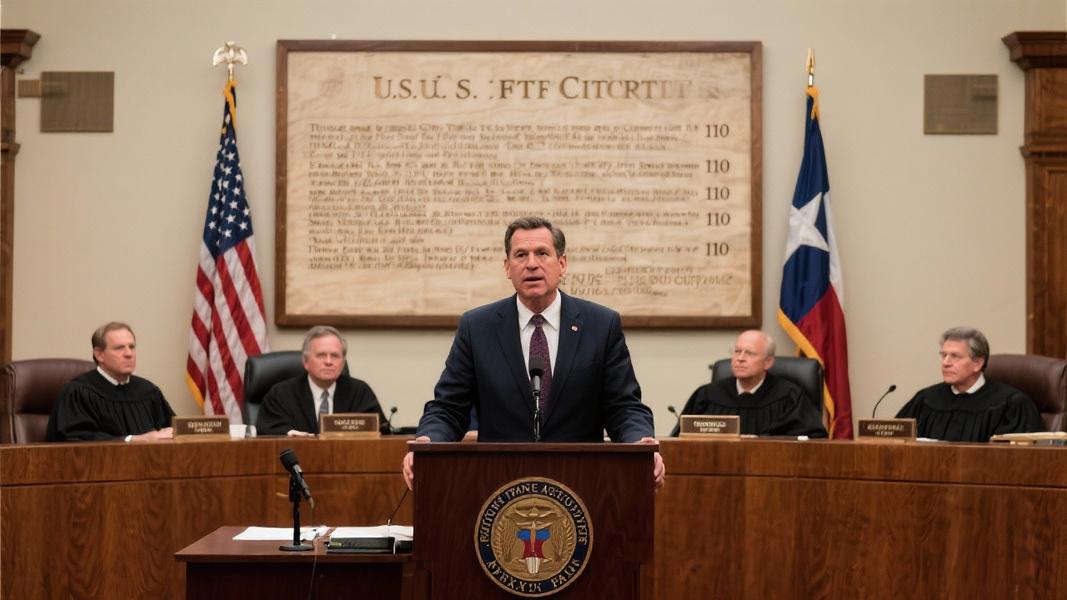
Texas Attorney General Ken Paxton has filed a lawsuit against Galveston Independent School District after its board voted against displaying the Ten Commandments in classrooms, escalating the state’s push to insert religious texts in public schools despite constitutional concerns.
The November lawsuit targets Galveston ISD for refusing to comply with Texas Senate Bill 10, which mandates that public schools display the biblical text on durable posters measuring at least 16 by 20 inches in “a prominent location” in every classroom. Unlike some Texas districts that have received federal court exemptions from the requirement, Galveston ISD has no such protection, making its defiance a direct challenge to the controversial state law.
Constitutional Clash
“America is a Christian nation and it is imperative that we display the very values and timeless truths that have historically guided the success of our country,” Paxton stated when announcing the legal action. The attorney general also dismissed what he called a “misconception” that the phrase “separation of church and state” appears in the U.S. Constitution.
But it’s not that simple. The lawsuit lands amid growing pushback from Texas families of various faiths and non-religious households who have filed their own legal challenges against the law. These families contend that SB 10 violates both the First Amendment’s Establishment Clause and their parental rights regarding religious education.
How far will this battle go? The Galveston case represents just one front in a broader national debate over the role of religion in public education, with Texas now at the epicenter of the controversy. The state legislature passed SB 10 as part of a wave of laws aimed at bringing more traditional and religious values into public schools.
School Districts Caught in the Middle
Galveston’s school board finds itself caught between state law and constitutional concerns that have troubled legal experts since the bill’s passage. While some districts have quietly complied with the mandate, others have sought and received federal court orders exempting them from the requirement — a protection Galveston doesn’t currently enjoy.
The specific requirements of SB 10 are notable for their detail — not just any display will do. The law specifies the poster size and mandates prominent placement, leaving little room for districts to minimize the religious display’s visibility.
Civil liberties organizations have rallied behind districts and families resisting the mandate. They point to decades of Supreme Court precedent limiting religious displays in public schools and question whether the Texas law can withstand constitutional scrutiny.
Broader Culture War Context
Paxton’s lawsuit against Galveston ISD fits into his broader campaign to enforce conservative social policies in Texas schools. From book bans to restrictions on transgender student rights, the attorney general has positioned himself as a defender of traditional values in education.
“We’ve seen this pattern repeatedly,” said one legal observer who requested anonymity due to ongoing litigation. “The legislature passes laws that push constitutional boundaries, knowing they’ll face court challenges, while officials like Paxton use enforcement actions to signal their commitment to religious conservative voters.”
The Ten Commandments dispute echoes similar battles fought decades ago, when the Supreme Court limited religious displays in public schools. Yet supporters of the Texas law believe the current, more conservative Supreme Court might view such displays differently.
As the Galveston case moves forward, one thing remains clear: Texas classrooms have become the latest battleground in America’s ongoing struggle to define the proper relationship between government, education, and faith — a struggle as old as the nation itself.
