
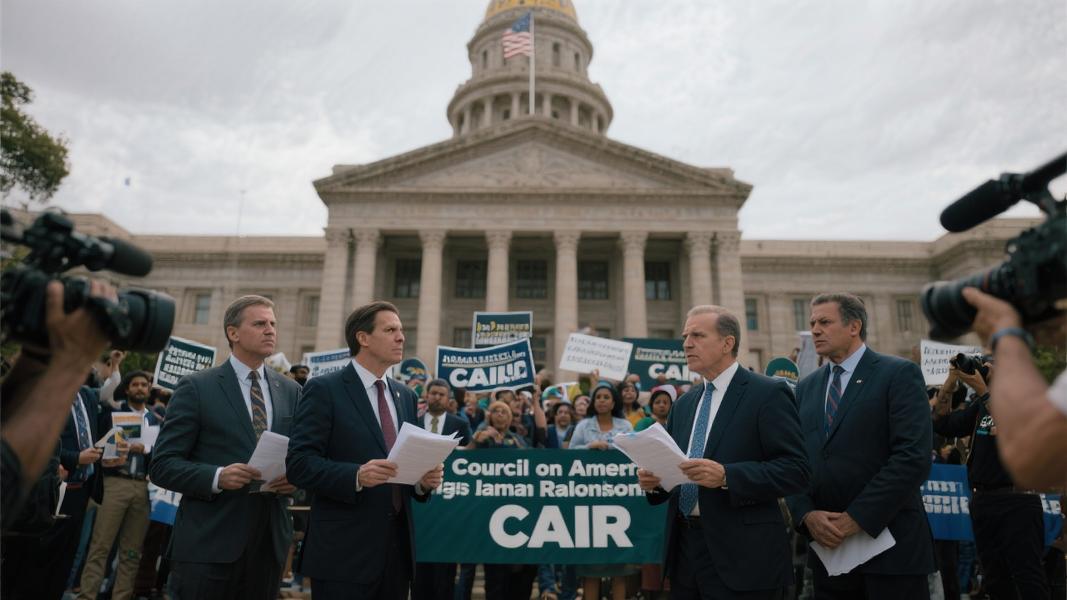
Texas has launched a sweeping legal offensive against two Islamic organizations, seeking to ban them from operating in the Lone Star State under allegations of terrorist ties.
Attorney General Ken Paxton filed a lawsuit in Collin County state court targeting the Council on American-Islamic Relations (CAIR) and the Muslim Brotherhood, claiming they violate Texas laws that prohibit terrorist organizations from owning property or conducting business within state boundaries.
“Sharia law and the jihadists who follow sharia law have no business being in Texas,” the lawsuit states bluntly, setting the tone for what could become a protracted legal battle over religious freedom and state authority.
Unprecedented Legal Action
The far-reaching lawsuit seeks to have CAIR officially declared a foreign terrorist organization under Texas law. If successful, it would prohibit the organization from conducting operations, fundraising, or recruiting within state borders — effectively shuttering its Texas presence.
Paxton didn’t mince words about the action’s intent. “It’s imperative that they are stopped from operating in Texas. Radical Islamic terrorists are antithetical to law and order, endanger the people of Texas, and are an existential threat to our values,” he stated in court documents.
The lawsuit follows Governor Greg Abbott’s November 18, 2025 designation of both the Muslim Brotherhood and CAIR as foreign terrorist organizations — a move that provided the legal foundation for Paxton’s court filing.
Is this an isolated action? Far from it. The lawsuit appears to have substantial support among Texas officials, with Agriculture Commissioner Sid Miller publicly endorsing the attorney general’s legal strategy.
Constitutional Questions Loom
The unprecedented nature of the lawsuit raises significant constitutional questions about state authority to designate and ban organizations as terrorist groups — a power typically reserved for federal agencies. Legal experts suggest the case could eventually make its way to higher courts if CAIR mounts the vigorous defense they’re expected to pursue.
CAIR, founded in 1994, has long described itself as a civil rights organization advocating for American Muslims. The organization has repeatedly denied any connection to terrorist activities or groups.
Critics of the Texas action point to potential First Amendment concerns, arguing that targeting religious-affiliated organizations without federal designation as terrorist groups could infringe on constitutional protections.
But Texas officials remain unmoved. The state’s legal filing portrays the action as necessary for public safety and preserving Texas values — framing that resonates with the state’s conservative base.
As the case begins its journey through the Texas court system, it represents one of the most aggressive state-level actions against Islamic organizations in recent American history — and potentially signals a new frontier in the ongoing tension between state powers and religious freedom protections.
